





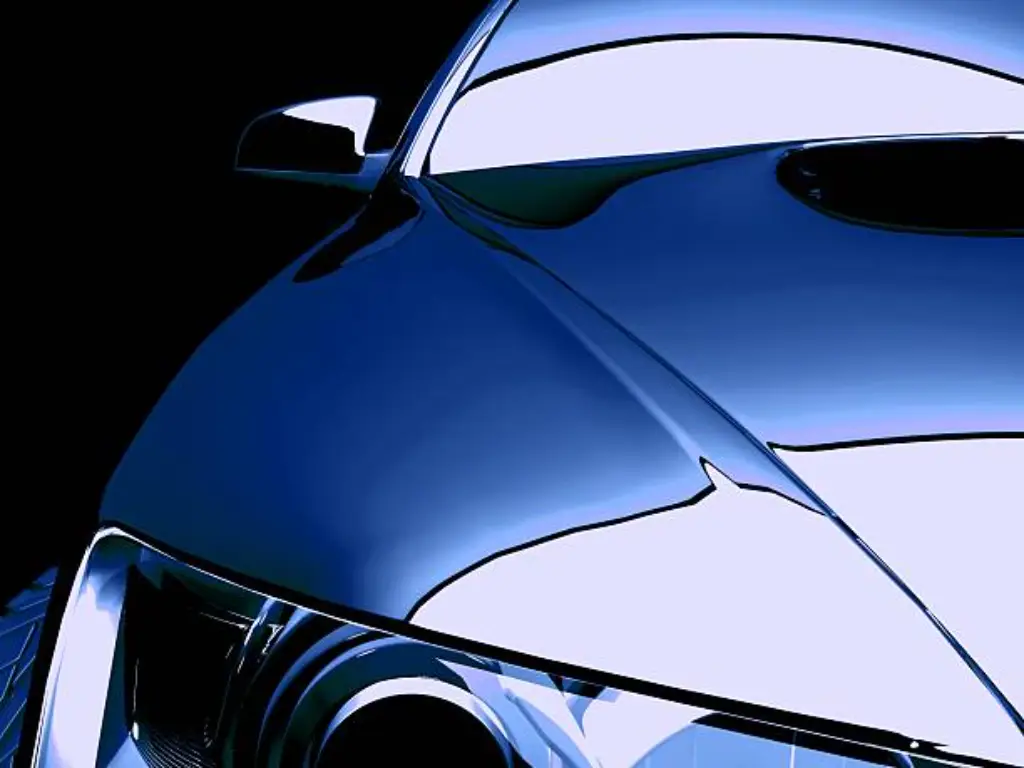
The process of accepting a new car is a very exciting one, with the smell of a new interior being so clean and the reflection of the untouched paintwork in the mirror. But to the discriminating owner, this is also the time when a critical countdown is set on for new car paint protection. The new car shine is delicate, and the choices taken during the initial 48 hours of ownership will either make a vehicle grow old gracefully or perish due to the unstoppable forces of the environment. In an era where automotive technology has leaped forward, finding the best paint protection for new car assets must be equally strategic and data-driven to maintain that flawless paint.
Why Factory Paint Needs Immediate Protection in 2026
The car industry of 2026 is a paradox in its own right: the cars are more technologically sophisticated than ever, but at the same time, their outer finishes are more exposed. Understanding this shift is the first step in a strategic protection plan to preserve your car’s paint.
The Vulnerability of Modern Eco-Paints
With the growing strictness of environmental regulations worldwide, automotive manufacturers have virtually switched to water-borne paint systems. Although they are much greener, they contain Volatile Organic Compounds (VOCs) that are lower and thus are thinner and softer than the solvent-based paints of ten years ago. On average, modern factory clear coats measure only about 35 to 50 microns—roughly the thickness of a post-it note. This is the thin layer of protection or “sacrificial” layer which is all that separates the colored base coat and the rough outside world. The car’s surface is much more prone to minor scratches and to environmental contaminants “etching” since it is “softer.”
Escalating Environmental Threats
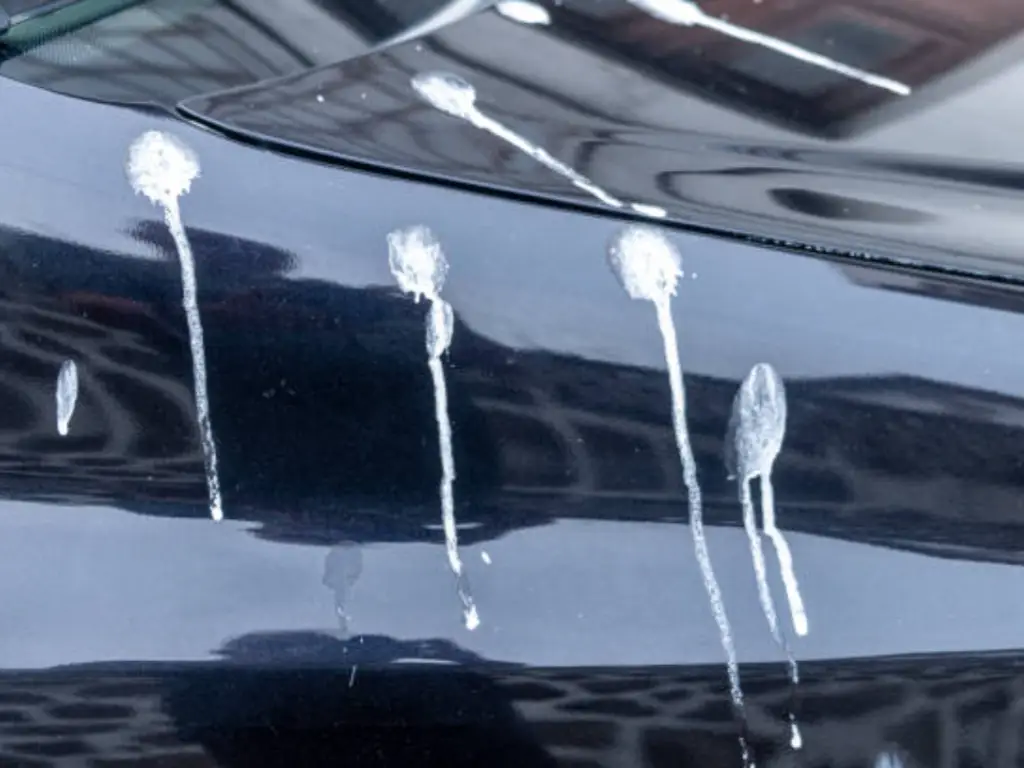
The threats are not only restricted to road gravel in 2026. City micro-dust, industrialized acid rain, and a growing intensity of UV rays courtesy of changing climatic patterns act as a constant abrasive and chemical solvent on the surface of your car. The bird droppings and tree sap, which are very acidic, may now cut into these softer clear coats in a few hours in the constant sunlight, leaving permanent scars. Moreover, understanding your car’s environment—from coastal salt air to industrial smog—is crucial, as these contemporary body panels are more vulnerable to UV degradation than in past generations.
The Resale Value Equation
Contemporary car consumers are better educated than ever. When you are ready to trade in or sell your car, the first thing an appraiser looks at is the quality of the paint job. A car with swirl marks, rock chips on the hood, or faded panels can see a valuation drop of 10% to 15%. In the high-end and EV markets, where aesthetics are tied to the perception of battery and mechanical care, reaching the car’s paint showroom standard is a powerful bargaining chip. Investing in best new car paint protection is not only a cost but a great way to manage your assets.
Evolution of Liquid Protection: From Traditional Wax to 2026 Nanotechnology
The kingdom of the “liquid” protection has long since overtaken the plain carnauba wax of the olden days. Nowadays, owners have to decide between conventional beauty and the advanced chemical durability of ceramic coatings.
Traditional Wax and Sealants: The DIY Entry Point
Even to the amateur who is fond of the rite of a Sunday morning bath, there remains a place of the classic hero of paint protection: car wax. Natural carnauba wax offers a “warm” look, however, most contemporary DIYers are now using synthetic polymers due to their long-lasting properties and the manner in which they can be used to enhance the car’s appearance. But in 2026, they are said to be “temporary” solutions. Even the best wax or a durable sealant needs frequent reapplication to keep the finish on the car, with a typical car paint sealant only extending the protection to 3-6 months.
Ceramic Coatings: The Industry Gold Standard
Ceramic finishes have been made the standard of serious car care. Unlike wax, which sits on top of the paint, a protective coating forms a semi-permanent chemical bond with the clear coat, creating a smooth finish that resists chemical stains.
- The 2026 Advantage: Modern coatings now feature “self-healing” properties under heat. Minor marring caused by the wash can literally vanish when the car is in the sun.
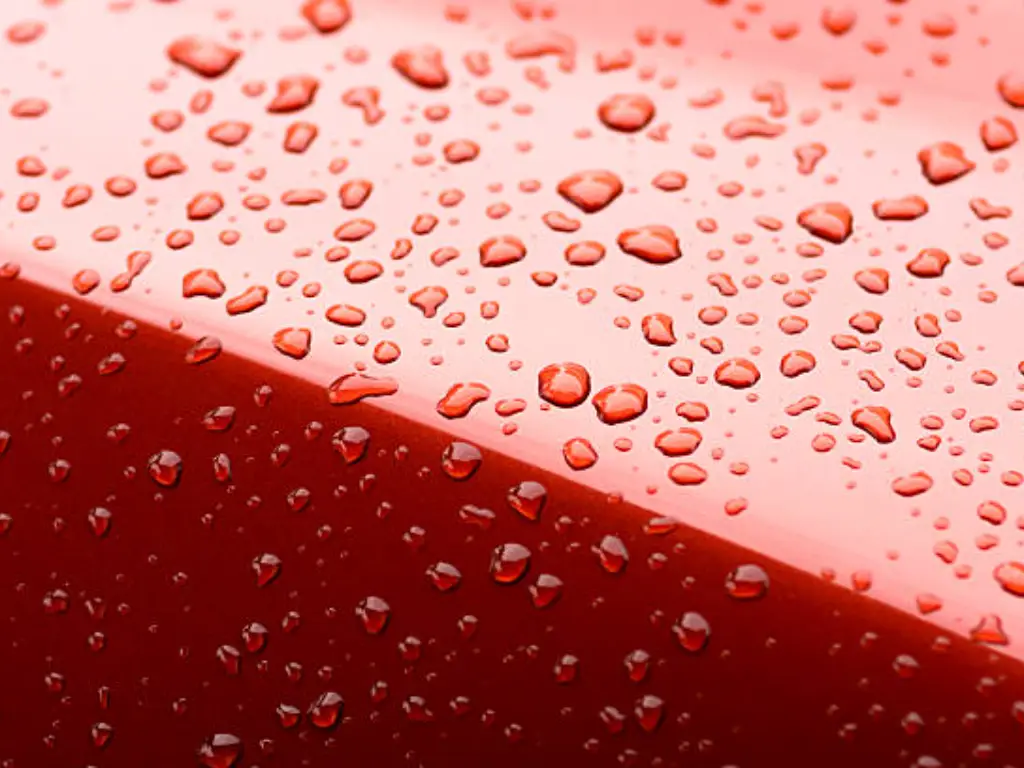
- Hydrophobicity: The primary draw is the “lotus effect”—water beads up and rolls off, taking dirt with it. This renders the car “self-cleaning” to some degree, which greatly decreases the routine maintenance load.
Graphene Coatings: Is the 2026 Tech Worth the Hype?
Graphene is the latest invention in liquid protection. Graphene coatings are being advertised to overcome the one major flaw of ceramics which is water spots. Graphene is a very conductive material, which reduces the temperature of the surface of the car, thus minerals do not “bake” into the finish. It is an ideal solution for individuals who have to face daily commutes in unfavorable conditions.
PPF: The Ultimate Shield Against Physical Damage
Although a ceramic coating is very resistant to chemicals, it is microscopic in nature. This is not enough to prevent a rock that is moving at high speed. This is where Paint Protection Film (PPF), or “clear bra,” is the only real physical car’s protective layer.
The Unique Defense of PPF
PPF is a durable shield made of high-grade thermoplastic polyurethane (TPU). Its primary advantage is impact resistance. When a rock hits a painted car, the shock is transferred directly to the weak paint. With PPF, the elastomer structure absorbs energy, and it is among the best ways of preventing chips.
Overcoming the “Side Effects”
Many owners hesitate to install PPF due to two legacy concerns: yellowing and paint damage upon removal.
- Will it turn yellow? The yellow color of traditional films was as a result of UV exposure and absorption of environmental pollutants.
- Will it damage the paint? Poor quality adhesives may bond too strongly, but modern hybrid solutions have eliminated the “paint pulling” effect.
The ClearPro Advantage: Professional Manufacturing & Innovation
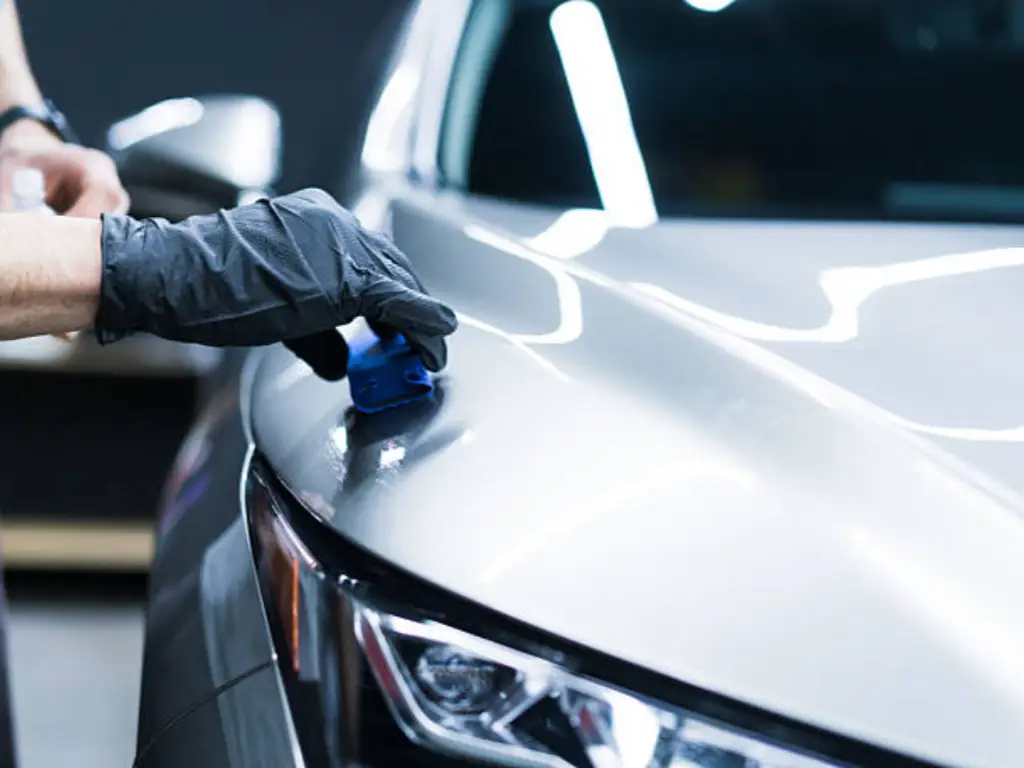
ClearPro has resolved these pain points as a new brand and professional producer of high-performance automotive films. Working in a 3,000-square-meter Class 1000 dust-free workshop, a standard of car care routine perfection, ClearPro guarantees that each roll is contaminated by microscopic elements.
Why ClearPro Redefines the Standard:
- Polyoptico™ Technology: ClearPro’s R&D team developed the Polyoptico™ nano-material cross-linked polymer structure. By incorporating inorganic metal compounds, this technology delivers a 60° gloss level of 95 GU (12-15 GU higher than standard films) and a haze index below 0.9%, ensuring absolute clarity. This precision engineering significantly enhances your car’s finish, creating a mirror-like depth that amplifies the car’s brilliance to a level that exceeds factory standards.
- Extreme Weather Resistance: ClearPro products are tested for 5,000 hours under UVB radiation, maintaining a ΔE < 1.0. This means the film is virtually immune to yellowing, even after 7-8 years of intense sun.
- The “Zero Residual” Promise: ClearPro will guarantee a secure bond that is not rigid with the assistance of the newest pressure-sensitive adhesives. When the film must be removed, 10 years later, it can be removed with ease and no traces are left on original factory paint.
- Unrivaled Durability: With a self-healing depth of >15 µm and a hydrophobic angle of ≥105° (certified by SGS), ClearPro provides a “showroom shine” that survives 50,000 km of real-world road testing.
- Manufacturing Power: ClearPro is not only a brand that simply “privately labels” films, but a manufacturer with ISO 9001, ISO 14001, and IATF 16949 certifications, providing a 10-year official e-warranty to car owners.
| Metric | Industry Standard PPF | ClearPro High-Performance PPF |
| Gloss Level (60°) | 80 – 83 GU | 95 GU |
| Haze Index | > 1.3% | < 0.9% |
| Hydrophobic Angle | 85° – 90° | ≥ 105° (SGS Certified) |
| Yellowing Resistance | ΔE < 2.0 | ΔE < 1.0 |
| Self-Healing Cycles | ~3,000 times | > 10,000 times |
| Warranty Scope | Basic 5 Years | 10 Year Full Coverage |
The Hybrid Strategy: High Protection on a Realistic Budget
The Hybrid Strategy is replacing the “all or nothing” approach in 2026, helping owners navigate protection options wisely.
The “Impact Zone” Architecture
The hybrid arrangement is most frequently used with Full Front (bumper, hood, fenders, mirrors, and headlights) PPF and high-grade Ceramic or Graphene Coating on the rest of the vertical and rear panels. This is a good idea because 90% of the physical damage happens in the front of the vehicle, whereas the rear and the roof are mostly affected by UV radiation and chemical fallout.
Tesla and EV Specific Considerations
Vehicles like the Tesla Model 3 or Model Y have unique aerodynamic profiles with very low, blunt front ends and “soft” paint. These cars are notorious “rock magnets.” The hybrid approach can also be used to expand the PPF to the “A-pillars” and the front of the roof, which are high-impact areas when driving at high speed on a motorway, to EV owners.
Color-Based Prioritization
- Black and Dark Colors: These colors are more heat absorbing and reveal all minor scratches and swirl marks. In the case of a dark car, PPF will be the choice since it will not be dulled with time as it heals itself.
- White and Silver Colors: These colors hide scratches well but show “iron fallout” and “black streaks” easily. In the case of these, the main concern is to have a high-quality hydrophobic coating so that dirt and minerals can be washed off without scrubbing, allowing you to restore the pristine look with minimal effort during every wash.
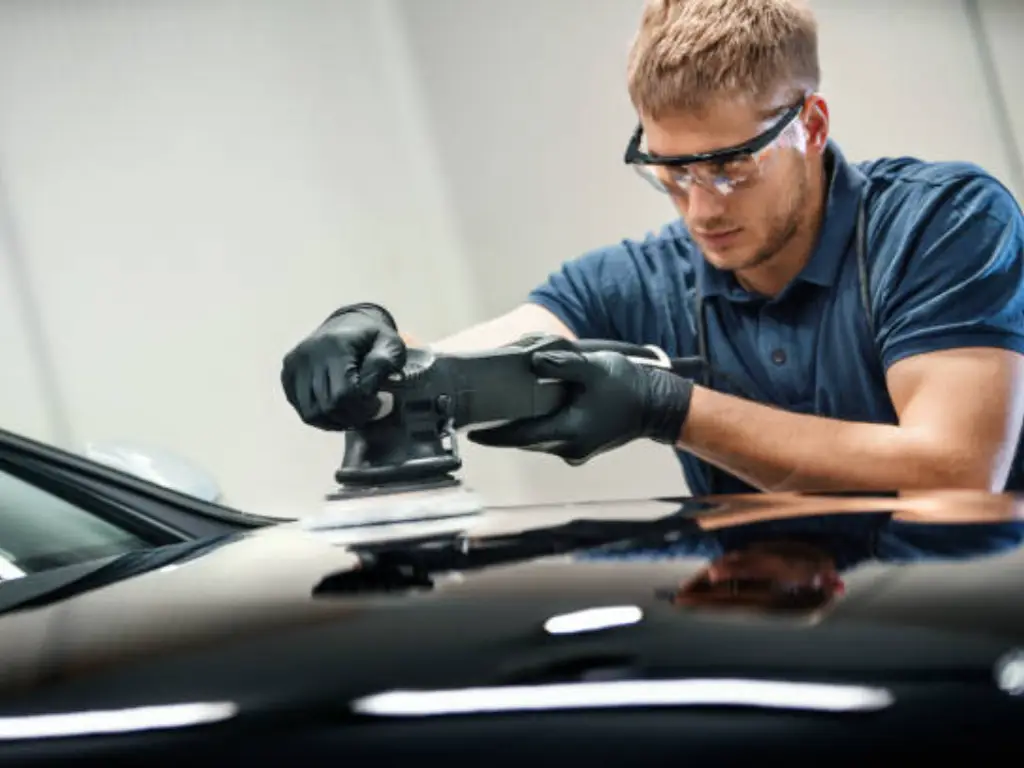
The Invisible Step: Why New Cars Need Paint Correction
Perhaps the most misunderstood part of the process is Paint Correction. Many owners ask: “Why does a brand-new car need polishing?” even when it seems to have a new car shine.
Factory and Transport Realities
The journey from the assembly line to your driveway is fraught with hazards. Cars are often transported via open rail cars (exposed to iron “rail dust”) or trucks (exposed to road salt). After arriving at the dealership, the cars are usually washed by dirty brushes that are used aggressively by the so-called “lot porters.” Under a high-intensity detailing light, a new car’s paint often reveals:
- Holograms: Caused by poor factory buffing.
- Pigtails: Circular scratches from orbital sanders used during PDI (Pre-Delivery Inspection).
- Industrial Fallout: Tiny metal particles embedded in the clear coat.
Bonding Science: Professional vs. DIY
One of the greatest errors is to apply a durable barrier on uncorrected paint. A professional will do a clay bar treatment and chemical decontamination before a machine polish. This flattens the clear coat, so the protective layer is 100% flat to bond with. Without this, even the best solution may look hazy.
Cost vs. Benefit: 2026 Pricing and Long-Term ROI
The concept of investing in paint protection is commonly considered through the prism of the initial cost, whereas in the 2026 automotive market, the more relevant indicator is the Total Cost of Ownership (TCO). With the skyrocketing prices of vehicles, the difference between a used car that is in good condition and one that is worn out has increased to a multi-thousand-dollar gap.
The 2026 Price Spectrum
The cost depends on the different protection methods and the car’s lifestyle.
| Protection Level | Initial Investment | Lifespan | Primary Benefit |
| DIY Wax/Sealant | $50 – $150 | 1–3 Months | Short-term gloss & hydrophobic effect |
| DIY Ceramic Kit | $150 – $300 | 6–12 Months | Enhanced chemical resistance for enthusiasts |
| Pro Ceramic Coating | $800 – $2,500 | 2–5 Years | Permanent chemical bond; “Self-cleaning” ease |
| Partial PPF (Front) | $1,500 – $3,500 | 7–10 Years | Heavy-duty defense for high-impact zones |
| Full Body PPF | $5,000 – $9,000 | 10+ Years | 360° armor; Total peace of mind |
The ROI Factor: Resale Value & Market Data
In 2026, transparency in vehicle history is at an all-time high. Buyers of used luxury cars and EVs are no longer just looking at the odometer; they are inspecting the car’s paint protection history.
- The 15% Premium: Recent 2026 industry surveys from major dealership networks indicate that vehicles with documented, professionally installed commitment of a full ceramic coating or PPF can command a resale premium of up to 15%. On a $60,000 SUV, that equates to a $9,000 difference in value—effectively covering the cost of the initial installation.
- The “Repaint” Penalty: Modern tri-coat and matte factory paints are notoriously difficult to match. One respray of a hood with too many rock chips may cost $1,500+ and up and usually leaves the car with a “Carfax” hit indicating that the car has had bodywork. This in itself can reduce trade-in deals by 10% since dealerships are afraid of concealed accident damage.
- Maintenance Savings: A ceramic-coated or PPF-wrapped car takes half the time to wash and does not need professional detailing services (buffing/polishing) which can cost $300-600 per session. These savings are “hidden” and can amount to almost $2,000 over five years.
The Financial Verdict
When you intend to retain your car within a period of less than 24 months, then a high-end coating is the most financially viable option. But in the case of those who are getting into a 5-to-10-year ownership cycle, Full or Partial PPF is the sole investment that yields a 100% dividend. It turns the exterior of a depreciating asset into a time capsule of “frozen” time, so that when you finally give the keys, you are bargaining with a position of complete aesthetic power.
Maintenance Mastery: Keeping That Showroom Shine Alive
Regular maintenance is the key to ensuring your car’s protective layer meets its 10-year life cycle.
The “Two-Bucket” Wash Protocol
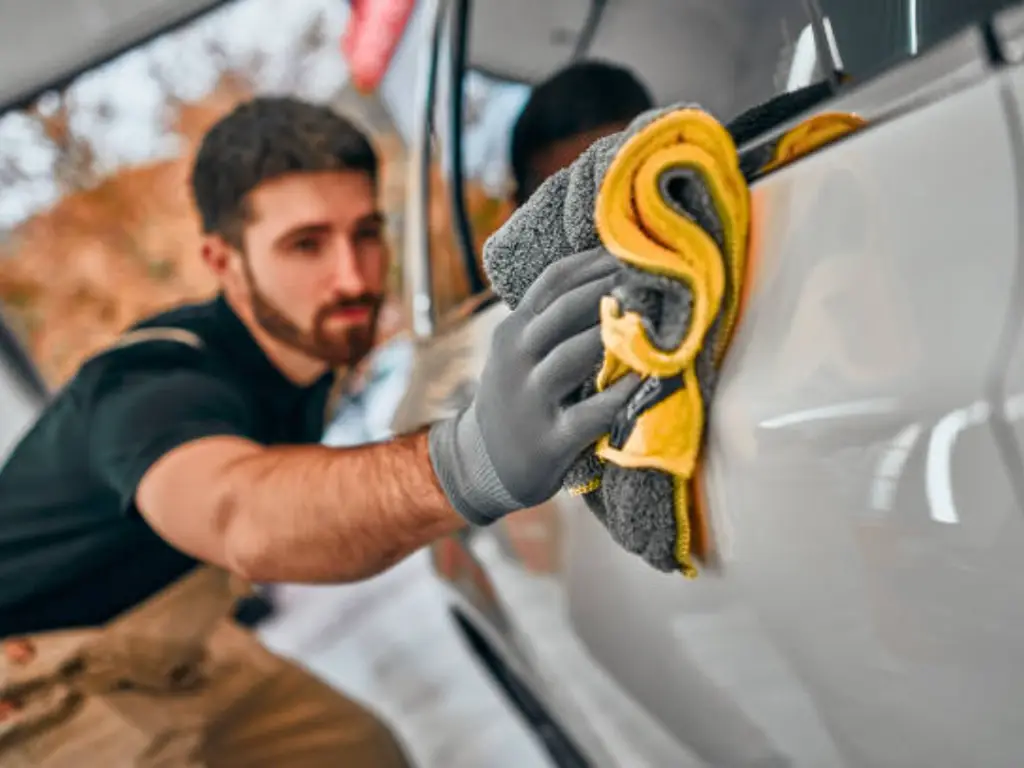
To prevent scratches, apply the two-bucket technique using a high-quality wash mitt and car wash soap. This ensures you never rub abrasive grit back onto the film.
- Bucket 1: pH-neutral automotive shampoo.
- Bucket 2: Clean rinse water.
- The Method: Wash a panel, rinse the mitt in the clean water to drop the dirt, then reload with soap. This ensures you never rub abrasive grit back onto the film or coating.
Chemical Awareness and Boosters
In 2026, many automatic car washes use ‘recycled water’ and high-pH chemicals that can strip the hydrophobic top coat of your protection. Always opt for ‘Touchless’ washes or, ideally, hand washing. Every 6 months, apply a Ceramic Booster or ‘Reload’ spray. These are easy spray-on products that restore the sacrificial layer with the effortless ease of sealants, so that water remains to bead aggressively and the surface remains to be ‘slick’ to the touch.
Daily Vigilance
The most important rule of maintenance is prompt removal of contaminants. When a bird attacks your car, do not wait. Use a premium microfiber towel and pH-neutral detail spray to eliminate acidity before it “bakes” into the surface. Using a high-quality car cover when parked for extended periods in harsh conditions is also a great way to minimize exposure. Choosing the right product for spot cleaning ensures you don’t compromise the underlying protection.
Conclusion: Securing Your Investment for the Road Ahead
A new car in 2026 is not only a mode of transportation but also a huge technological and financial investment. The “wait and see” strategy of protecting the paint is a gamble that is hardly ever won as factory paints get thinner and environmental issues become more serious. Whether you choose the chemical brilliance of a ceramic coating or the physical armor of a high-performance PPF, taking action in the first weeks of ownership is the only way to lock in that car’s shine and showroom finish and maximize your future resale value.
Ready to give your new vehicle the “ClearPro” clarity it deserves? Don’t let the first rock chip be your wake-up call. Visit our [Store Locator] today to find a certified professional installer near you, or explore our full range of [Next-Gen Protective Films] to customize your perfect defense strategy. Choose clarity—choose the ultimate peace of mind for the journey ahead.

 EN
EN  ES
ES  FR
FR  AR
AR