




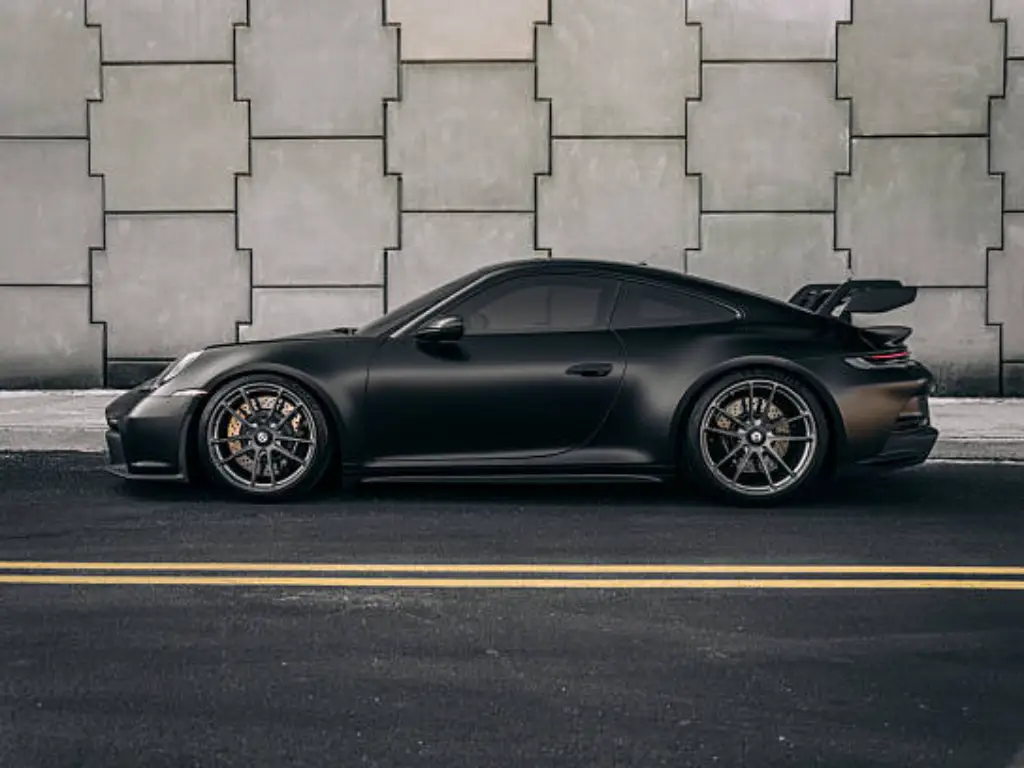
The matte black finish has been the ultimate representation of automotive aggression and low-key luxury. Whether it is a smooth sports coupe or a full-size SUV, it is one of the most popular aesthetic modifications in the automotive industry today to turn a glossy factory finish into a menacing, light-absorbing matte black. However, if you are wondering how much does it cost to wrap a car matte black, you should be aware of the economic truth of this change before you give your keys to a local store or begin placing orders on the internet to get rolls of vinyl.
The quote that you receive at a wrap shop is not a number that was plucked out of thin air. It is a calculated sum of material expenses, careful labor hours, vehicle complexity and geographic location. Moreover, the conventional matte black vinyl is associated with a plethora of maintenance facts that most installers will not disclose to you until your credit card is swiped.
In this comprehensive guide, we are going to answer exactly how much does it cost to wrap a car matte black, break down the real, unfiltered costs, expose the hidden fees that can blow up your budget, and explain why upgrading to advanced paint protection film (PPF) might be the only way to achieve a flawless, long-lasting stealth finish.
Average Matte Black Wrap Costs: The Quick Answer
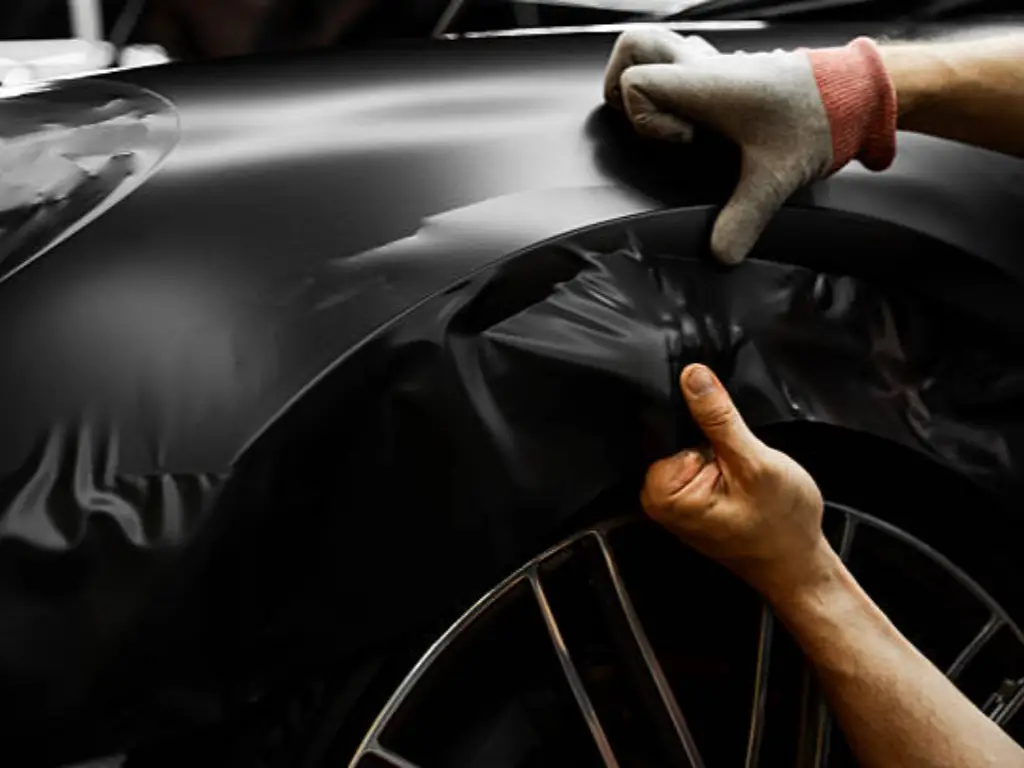
In case you want the straight up and down, here is the direct response: You can expect to spend between $2,000 and $6,000 or more on a full-body matte black vinyl wrap with professional installation. In the event that you are a courageous individual among car enthusiasts who is thinking of the DIY option, your expenses will be limited to materials and tools, which will reduce the overall to a far more manageable amount of $500 to $1,500.
Nevertheless, partial wraps are also popular among vehicle owners who want to have a custom appearance but do not want to spend the full-body cost. When you simply wish to wrap certain accents, like the roof, the hood, the wing mirrors, or chrome trims (also known as a “chrome delete”) then you can expect to pay between $300 and $1,000 depending on the difficulty of the panels.
Although these figures are a good starting point, the amount you will end up paying on the final invoice will depend on the size of your car, the complexity of the bodywork, and the type of materials you will use.
Matte Black Wrap Price Breakdown by Vehicle Size
The size of the vehicle is the most important baseline variable in the cost of a matte black wrap. Larger vehicles will need much more raw material and will need more labor hours to prepare, stretch and tuck the film.
To provide you with a better idea, the average professional costs and the approximate quantity of vinyl needed depending on the type of the vehicle are broken down as follows:
| Vehicle Category | Examples | Est. Material Needed (ft.) | Average Professional Cost |
| Coupes & Compact Sedans | Honda Civic, Ford Mustang, BMW 3 Series | 50 – 60 ft. | $2,000 – $3,000 |
| Mid-Size SUVs & Crossovers | Tesla Model Y, Jeep Grand Cherokee, BMW X5 | 60 – 75 ft. | $3,000 – $4,500 |
| Full-Size SUVs & Trucks | Ford F-150, Cadillac Escalade, Chevy Tahoe | 75 – 100 ft. | $4,000 – $6,000+ |
| Exotics & Supercars | Porsche 911, Lamborghini Huracan, Corvette C8 | 60 – 70 ft. | $5,000 – $8,000+ |
Note on Exotics: You might notice that exotics and supercars require roughly the same amount of material as a standard sedan, yet the price is drastically higher. This brings us to the most critical component of wrap pricing: the labor.
Labor vs. Materials: Where Your Money Actually Goes
Another myth that people who own cars have is that the vinyl material is extremely costly. As a matter of fact, when a shop charges you $3,500 to wrap your car, a quality vinyl wrap from such brands as 3M or Avery Dennison will only cost you about $600 – $800 of that bill.
Where do you spend the rest of your money? The 70/30 Rule. Materials make up about 20% to 30% of the cost, and the rest 70% to 80% is pure labor and shop overhead.
Covering a car is a very tedious and manual task. The vehicle should be thoroughly washed, chemically decontaminated and dried before a single inch of vinyl is applied. Then comes the disassembly. Professional installers have to be very careful when removing door handles, taillights, headlights, bumpers and trim pieces to make the wrap appear as a factory paint job.
In addition, the geometry of the vehicle is extremely complicated. The violent aerodynamics of a Porsche 911 or a Corvette C8 have deep recesses, sharp edges, and huge air intakes. It takes a master installer to stretch matte vinyl into these shapes, as the complexity of its curves dictates how difficult it is to apply without over-stretching it, tearing it or making it lift weeks later.
Lastly, labor rates are highly affected by regional economics. A high-rent wrap shop in the middle of Los Angeles or Miami with huge demand can have an effective labor rate of $150 to $200 per hour, and a typical job will be over $4500. On the other hand, a well-known store in a smaller suburb could cost $80 to $100 per hour, which would take the same job on the same car to the same place to within $2,500.
Hidden Costs: Paint Correction, Removal, and Door Jambs
When you look at a $3,000 quote, you might assume that covers everything. Nevertheless, the automotive wrap business is infamous for hidden expenses that are only disclosed when the car is literally in the shop. The three huge hidden costs that you need to budget here are:
- Paint Correction and Prep Work ($200 – $800+)
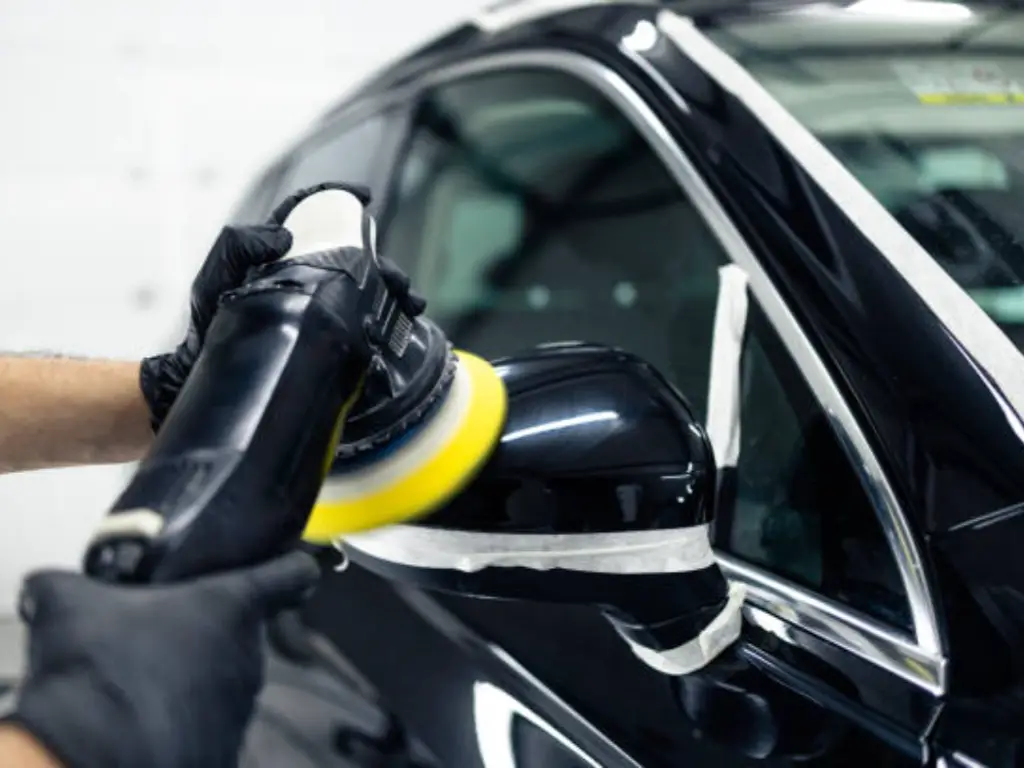
Vinyl wrap is extremely thin (typically between 3 and 4 mils). It is not a magic band-aid that conceals the damage of vehicles. Depending on the condition of the paint, when you have rock chips, deep scratches, peeling clear coat or dents in your original paint, the matte black vinyl will actually accentuate them, and they will appear as unsightly pimples beneath the surface. The reputable shops will not wrap over damaged paint without proper surface preparation first, which will incur a significant labor cost.
- Door Jambs and Interior Sills ($500 – $1,200+)
A standard wrap only covers the exterior painted surfaces of the car. When you open your doors, the original paint color on the inner door jambs and sills will still be visible. When you wrap a white car in matte black, when you open the door, you will see a blaring white frame. Door jamb wrapping is extremely challenging with the complicated hinges, wiring boots, and narrow spaces. You will need to spend at least $500 to $1000 additional to get the jambs wrapped to look smooth.
- Wrap Removal ($500 – $1,500+)
Vinyl wraps are temporary. The vinyl will start to degrade, crack or fade due to harsh sun exposure and damaging UV rays after 3 to 5 years. The process of removing an old wrap is a tedious task that requires hours of hard work, heat guns, and chemical adhesive removers. When the last wrap was cheap or left on too long, it may bake into the clear coat and may take days to remove and may cost you more than $1000 to get back to your original paint.
The Ugly Truth About Maintaining Matte Black Wraps
Wrap shops are happy to sell you the violent looks of a matte black car, but they do not train you in the nightmare of keeping it. The ugly reality is that the old fashioned matte black PVC vinyl is extremely weak and highly porous in comparison to factory clear coat.
First, you can never use an automatic car wash again. The harsh spinning brushes will instantly scratch the vinyl and create unwanted glossy finishes across your matte exterior. You have to wash the car by hand with the two-bucket technique and special matte soaps that do not have any waxes or gloss enhancers.
Second, matte black vinyl is a magnet for stains and environmental fallout. Since the surface is microscopically rough (that is what diffuses light to form the matte appearance), bird droppings, tree sap, dead bugs, and oily fingerprints seep into the pores of the vinyl. When you fail to wash a bird dropping off within a few hours, the acid will permanently cut into the wrap.
Worst of all, matte vinyl cannot be polished. If your factory paint gets a light scratch, a detailer can easily buff and polish it out. If a matte black wrap is scratched, then there is no recourse at all. Shining matte vinyl will only make the surface smooth, and you will be left with a shiny, ruined spot on your door. The only remedy for a scratched matte panel is to strip the entire panel and pay to have it re-wrapped.
Matte Vinyl vs. Matte Paint vs. Stealth PPF
Consumers usually have three avenues to follow when pursuing the stealth look. It is important to know the long-term holding costs of each in order to make an informed decision.
- Matte Factory Paint / Custom Repaint ($7,000 – $15,000): It is breathtakingly expensive to order a car with factory matte paint (such as the Magno paint used by Mercedes) or to commit to a permanent paint job like a high-end matte repaint. Although it appears amazing, it is here to stay. It restricts your resale value (because many customers are scared of matte paint), and in case of a fender bender, it is infamously hard to match a repainted matte panel with the rest of the car at body shops.
- Traditional Matte Vinyl Wrap ($2,000 – $6,000): As discussed, this is the most common route. It is comparatively cheap and 100% reversible. But it has zero protection against rock chips, provides only 3-5 years of use, and is highly prone to scratching and environmental staining.
- Stealth/Matte Paint Protection Film (PPF) ($5,000 – $8,000+): This is the modern, premium solution. Matte PPF is a polyurethane coating that is thick, transforms any glossy factory paint job into a rich matte finish, and serves as a highly durable protective layer. Unlike vinyl, PPF absorbs high-speed rock impacts, prevents chemical etching, and features self-healing properties that make scratches disappear with heat.
ClearPro Matte PPF: The Ultimate Upgrade
If you want the stealth look without the inherent flaws of traditional vinyl—like milky haze, heavy orange peel, and zero scratch resistance—upgrading to ClearPro Matte PPF is the definitive solution. Manufactured in a medical-grade Class 1000 cleanroom, ClearPro utilizes a proprietary Polyoptico™ cross-linked polymer coating to deliver the industry’s only “Zero Orange Peel” commitment (Ra ≤0.05 µm) for a flawlessly uniform, luxurious satin-matte finish.
Furthermore, ClearPro eliminates the maintenance nightmares of traditional matte wraps:
- Effortless Maintenance: Features an SGS-certified water contact angle of ≥105°. Oil, dirt, and water simply bead up and slide off.
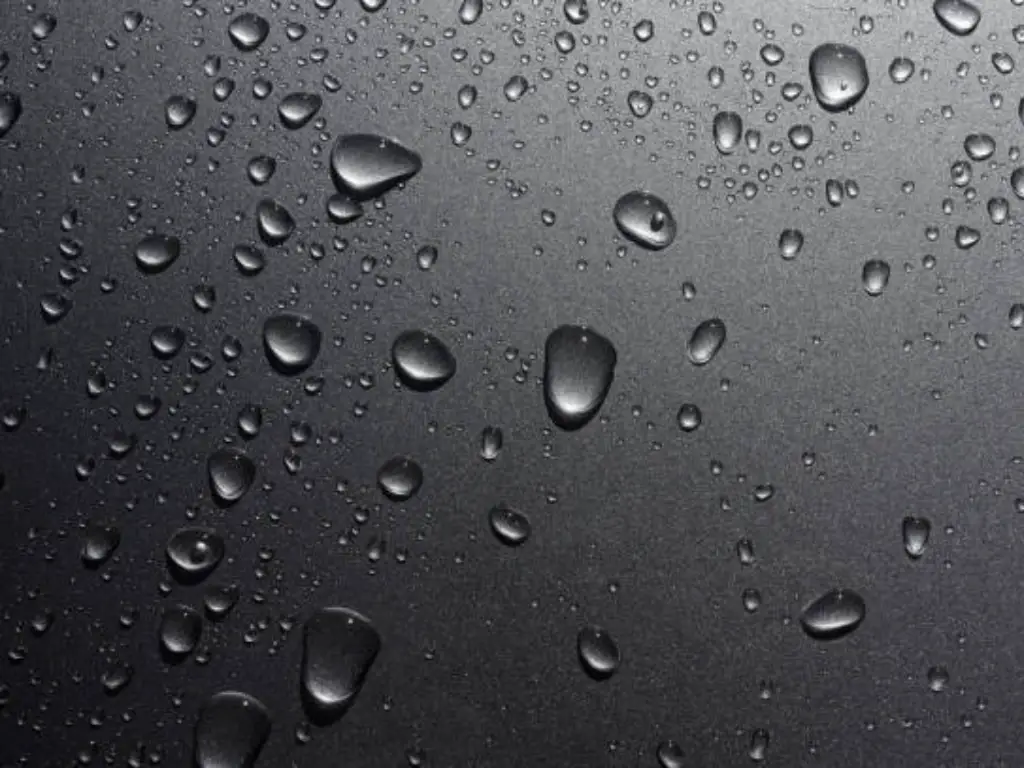
- Advanced Self-Healing: Minor scratches from daily driving vanish in seconds with heat. Our thermal recovery formula boasts a healing depth of >15 µm and retains over 90% efficiency even after 10,000 cycles.
- Extreme Durability: At 8 mils thick with a >400% elongation rate, it offers severe rock-chip protection. It is backed by a 10-year warranty against yellowing (ΔE<1.0) and validated by 50,000 km of extreme global road testing.
It is the ultimate choice for those who refuse to compromise between uncompromising aesthetics and true original paint protection.
Pro Shop vs. DIY: Is the Savings Worth It?
When a car owner is presented with a quote of $4,000 by a pro shop, it is easy to be tempted to purchase a roll of vinyl costing $600 online and attempt the task in his or her garage. When you do it yourself, you will have to add to your materials budget the cost of hidden tools: a good heat gun, squeegees, knifeless tape, microfiber towels, isopropyl alcohol, and special magnets, which will cost you about $150 to $300.
But is the massive financial saving worth the risk? For 90% of people, the answer is a resounding no.
Matte black is universally considered by installers to be the most unforgiving color and finish to work with. Gloss wraps can hide minor imperfections with their reflections, and complex patterns can camouflage slight stretch marks. Matte black hides nothing.
When a beginner pulls the vinyl even a little too far round a mirror or a bumper corner, the film will “blush” due to improper installation—it will become not a deep black, but a hazy permanent milky white or glossy streak. When you catch one grain of dirt or a strand of hair under the film, it will be as noticeable as a boulder on the smooth matte surface. Moreover, direct cutting on the paint of the car without extensive experience in using knifeless tape often leaves behind the scratches of the razor blade that are deep in the factory clear coat.
Is a Matte Black Car Wrap Worth the Investment?
In the end, the question of whether a matte black car wrap is a good investment or not is all up to you, your objectives, your financial means, and how much you care about the condition of your car.
When you are driving a cheap, old-fashioned car and just want to have a quick, aggressive new look for a car show season, a $2,500 traditional matte vinyl wrap at a local shop may be well-grounded. You take the headaches of maintenance as a price to the temporary cosmetic ecstasy.
But when you are driving a sports car of the day, a luxury SUV, or any other vehicle where retaining resale value is a concern, traditional vinyl is not a good investment. It has zero protection and the damage it can withstand in day to day driving will soon ruin the appearance of the car.
To the people who consider their cars as long-term investments, it is usually more mathematically and aesthetically correct to upgrade to high-performance matte Paint Protection Film (PPF). A high-end matte PPF not only provides an impeccable, texture-free stealth finish, but also provides physical protection against road debris. This will save your vehicle by removing the constant worry of scratching and keeping the factory paint under the car in its original state, which will save the underlying condition of the car and give it the highest resale value when you are finally ready to sell it.

 EN
EN  ES
ES  FR
FR  AR
AR