




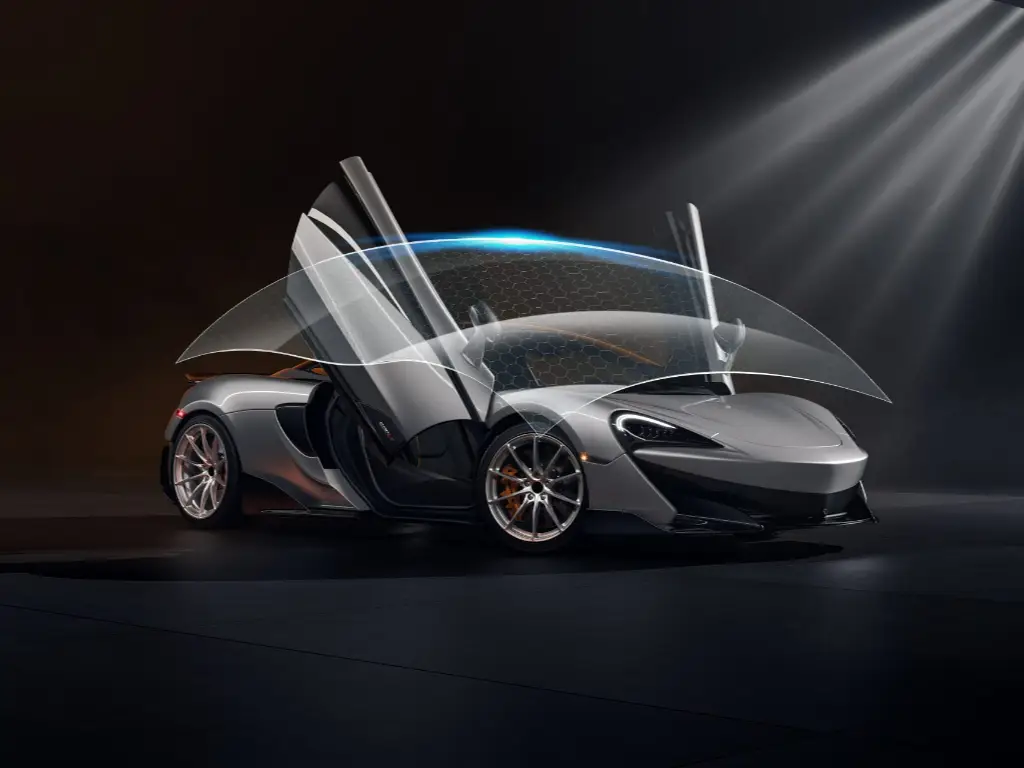
A devoted car enthusiast loves the sun while driving and showing off their detailed and polished vehicles, however the sun does have its disadvantages. The sun highlights the shimmering metallic flecks and brings out the sparkle of the clear coat, while on the contrary it’s glare points out the darkness of adversaries. It’s always easier to pinpoint things like rock chips, road salt, and minor scratches, but a cars uv aesthetic damage is just as important, if not more of a threat.
A common question in the world of detailing is, does the sun damage paint protection film?
Introduction: Does PPF Have UV Protection?
The answer is yes, the majority of the contemporary PPF provides UV protection, yet the truth is more subtle. The films are not made on an equal footing, the strength varies completely depending on the materials that are used, how the manufacturing is done, and the technology that has been incorporated into the layers of the film.
The photo-degradation of automotive surfaces is caused by UV radiation (UV-A and UV-B). It is a high-energy attack on your car outside. With time this exposure causes the damage to become cumulative which is usually irreversible:
- Fading: The vibrant pigments in your paint lose their saturation and depth, making the car look “washed out.”
- Oxidation: The clear coat breaks down, becoming chalky, hazy, and dull.
- Micro-Cracking: Micro-Cracking: The form of the paint forms microscopic cracks, which ultimately form peeling clear coats.
The high quality of PPF serves as a sacrificial shield. It blocks bad rays finding their way to the clear coat thereby slowing down the accumulated damage of the sun. This keeps the car shiny and preserves the color of the car many years compared to bare paint. But to be sure that you are really safe, you need to know how the PPF absorbs UV, the variations in materials, and how to pick a film, which does not yellow.
This paper will bring you close to the structure of PPF, how it works to shield UV rays, the comparison of UV resistance of various materials, and a roadmap on how to choose a film that will last long without getting opaque.
The Science Behind the Shield: How PPF Blocks UV Rays
In order to understand the importance of protecting the paint with a paint protection film in terms of its ability to block UV rays, it is worth visualizing the film as not a simple piece of plastic, but rather a sophisticated laminate of engineered substances. All the layers of PPF have a certain purpose. However, in the case of UV-protection, the inter-relationship between the Functional Top Coating and the Base Layer is the most significant.
The Anatomy of Protection: The 5-Layer Structure
The standard 5-layer structure of a high quality PPF is decomposed in the following table to identify where the strong defense occurs in reality:
| Layer Name | Position | Primary Function | UV Protection Role |
| 1. PET Protective Liner | Top (Removed) | Protects the coating before installation. | None (Discarded upon installation). |
| 2. Functional Top Coating | Exterior Surface | Self-healing swirl marks, stain resistance, hydrophobicity. | THE MAIN FORCE: Contains high concentrations of UV inhibitors, absorbers, and antioxidants. |
| 3. Base Film (TPU) | Middle Core | Impact resistance against road debris and physical damage, tensile strength, stretch. | Secondary: Provides the physical barrier, but relies on the top coat for chemical stability. |
| 4. Adhesive Layer | Bottom | Bonds film to vehicle paint; ensures optical clarity. | Support: Must be UV-stable to prevent the glue from yellowing or failing. |
| 5. Release Liner | Bottom (Removed) | Protects the adhesive before PPF installation. | None (Discarded upon installation). |
The “Main Force” of Defense: The Functional Top Coating
Consumers erroneously tend to think that it is the thickness of the film (the Base Layer) that prevents the UV. As a matter of fact, the Functional Top Coating, which is typically just 0.5 to 1.0 mil in thickness, is the hero of UV protection.
The coating is functional and chemically modified with UV Absorbers and HALS (Hindered Amine Light Stabilizers).
- UV Absorbers: These are molecules that are solar radiation sponges. They absorb the high-energy UV photons and transform them into harmless heat energy, and the rays are not able to reach the base layer and the paint of the car.
- Antioxidants: These prevent the oxidative degradation of the film itself.
Why the Coating is Critical:
When the functional coating is not of good quality or too porous then UV rays will go round it and directly strike the Base Layer. The Base Layer will speed up the aging process once it is exposed to direct sunlight and UV without the protection of the coating. Moreover, this wear surface determines the product features which you can see and touch: the gloss, the hydrophobic (water-beading) effect, and the stain resistance. Should the coating wear out because of low UV resistance, then the other features of the film are wasted and probably one has to apply the waxes or sealants more often to compensate.
Base Layer Battles: Why TPU Outperforms Others in UV Stability
Although it is the functional coating which becomes the target of the solar attack, the substrate, the Base Layer, is the foundation. When the foundation is not firm, the building falls.
Naturally, the base layer has extremely low and volatile UV shielding ability. Thus, the choice of the material type is the most important factor that affects the prevention of the so-called Yellowing phenomenon which afflicted early protective films. The Base Layer needs to be in absolute harmony with the coating; in case the underlying material is not chemically stable, then the whole top coating would not help in saving the material as it goes yellow and spoils the look of the vehicle.
Comparing the Contenders: PVC vs. TPH vs. TPU
Here is the comparison of the behavior of different base materials on exposure to UV in detail:
| Material Type | Composition | UV Resistance Mechanism | Lifespan under Sun | Verdict |
| PVC (TPO) | Polyvinyl Chloride | Poor. Relies heavily on weak stabilizers. The material structure breaks down rapidly under UV. | 1 – 2 Years | Obsolete. Turns yellow, cracks, and becomes brittle quickly. |
| TPH | PVC + Plasticizers | Moderate. An attempted upgrade to PVC. Uses plasticizers to mimic flexibility, but UV causes them to evaporate. | 2 – 3 Years | Budget Only. Will eventually yellow and lose gloss. |
| Aromatic TPU | Thermoplastic Polyurethane | Average. Strong physically, but contains benzene rings that oxidize and yellow when exposed to UV. | 3 – 5 Years | Risky. prone to “Yellow Car Syndrome.” |
| Aliphatic TPU | Aliphatic Polyurethane | Excellent. Chemically stable linear structure. Does not contain benzene rings, making it “invisible” to UV aging. | 7 – 10+ Years | The Gold Standard. |
The TPU Advantage
The obvious victor in this tussle is the aliphatic TPU (Thermoplastic Polyurethane). In contrast to PVC or Aromatic TPU, the Aliphatic TPU has a chemically inert molecular structure to UV radiation. It does not respond to the sun by altering color.
You simply add a high-quality Functional Top Coating (to receive the rays) and a high-quality Aliphatic TPU Base Layer (to stay firm against the rays that were left), and you will have a complete protection system. This is the synergy that makes premium PPF products provide 10 years or more warranty of not yellowing and the finish of the car remains in perfect condition.
Not all films offer the same level of UV resistance. To ensure long-term optical clarity without degradation, it is crucial to select formulations from [reputable PPF brands] that prioritize UV-stable adhesive layers.
Sourcing Guide: How to Select High-Quality PPF Materials
Based on the above analysis, it is apparent that the longevity of PPF is not magic but rather chemistry. The raw materials determine the outcome whether you are a B2B buyer seeking a potential supplier who is reliable to replenish your shop or you are a car owner seeking to safeguard a luxury item.
The thing is that, when choosing a supplier of the PPF or a brand, you should not pay attention to the marketing fluff, but should research the ingredients. The following is a list of what to consider:
Raw Material Quality: The DNA of the Film
The first question owners of vehicles should ask is the source of the base layer and the coating chemicals.
- The Base Layer: Be sure that the film is Aliphatic TPU. The best manufacturers usually get their TPU resin supplied by giants in the industry (such as Lubrizol of USA or Covestro of Germany). Such brands manufacture optical resins that are UV-resistant.
- The Coating: Inquire about the coating technology. Is it a dense coating? Is it a high quality UV inhibitor? The formula of the coating will specify the lifespan of the film to repel water and dirt in 1 year or in 10 years.
The Manufacturing & “Matching” Process
Quality ingredients aren’t everything; you also need a skilled chef. When it comes to outstanding protection, the relationship between the Base Layer and the Top Coating is crucial.
- Coating Integration: For high performance in adhesion and protection, the functional coating must be a perfect fit to the base layer. If the “matching” is poorly executed, the coating is <d>0u(0) to delaminate or develop an “orange-peel” structure.
- Precision Casting: Base films must be cast in conditions that are entirely isolated from as much dust as possible. Chop a little dust, patch out the fractal harmony that overall renders the dust.
Comprehensive Supplier Strength
To B2B buyers, the supplier’s reliability is equally important as the product’s reliability.
- Certifications: Check whether there is an SGS or ISO report for Xenon Arc or QUV testing (accelerated weathering tests). These tests replicate years of sun exposure in weeks.
- Supply Chain Stability: Does the supplier maintain a steady flow of raw materials? Fluctuations in batches of TPU can affect UV stabilization. You want a supplier with a dependable, consistent formula.
The ClearPro Advantage: Advanced Polyoptico™ & Premium Materials
With so many mixed options on the market, it’s hard to tell which film will actually last. ClearPro stands out because we’ve cracked the code on the most critical part of the film: the balance between the Base Layer and the Top Coating. We don’t just slap layers together; we engineer them to survive the real world.
Here is why ClearPro has the upper hand when it comes to UV protection:
Our Secret Weapon: Polyoptico™ Technology
ClearPro uses a proprietary coating process we call Polyoptico™.
- What it is: Think of this as a “molecular shield.” We use a special treatment involving inorganic metal compounds to make the surface structure incredibly dense and tightly cross-linked.
- The Benefit: By packing the surface molecules tighter, Polyoptico™ does two things. First, it creates a tough barrier that environmental nasties like acid rain and bird droppings can’t penetrate. Second—and this is huge for UV defense—it. It acts like a mirror, physically reflecting and scattering UV rays much better than standard coatings. It also “locks in” the UV inhibitors, stopping them from wearing off over time. This means the protection you get in Year 5 is just as strong as it was on Day 1.
Ingredients Matter: We Don’t Cut Corners
We refuse to compromise on the “DNA” of our film. If the ingredients aren’t the best, the film won’t last.
- Premium Aliphatic TPU: We source our Aliphatic TPU substrates from the world’s top chemical providers. This ensures the core of the film stays optically clear and refuses to turn yellow, providing a perfect, invisible canvas for your car’s surface.
- UV-Stable Adhesives: We use high-end pressure-sensitive adhesives (often sourced from Ashland). These are famous for being easy to install and, more importantly, having high UV stability. This means you won’t see ugly yellow glue lines down the road, and if you ever remove the film, it comes off clean without leaving a sticky mess.

We Watch Every Step
Great materials need great manufacturing. ClearPro offers Total Process Control. We monitor everything, from the initial plastic particles to the final precision coating. This eliminates the “bad batches” you often get with cheaper brands. When you choose ClearPro, you aren’t just buying plastic; you are choosing a scientifically verified shield against the elements, backed by rigorous testing.
Conclusion: Is PPF Worth It for Sun Protection?
So, does PPF actually protect against UV damage? Absolutely—but only if you pick the right one.
The sun is relentless, and UV damage adds up over time. While a generic film might stop rock chips, it often fails the test of time against the sun, eventually cracking or turning yellow itself. True protection only happens when you combine a high-performance coating (like ClearPro’s Polyoptico™) with a premium Aliphatic TPU base.
Investing in a high-quality protective layer isn’t just about stopping deep scratches; it’s about saving the chemical life of your paint layer. Think of it as permanent, high-gloss sunscreen. It keeps your car’s exterior looking like it just rolled out of the showroom, no matter how harsh the summer sun gets.
Plus, preserving your original paint through professional PPF installation—usually done after a nice paint correction—keeps the car safe and seriously boosts its resale value. Whether you hate seeing swirl marks from washing or just want the peace of mind that comes with a robust defense, choosing the right film gives you the best results.
Choose wisely, choose quality, and let ClearPro be the shield that keeps your investment brilliant for years to come. Learn more about our advanced protection technology at https://www.clearpro.com/.

 EN
EN  ES
ES  FR
FR  AR
AR