




Introduction: Breaking the Cycle of Damage
Finding a scratch on your car is a very inevitable hassle of owning a car. Of course, many drivers can be interested in finding the solution to how to repair car scratches, and wonder whether they can do it themselves or if they should involve a professional. Although this guide will show you how to identify and fix these blemishes, it is important to note one simple fact: the current modern automotive paint is delicate.
Although technology is there, your car is at a risk of road debris, accidents in the parking lot affecting the bumper, and environmental pollutants all the time. The old-fashioned way of dealing with scratches is purely reactive, you wait until the traffic accident happens and then you pay to have the paint repaired done. This leads to a vicious circle of Scratch, Repair, Repeat and it is time and money wasted as you end up depreciating the value of your vehicle’s factory finish.
This article suggests the implementation of active protection instead of reactive repair. We will also take you through professional techniques of diagnosing the depth of paint and what needs to be done to carry out DIY car scratch repair. Then the critical risks of doing it yourself will be analyzed. After that, we shall unveil the reason as to why the final solution is not correcting the paint but rather put down fresh Paint Protection Film (PPF) that will make sure your factory finish will never be damaged again.
Can I Polish It Myself? Diagnosing Severity with the Paint Structure
Before attempting any repair, you must understand the canvas you are working on. A correct diagnosis is the difference between a successful fix and a ruined paint job.
Before attempting any repair, you must understand the canvas you are working on. A correct diagnosis is the difference between a successful fix and a ruined paint job.
Understanding the Paint Layers
Car paint is a system that is multi-layered. The repair method depends on the knowledge of which layer is damaged.
- The Clear Coat: The upper transparent coating that is a source of gloss and UV protection. It is very fine (just under 40-50 microns). 90 percent of the minor scratches (swirls, light scuffs) are here.
- The Base Coat: The layer which has the specific paint color. When a scratch goes this far, it is useless polishing as the pigment is gone physically.
- The Primer: The adhesive layer, which is typically grey, white or black.
- The Metal/Body Panel: The lowest-level. Exposure here leads to rust.
Important to note: Although the light scratches in the clear coat can be polished, any damage that goes to the base coat or further necessitates the addition of new paint, not its removal.
Diagnostic Matrix: Inventory of Damage for Car Scratch Repair
Assess your car scratch on the following table. Another column detailing the Paint Protection Film (PPF) reaction to the same situation is also added, showing the importance of prevention.
Assess your scratch on the following table. Another column detailing the Paint Protection Film (PPF) reaction to the same situation is also added, and it shows the importance of prevention.
| Visual Phenomenon | Scratch Level | DIY Feasibility & Advice | Scenario: If You Had PPF Installed |
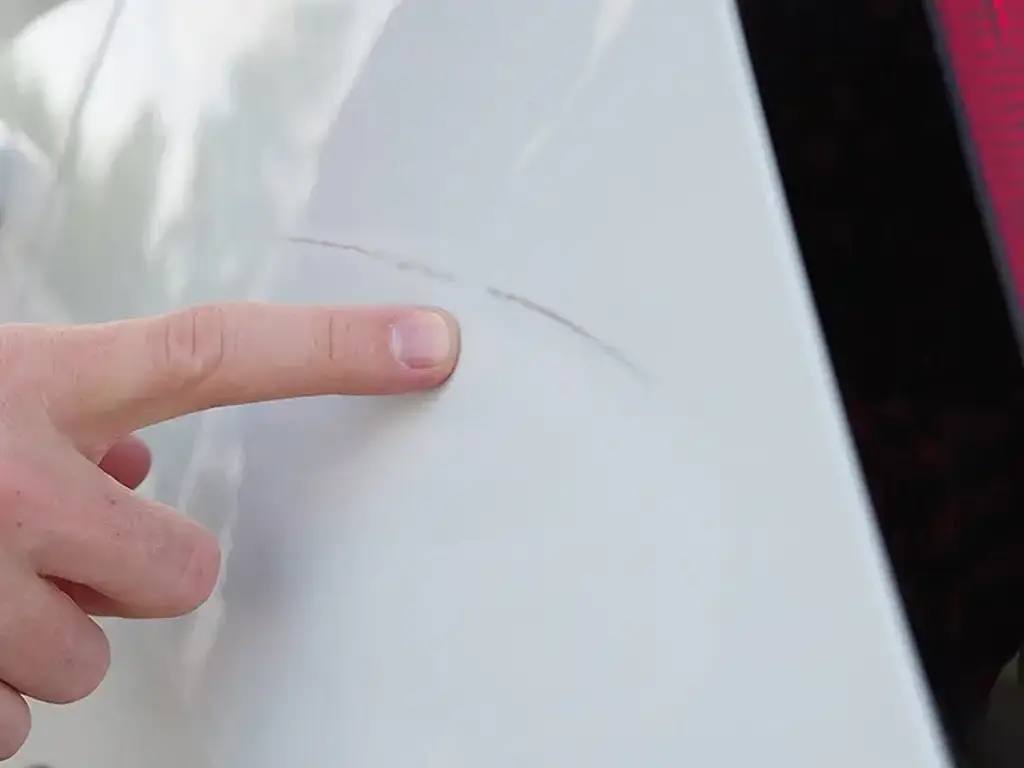
| White/Hazy line, disappears when sprayed with water. Fingernail glides smoothly. | Level 1: Clear Coat Scratch | High. Can be fixed with polishing compound. | Self-Healed. The scratch would disappear automatically with heat (sunlight/hot water). |
| Color looks dull/matte, fingernail catches slightly. | Level 2: Deep Clear Coat / Base Coat Touch | Medium/Low. Requires aggressive compound. High risk of burn-through. | Film Sacrificed. The film might scar, but the factory paint underneath remains perfect. |
| Grey, White, or Black line visible. Fingernail catches deeply. | Level 3: Primer Exposed | None. Requires touch-up paint or professional respray. | Paint Saved. The film likely absorbed the impact, preventing the need for a repaint. |
| Silver or Rust visible. | Level 4: Metal Exposed | None. Immediate body shop repair needed to prevent rust. | Damage Mitigated. The film would significantly reduce the severity of the impact. |
DIY Steps for Car Surface Scratches Repair
If your diagnosis confirms a Level 1 (Clear Coat) scratch, you can likely handle the repair process yourself. For these minor surface defects, the goal is to gently level the surrounding clear coat until it matches the depth of the scratch.
The Essential DIY Tool Kit for Car Scratches Repair
Using the right tools is critical. Avoid home remedies like toothpaste or baking soda paste, and do not try to fill scratches with clear nail polish or standard nail polish, as these are temporary hacks that look unprofessional in the painted area.
| Tool Category | Recommended Item | Purpose |
| Cleaning | Microfiber Towels | Residue removal. Use high GSM towels to prevent swirls. |
| Decontamination | Clay Bar & Lubricant | Removes embedded grit before polishing. |
| Correction | Rubbing Compound | The abrasive liquid that removes the defect. |
| Refining | Finishing Polish | Restores gloss and removes haze left by the compound. |
| Protection | Carnauba Wax or Sealant | Seals the “naked” paint after repair. |
Budget Estimate: A quality DIY scratch repair kit containing these essentials typically costs between $30 and $50.
The Step-by-Step Process for Car Scratches Repair
Step 1: Cleaning and Decontamination.
Wash the affected area thoroughly. Subsequently, apply lubricated clay bar to get rid of invisible bonded contaminants. Otherwise, you will make a mess of fresh scratches by scratching the dirt into the paint.
Step 2: Compound (The Cutting Phase)
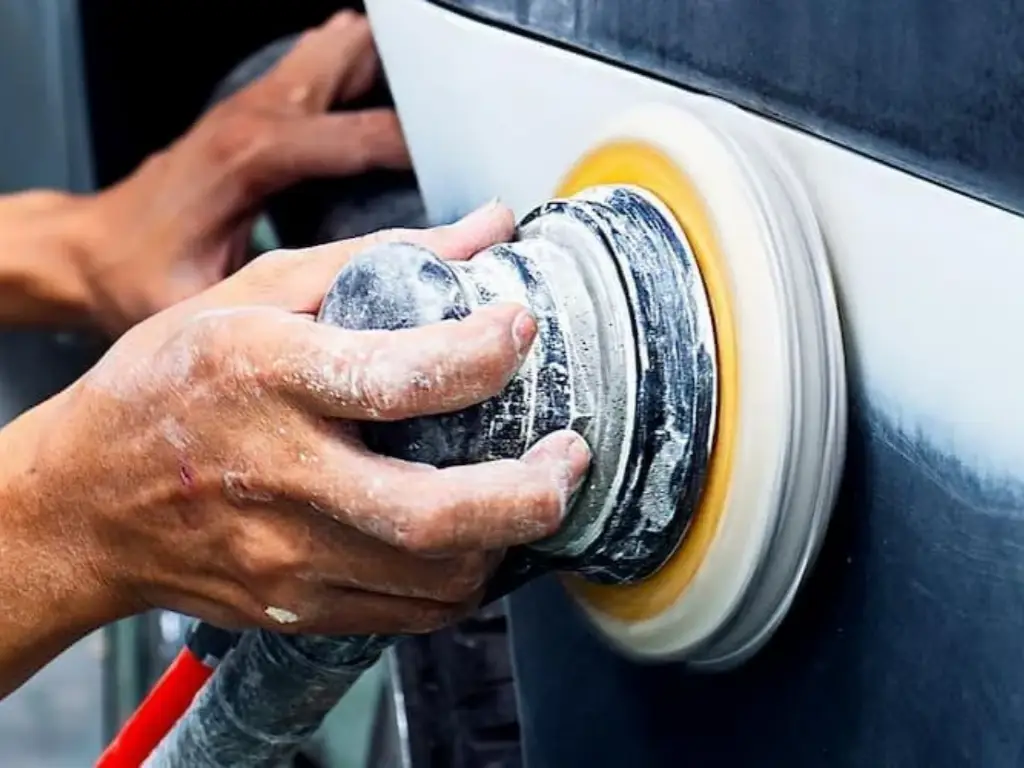
Rub a bit of rubbing compound on to a hard foam pad. The product should be rubbed into the scratch with a cross-hatching (up-and-down, then left-and-right) motion with a moderate amount of force. Do not rub in circles. Continue for 1-2 minutes in the damaged area.
Step 3: Wipe and Inspect
Clean residue from the surrounding area with a clean microfiber towel. Examine the place with a flashlight. In case the scratch is removed, but the paint is a bit opaque (hazy), then go to the next step.
Step 4: Polish and Protect
Replace to a less hard pad and the finishing polish. Do the same thing, but this time, the pressure should be light to restore the mirror-like shine. Lastly, a layer of wax or sealant has to be applied at once since polishing removes all earlier coats of paint protection. If you needed touch-up paint earlier, ensure you allowed sufficient drying time before this stage.
While traditional wax or sealants offer temporary chemical resistance, they cannot prevent future kinetic impacts or physical abrasion. To truly break the cycle of recurring scratches and permanent clear coat thinning, transitioning to a dedicated polyurethane barrier is the most technically sound strategy. You can review an audited list of [leading paint protection film manufacturers] to compare aliphatic TPU options that provide self-healing defense for your newly corrected paint.
Critical Risks of DIY Car Surface Scratches Repair
Although DIY repair sounds like the economical answer, it is full of pitfalls that will cost a person over $30 to repair a possible disastrous error worth over 500 dollars.
- The Cost of Misdiagnosis
You can always risk losing a clear coat accidentally when attempting to polish a deep scratch (Level 3) as shallow. There is no way to put color back into existence. Such an underestimation wastes funds in compounds and postpones the required paint to do the touch-up, which may lead to rusting.
- Operation damage: Secondary Damage.
Amateurs do not have a feeling of polishing. Common errors include:
- Burn-Through: You can remove all the clear coat by pressing or polishing on the edges (where the paint is the thinnest), leaving the dull base coat showing. This is irreversible.
- Holograms: When hand polishing, there is sometimes an irregular distribution of pressure and a trail of buffer is left behind or some ghost swirls can be seen through the sun.
- Dirty Pads: Dropping a pad and using it again puts dirt on the process that scratches the paint further than previously.
Furthermore, damage often isn’t limited to paint. You might also be dealing with a dent that requires paintless dent repair or traditional dent repair services. Other issues like wheel repair or headlight restoration (fixing a foggy headlight) often accompany scratches. Whether you are looking for a shop in a local area like Decatur or a major city, finding reliable dent repair can be difficult.
The damage of the clear coats is irreversible. After being polished off, it never grows back. When you wrongly interpret the depth or performance, you make an irreparable cosmetic error. The safest and least risky solution is to hand over the vehicle to a professional technician in case the attempt is to achieve a perfect result without the threat of hazing and burn-through.
The Hard Truth: Repairing Scratches Thins Your Paint
This is the trick that most body shops will not stress upon: Polishing does not refill a scratch, it takes away the paint surrounding the size of the damage.
Each time you do a car scratch repair job, you are hacking microns of the clear coat of your car. An average factory clear coat is about 40-50 microns in thickness; that is thinner than a typical Post-it note. Heavy compounding session has the capacity to take off 2-5 microns. This implies that a vehicle can not last through more than a few repairs of its lifetime without a clear coat being thin enough to withstand the UV rays and cause peeling and oxidation.
There is no use waiting until you get scratches before repairing them, as this is a losing game since you have to drive anyway. You require a conditioning layer to absorb the punishment so that your factory paint does not need to.
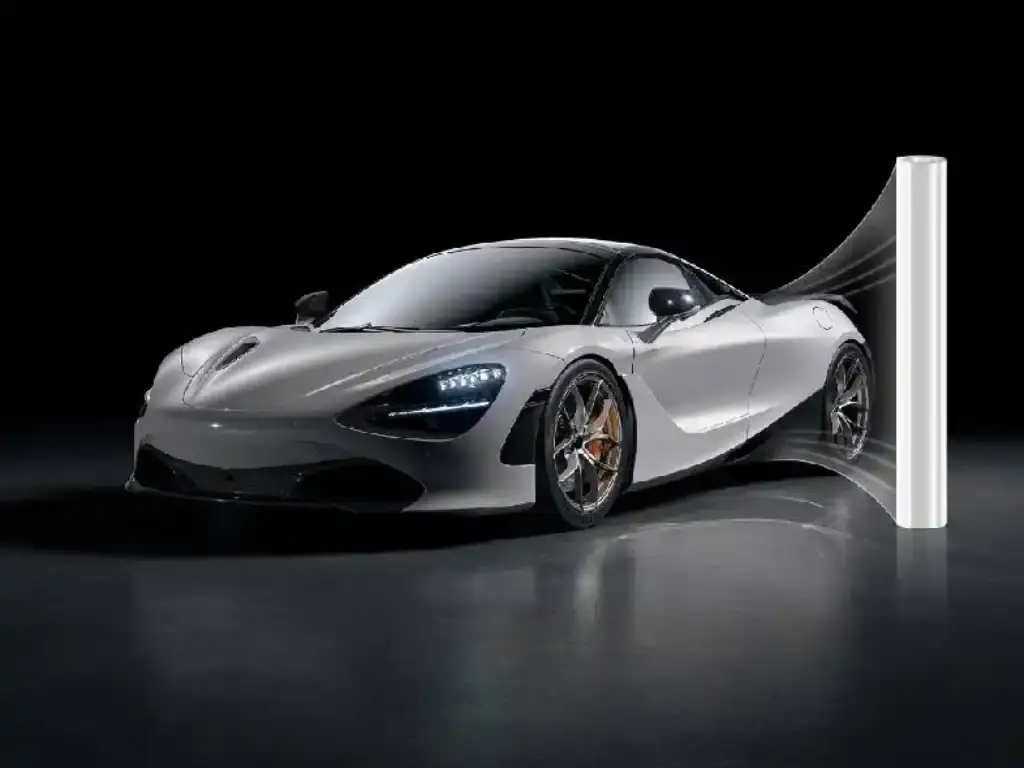
Paint Protection Film (PPF) plays this role. It is the initial line of defense. Imagine rubbing against a dry bush or an errant shopping cart. And, unPF, that scratches your clear coat. Having a high-quality PPF such as Clear Pro, your paint will be under the film absorbing the friction and will not be damaged.In order to really stop the cycle of destruction we must consider the technology that has made this permanent protection possible.
The Permanent Solution with Clear Pro PPF
When scratch repair causes to thin your paint, the only logical solution is to paint over the car in such a way that it can be replenished over and over again, without having to contact the actual surface of the car. Paint Protection Film (PPF) is this invisible armour- an easy to see, thermoplastic urethane film that is used to take the hits instead of your clear coat.
The PPF market is however complicated. The common problems with many generic films include a phenomenon known as orange peel (distortion of texture), yellowing as time passes as a result of UV exposure, or lack of self-healing ability. Herein lies the difference between Clear Pro and the rest. As a professional producer, we have created a solution that will change the idea of having a passive shield into an active intelligent defense system.

The Science of Healing: Polyoptico™ Technology
Normal PPF is capable of withstanding stone chips, but Clear Pro is better. Our own proprietary coating structure is called Polyoptico Technology. In comparison to generic type of coating applied on re-labeled market films, PolyopticoTM is an in-house formulation which aims at revising the durability and the aesthetic.
- The Micro-Structure: Nano-Material Cross Linked Polymer Polyoptico is a dense and well structured nano-material cross-linked polymer coating. Consider a microscopic net in which the molecules are closely combined but are flexible. Such peculiar alignment of the molecules gives the film a memory.
- The Self-Healing Mechanism It is this arrangement that is the secret of our high self-curing powers. Molecular bonds are not broken, when the film is scratched, they are just displaced. This is the effect of the heat, whether it is the sun, hot water or the warmth of the engine, which activates the memory of the polymer to spring the surface back to its original smooth appearance. There is no need to remove scratches on the film. You simply let them heal. This practically removes the requirement of scratching the car with the help of technology.
- Enhancement of Visual Appeal: Inorganic Metal Compounds Protection shouldn’t come at the expense of beauty. To fulfill our commitment to “Feel The New Clarity,” we incorporate transparent, high-gloss inorganic metal compounds into the formula. This optical engineering ensures the film is not just invisible; it enhances the depth and gloss of your paint, delivering a finish that is often clearer and more vibrant than the factory paint itself.
The Clear Pro Advantage: Supply Chain Mastery & 10-Year Promise
In the world of automotive protection, product quality is strictly determined by the manufacturing standard. Many brands are simply marketing companies that buy film from third parties. Clear Pro is the factory.
- IATF 16949 Certification & Supply Chain Mastery We don’t just meet standards; we set them. Clear Pro’s factory holds the IATF 16949 certification. This is the highest quality management standard in the global automotive supply chain—far stricter than ISO9001. What this means for you: It means our “Automated Precision Production” meets the rigorous demands of top-tier car manufacturers (OEMs). We control chemistry from the raw aliphatic TPU granules to the final pressure-sensitive adhesive. This vertical integration ensures every roll of film is free from the defects common in lower-tier products.
- Solving the “Bad Film” Nightmares Car owners often hesitate to install PPF due to horror stories about films turning yellow, bubbling, or leaving nasty glue residue (delaminating). Because we control the adhesive formulation and substrate technology at the source, we have solved these issues at the molecular level. Our films are engineered to remain invisible and removable without damaging your paint.
- The 10-Year Factory Promise We back our manufacturing excellence with a comprehensive 10-Year Warranty, supported by Electronic Quality Assurance. This warranty covers yellowing, cracking, fading, bubbling, and delamination. With Clear Pro, you aren’t just buying a film; you are securing a decade of industrial-grade peace of mind.
Conclusion: Go Beyond Car Scratch Repair and Protection.
We have begun this guide by discussing the stress of finding a scratch. Your diagnosis of the damage and the tools to carry out a DIY repair are now in your possession. But it is as much to preserve that freshly restored finish as to repair it.
You can lock in the perfection of your vehicle today instead of waiting till the next time you get a scratch. By installing Clear Pro PPF, you are enhancing your vehicle security. It is a solution that combines the self-healing power of Polyoptico Technology with the ground-breaking IATF 16949 certified manufacturing. This will guarantee that all your labor in repairing the paint is saved over the years to come.Repair and protect your value of your car, not only repair it but fortify it, and save it.
Feel The New Clarity. Visit https://www.clearpro.com/ to find the ultimate protection solution for your vehicle. For any inquiries, feel free to send us an email.

 EN
EN  ES
ES  FR
FR  AR
AR