




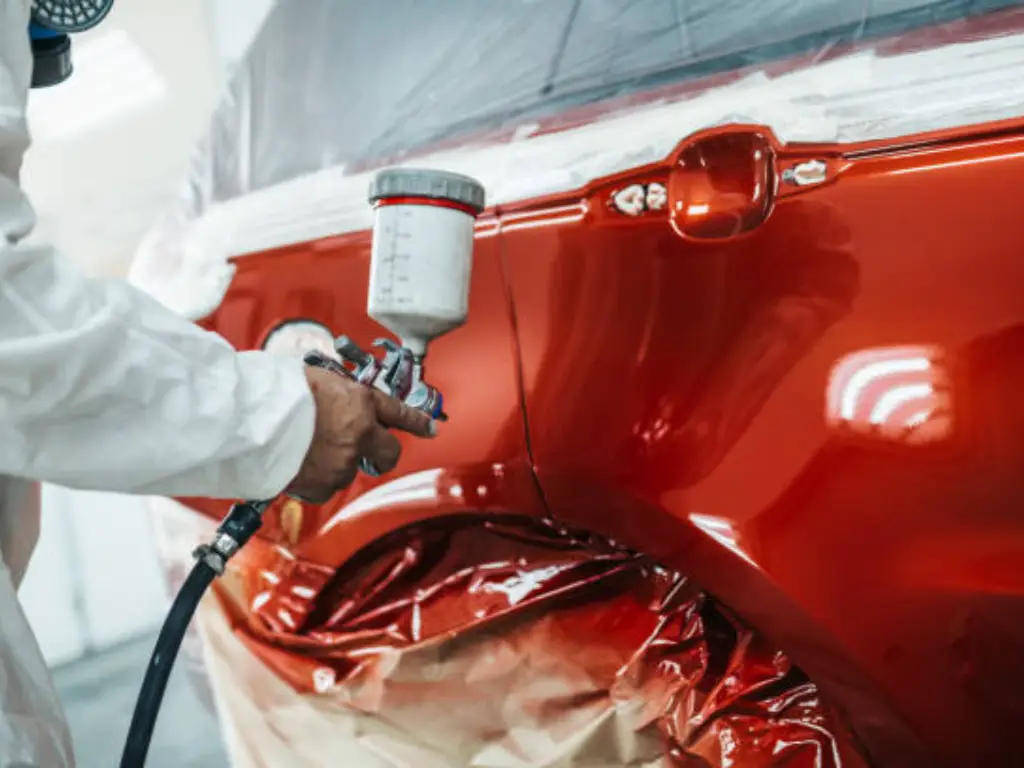
To the majority of vehicle owners, a scratch on the car is an emotional experience. It seems to be an intrusion into the aesthetic integrity of the machine, resulting in visible car paint damage. To the economically minded owner, however, a scratch is a much more specific thing: it is a direct depreciation of an asset.
The car industry is driven by the fact that entropy is unavoidable. The stones are thrown, the shopping carts are rolling, and the UV rays are weakening the chemical bonds. The conventional reaction to this harm is reactive: you wait till the paint damage is done, and then you compensate to undo it. However, the economics of car paint repair are often unfavored to the owner. The difference between a low-cost DIY repair and a professional restoration is a divide of cost, risk, and time.
In order to make a logical choice regarding your vehicle finish—whether it is a minor touch-up or a full paint job—you have to know how the damage works, how much repairs really cost and how prevention makes sense. It is not vanity, it is asset management.
Diagnosing the Damage: From Clear Coat to Deep Scratches
The cost of a repair can only be calculated after the severity of the liability has been determined. Not every dent or scratch is made equal. The current automotive paint systems are a laminate coating: a coating of zinc phosphate on the metal, an electro-coat (E-coat), a primer, a base coat (the paint color), and finally a clear coat.
Most of the surface imperfections are only found in the clear coat—the transparent layer of urethane or acrylic which covers the pigment. You do not require a consultant to tell you what to do, you require your fingernail.
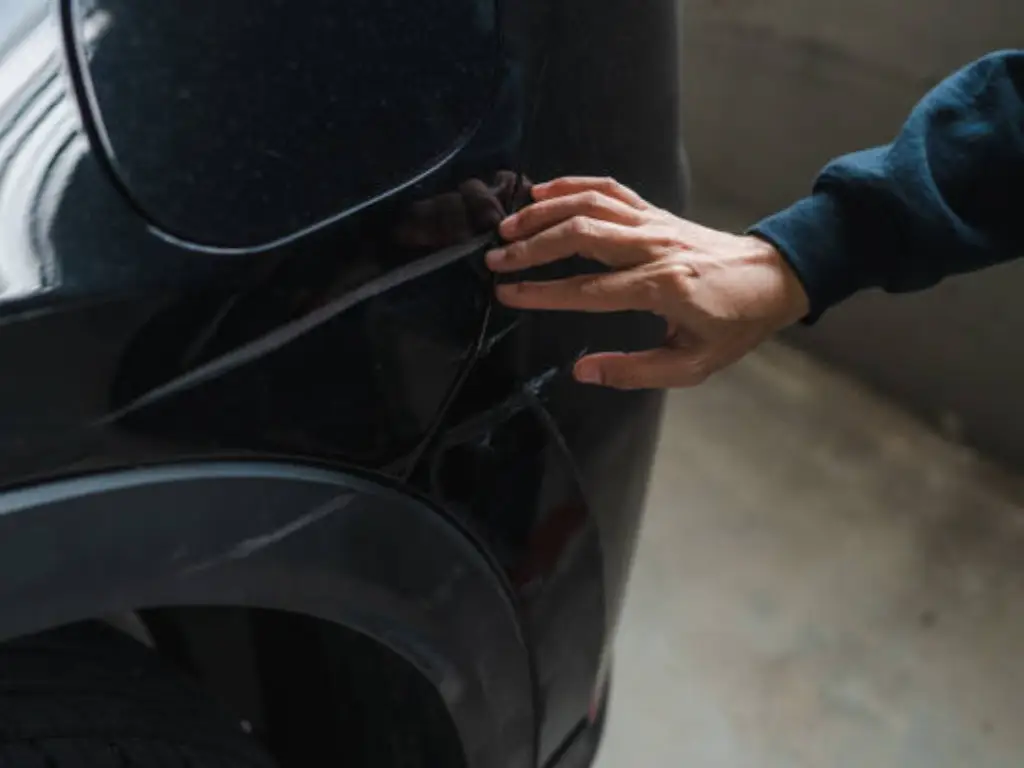
The Fingernail Test
Scratch your fingernail at right angles. In case your nail slides past the mark without catching, the damage is superficial. It is located at the upper microns of the clear coat. When your fingernail snags–even a little–you have pierced the clear coat. When you observe white (primer) or silver (bare metal) the structural integrity of the panel is impaired.
The Microscopic Reality
What is the significance of this difference? Due to the refraction of light. The reason a clear coat scratch is white is not that the pigment has been removed, but that the jagged edges of the scratch are scattering the light. To repair this, the common practice is to polish it off, that is, with abrasives, until the clear finish is even with the bottom of the scratch.
But when the base coat has been exposed, then there is no clear coat to level. You are no longer polishing; you are repainting. This is where a $50 issue turns into a one thousand dollar issue. The first step towards preventing unnecessary spending on products that cannot work physically is the identification of this boundary.
DIY vs. Professional Shop: Calculating Costs and Risks
The market place presents two different repair options: the low entry cost of DIY and the high overhead cost of professional service. The difference in the price is not random, but it is the difference between a cosmetic cover-up and a structural restoration.
The Professional Premium
Whether you are in Los Angeles, the San Fernando Valley, or Orange County, CA, the reality of professional labor costs remains high. Auto body shops in the surrounding area offering full collision repair services and auto painting have significant overhead. A good body shop does not just cover up a scratch. They take the panel out, take off the hardware, sand the whole surface, and spray in a filtered booth to ensure exceptional results.
The price of repainting a single panel—or even a localized bumper repair—will be between 500 and more than 1500. While many shops offer a free estimate, you are ultimately buying labor from technicians with years of experience, waste disposal that is EPA approved, and the overhead of a dust-eliminating facility. Some may offer paintless dent removal for minor issues, but for paint defects, you are paying for a premium service backed by extensive experience.
The DIY Equation
On the other hand, the price of a good DIY kit is between 50 and 100. The savings are enormous on paper. Nevertheless, this computation usually overlooks the shadow price of the repair:
1. Time: The time that is needed to do a proper repair is between 4-6 hours of work, and time to cure.
2. Tooling: Do you have a two-action polisher? High-grit wet sandpaper? Tack cloths?
3. Risk: There is a high likelihood of error. In case you strip the clear coat in the sanding process, the panel would need a professional respray, which would nullify your savings.
DIY makes sense in the case of a daily driver who has 100,000 miles. In the case of a luxury car or a newer model, a self-service repair is a risk to the resale value of the car. A car with a visible poor repair can actually depreciate the car more than the original scratch.
Essential Steps for Effective DIY Car Paint Repair
If you determine that the asset value warrants a DIY approach, execution must be clinical. The goal is not to add paint, but to integrate new chemistry with the old. The following protocol is the industry standard for non-professional repair.
- Decontamination
The area must be chemically clean. Dish soap is insufficient. Use a wax and grease remover to strip old sealants. Any lipid residue will prevent the new paint from bonding, leading to flaking later.
- Precision Sanding
Use 2000 to 3000-grit sandpaper soaked in soapy water. The objective is to smooth the jagged edges of the chip or scratch, not to widen the damage area. Sand until the surface is dull and tactilely smooth.
- Layering the Base Coat
Shake the paint pen or can thoroughly. Apply color to ultra-thin layers. Do not try to cover the damage in one pass. Dab or spray, let it dry for 15 minutes, and repeat until the color level matches the surrounding paint.
- The Clear Coat Application
This is the protective seal. Apply slightly clearer coat than seems necessary, as it will shrink when it cures. It should sit slightly proud (higher) than the surrounding surface.
- Leveling and Blending
Once cured (usually 24–48 hours), use 3000-grit paper to wet-sand the repair flush with the panel.
- Polishing
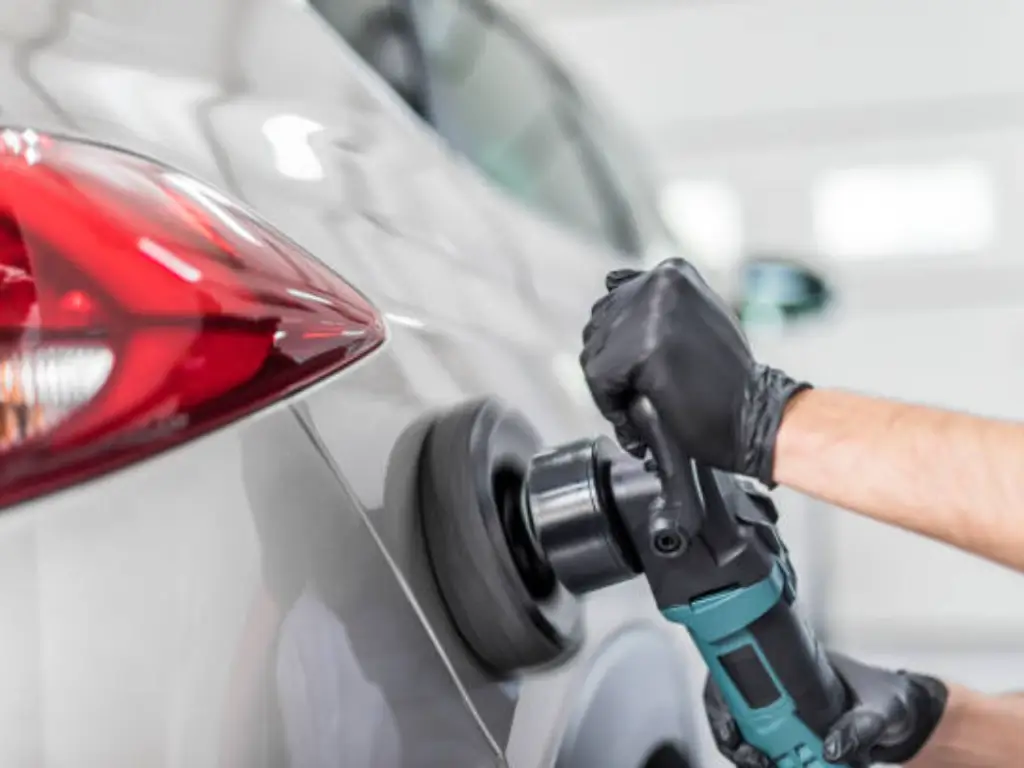
Sanding leaves the finish hazy. Use a rubbing compound followed by a finishing polish to restore the gloss. This step relies on friction and heat to rearrange the clear coat surface on a microscopic level.
Why DIY Repairs Fail: Common Pitfalls to Avoid
The above instructions outline the best case scenario. Garage repairs are not always like that. In the absence of a controlled environment and professional equipment, a number of failure points are statistically likely.
Color Mismatch
A starting point, not a guarantee, is the paint code of your car. Exposure to UV alters the color of your car. A Factory White repair kit has the color that your car used to have five years ago, not the one it has now. What you have is a patch that is different to the rest of the panel, and it immediately attracts the eye to the damage that you attempted to conceal.
The Orange Peel Effect
Electrostatically or using high-volume, low-pressure (HVLP) guns that spray paint into a fine mist, factory paint is applied. The propellant used in aerosol cans spits bigger droplets. The droplets form a rippled texture when they land, which is referred to as orange peel. This can be minimized by sanding, although a rattle can mirror finish, it is almost impossible to get to a factory-flat finish.
Rust Creep
This is the most perversest failure. When a deep scratch has oxidized the metal, even on a microscopic scale, and you then paint over it without turning the rust, the corrosion will proceed under the new paint. In six months, the paint will then blister and peel away, leaving a much bigger area of rot. This develops a cosmetic problem into structural cancer.
Beyond Repair: Preventing Future Damage with Paint Protection Film
In the event that the analysis above results in the finding that repair is expensive, risky and technically challenging, the rational economic action would be to avoid the necessity of repair altogether. This leads to Paint Protection Film (PPF).
In the past, the care of cars was reactive. You sponged off the dirt; you waxed to retard oxidation. PPF changes the paradigm to active maintenance of assets. It is a thermoplastic urethane coating that is used on the painted areas of a new or used car.
PFP is functionally a sacrificial layer. It is designed to take the kinetic energy of debris on the road, such as gravel, sand, salt, etc, which would otherwise chip the paint. As a rock collides with the film, the urethane compresses and spreads out the energy so that the clear coat is not hit.
Moreover, the contemporary PPF has elastomeric polymers enabling the surface to self-heal. The swirl marks and light scratches become rearranged back to a flat form when subjected to heat.You are no longer managing paint repair; you are managing a replaceable protective skin.
ClearPro Advantage: Engineering the World’s Most Durable PPF
Polyurethane films are not equally good in terms of ROI. There is saturation of the market with white label films that turn yellow after two years or do not stick. ClearPro does not differentiate itself based on marketing, but rather on its manufacturing capacity and measurable measures. We are not a rebranding agency, we are a manufacturer: we have a 3,000-square-meter Class 1000 cleanroom and IATF 16949 certification.
The technical analysis of why ClearPro is better than the market standard is as follows:
Advanced Coating Technology: Polyoptico™
The core failure point of standard PPF is the loss of clarity. ClearPro utilizes a proprietary Polyoptico™ coating—a dense, cross-linked arrangement of nano-materials.
- The Metric: Industry standard films typically achieve a 60° gloss reading of 80–83 GU (Gloss Units). ClearPro achieves 95 GU. This means the film is optically clearer and glossier than many factory clear coats.
- Visual Fidelity: We utilize a Zero Orange Peel manufacturing process. Under 500x magnification, ClearPro’s surface roughness (Ra) is ≤0.05 µm, compared to the competitor average of 0.15–0.25 µm. The result is an invisible shield that does not distort the reflection.
Lab-Tested Impact and Self-Healing
Durability is a function of chemistry, not thickness alone.
- Self-Healing Efficiency: In standardized testing using a copper brush to inflict damage, followed by 80°C heat exposure, ClearPro demonstrates a >90% recovery efficiency even after 10,000 cycles. Competitor films often degrade to 50% efficiency after just 3,000 cycles.
- Hydrophobicity: Our coating maintains a water contact angle of ≥105°. Crucially, after 2,000 hours of Xenon aging (simulating years of sun exposure), this angle remains above 100°, whereas competitors drop to 85°, losing their self-cleaning properties.
Direct-from-Manufacturer Value
Because ClearPro controls the entire supply chain—from the granular formulation to the coating line—we offer a 10-year warranty backed by electronic registration. We are not relying on a third-party supplier’s promise; we are relying on our own lab data and SGS/ISO certifications. This is the difference between buying a product and investing in an engineered solution.
Long-Term Value: Comparing Repair Costs to Protection Investment
| 5-Year Ownership Cost | Scenario A: Unprotected Car | Scenario B: ClearPro Protected |
| Initial Investment | $0 | $X,XXX (Installation) |
| Paint Maintenance (Wax/Polish) | ~$1,500 ($300/year) | $0 (Hydrophobic self-cleaning) |
| Likely Repair Costs | ~$1,200 (2 bumper resprays) | $0 (Film absorbs impact) |
| Resale Value Impact | -$2,000 (Depreciation due to wear) | +$1,000 (Pristine factory paint premium) |
| Net Financial Outcome | Loss of ~$4,700 | Asset Value Preserved |
Let us finalize the economic argument.
Scenario A: The Unprotected Vehicle
Over five years, a daily driver will accumulate stone chips on the hood and bumper, swirl marks from washing, and likely one or two deeper scratches from parking incidents.
- Cost of maintenance: Periodic polishing ($300/year).
- Cost of repair: One bumper respray ($600–$800).
- Depreciation: When you sell the vehicle, the worn paint and non-original respray work are detected by the buyer or dealer. The trade-in value drops by 10–15%.
Scenario B: The ClearPro Protected Vehicle
You pay an upfront capital cost for installation.
- Cost of maintenance: Reduced. The hydrophobic surface requires fewer washes and no waxing.
- Cost of repair: Zero. The film absorbs the abuse. If a panel is severely damaged, you replace the film section, not the paint.
- Asset Value: Upon resale, you peel the film off. The paint underneath is pristine, effectively “brand new” factory paint. This commands a premium in the used market.
The math is straightforward. Paint repair is a sunk cost—money spent to fix a depreciating asset. ClearPro PPF is capital protection—an investment that preserves the asset’s residual value.
Final Thoughts: Preserve Your Car’s Factory Finish
A search on car paint repair is a search of a solution to an already existing problem. Although there are DIY approaches, they are loaded with technical traps, and professional repair is overly costly as compared to the value that it recovers.
It is not the most effective way to become a master of sanding and mixing paint, but to make sure that you will not touch the paint at all. By covering the car with high performance engineering materials such as ClearPro, you break the circle of destruction and restoration. You are not a mere car owner anymore, you are a guardian of the original, factory perfection of the vehicle.
Ready to stop repairing and start protecting?
Discover the engineering behind ClearPro and find an authorized installer

 EN
EN  ES
ES  FR
FR  AR
AR