




Introduction to Tint Percentages
If you want to make your car look neat and custom, it is essential to choose the right tint. So, what does vlt mean for window tint? The term ‘visible light transmission’ (VLT) is used to categorize window tint levels, describing the degree of tinting, determining how much light can penetrate your vehicle’s windows. These percentages are important because they influence:
- The appearance of your vehicle.
- Your ability to see through the windows.
- Protection against harmful sun rays.
- How much heat enters the automobile.
In order for you to be able to make a good choice, you have to understand these car window tint percentages.This will ensure that yours is a stylish, functional and law-abiding car.
If you’re just starting out with window tint selection, it might seem complicated. There are different tint levels that range from light, barely changing how your window looks like, to those that are dark giving more privacy. Each level of tint has its own aim:
- Keep cool inside your car.
- To protect from dangerous UV radiation.
- To enhance confidentiality.
Thus understanding what every tint percentage gives makes up for selecting an appropriate one for your auto.
The Science Behind Tint Percentages: How They Work
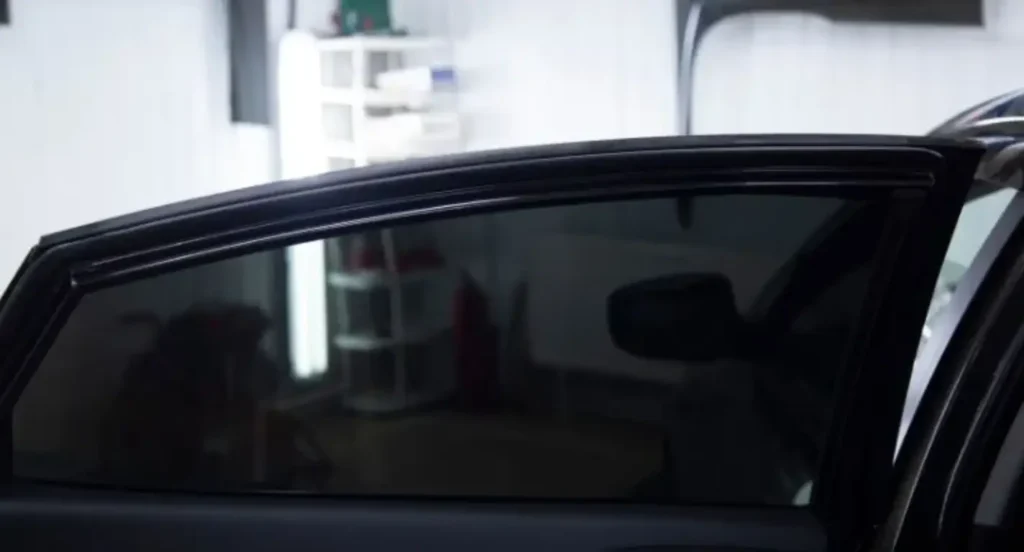
The manner in which car tint levels apply to car windows is not just a change in the appearance but has a practical use as well. Besides that, these tints are made from materials that regulate the amount of light allowed to pass through the windows.
The window films include various types of materials. These substances either absorb or reflect light. This achieves the preferred level of shading. The main components of these materials are dyes that absorb light which will in turn reduce glare and heat coming in too. There are also metal particles in the film that reflect sunlight and help to control heat while at the same time protecting against ultra violet rays. These two factors of absorption and reflection greatly reduce the amount of solar energy penetrating the automobile.
Protection from sun damage, amongst other things, revolves around these materials for the sake of comfort only. They also shield your skin from the sun by covering up to 99% of the dangerous UV rays. In addition, drivers are able to enjoy less glare, which means that they are able to see well and this does not strain their eyes, especially when the sun is out.
Visible Light Transmission (VLT) is the amount of light that can pass through. For instance, a 20 tint means that only( 20 percent tint)20% of the light can pass through the glass. That makes the windows very dark indeed.
In conclusion, a tint’s effectiveness depends on its material and how it responds to light. It is important to balance safety and visibility to meet the needs of elegance, well-being, and convenience in car transport.
State Regulations: Legal Tint Percentages Across the US
| State | Front Side Windows VLT | Rear Side Windows VLT | Rear Windshield VLT |
| Massachusetts | 35% | 35% | 35% |
| Michigan | Any, clear above 4″ | Any | Any |
| Minnesota | 50% | 50% | 50% |
| Mississippi | 28% | 28% | 28% |
| Missouri | 35% | Any | Any |
| Montana | 24% | 14% | 14% |
| Nebraska | 35% | 20% | 20% |
| Nevada | 35% | Any | Any |
🔍 Want to know what’s legal in your state? Check out our full Window Tint Percentages by State Guide.
Before you get any film for your car, it is important that you know about the legal situation concerning window tint percent and windshield tint percentages. There are variations in the regulations across the states and therefore the options of tints to be used on windows.
For example, New York has allowed 70% VLT on the front side windows so that it is easier to see at night while other states have it as low as 35% VLT to provide more privacy and protection from the sun.
In particular, one has to know the state laws before tinting the vehicle’s windows in any way. These rules are there mainly for safety purposes, which means that there should be enough light for the driver when it is dark or raining. Therefore, the analysis of these policies can contribute to the avoidance of possible fines’ occurrence in addition to ensuring that the car complies with all the safety standards that are present in each state of America.
What is Visible Light Transmission (VLT) in Window Tinting?
Before you tint your vehicle’s window, it is crucial that you have knowledge on the legal requirements on the tinting percentages. Your choice and how it is applied are greatly influenced by the laws that exist in relation to window tints and these differ a lot across the states. For instance, New York permits a very high 70% VLT on front side windows. This is meant to increase safety on the roads by admitting more light. However, some other states allow darker tints such as 35% VLT that offer more privacy and protection from the sun.
One should be aware of the particular state tint laws regarding tinting before proceeding to tint the car windows. Most of these laws are meant to enhance safety. They make sure that drivers are able to see them during night or during bad weather conditions. Knowledge of such rules could assist in avoiding penalties while at the same time making sure that one’s automobile is legal in the state safety laws.
Common levels of Car Tint Explained
Many tinting percentage choices are available to satisfy various drivers’ requirements. Below are the most common types:Below are the most common types:
70% VLT tint: This one is very thin and offers very little sun protection, but it does a good job of cutting out a lot of UV and infrared radiation. It is ideal for drivers who may wish to be shielded from UV without having a tinted view. For car windshields, this tint can be used as a light UV shield, especially in states where only a strip of tint is allowed on the front windshield.
50% VLT tint: Slightly darker choice that allows the driver to see the road ahead while at the same time protecting him from direct sunlight and UV radiation. On car windshields, this tint is ideal for those who need a balance of sunlight protection without reducing visibility too much, often applied as a top strip.
35% VLT tint: It is often referred to as the standard choice for privacy without compromising the vision at night. The tint that reduces the temperature inside a car is visible with this option. For car windshields, 35% VLT is a common choice for the top strip, providing moderate sun protection while maintaining clarity for driving.
20% VLT tint: This tint is mostly used on private cars and it provides high privacy and also minimizes glare. On the windshield, a 20% tint is typically used as a top strip to offer additional sun protection while ensuring that the driver still has good visibility.
15% VLT tint: known as ‘limo tint,’ is very dark and mainly used on passenger car back windows for privacy and protection. On car windshields, this level of tint is typically not allowed for the full windshield, but it can be used for the top strip in certain states for privacy and heat reduction.
5% VLT tint: This is the darkest available shade which only allows 5 percent tint of the light to pass through it. Most appropriate for hot regions and offers maximum protection from sun rays, thus ideal for people who want to be most protected from the sun. On car windshields, this tint is rarely used, except for the top strip, and is often restricted in many states due to visibility concerns.

Various tint percentages improve car comfort or passenger privacy. Consider these factors and legal provisions when choosing car tint percentages.
The Relationship Between Tint Cost and Darkness
A common misconception is that “darker tint (lower VLT) means better heat rejection and a higher price.” This is not necessarily true.
A window tint’s heat rejection performance and its final price are primarily determined by its material type, not its VLT (darkness).
- Dyed Film: The least expensive. It absorbs heat (least efficient) and is prone to fading and turning purple. A 5% VLT dyed film will be very dark but offer poor heat rejection.
- Carbon Film: The mid-range option. It reflects heat using carbon particles, contains no metal (won’t interfere with signals), and offers good heat rejection.
- Ceramic Film: The most expensive. It uses nano-ceramic particles to block infrared light (the primary source of heat) and offers the highest level of heat rejection, even at lighter VLTs.
The Key Takeaway: A 70% VLT (light-colored) ceramic film will block significantly more heat than a 5% VLT (dark-colored) dyed film—and will cost much more.
Therefore, after you select a VLT percentage to meet your privacy and legal needs, the more important decision is choosing the right “film type” to meet your heat rejection goals and budget.
Did you know darker tints like 5% or 10% cost more due to materials and technology, while lighter tints like 50% or 70% are more budget-friendly? Learn more in our article: “Window Tint Costs.”
Comparing Tint Percentages: 70% vs. 50% vs. 35%
Deciding between 70% VLT, 50% VLT, and 35% VLT may not be easy. Here’s how they compare:
70% VLT is barely visible, and it is perfect if you desire your car to remain as it is with the added feature of UV protection. It is ideal for those who desire a less conspicuous coloration but would like to have some measure of UV protection and a small amount of heat absorption.
Window films with 50% VLT are lightly tinted to allow privacy without impairing vision. They provide a perfect middle ground between films that reject more heat and UV than those with 70% shading and those offering better visibility than darker films.
35% VLT has always been one of the most preferred choices for drivers because it provides the best of both worlds – privacy and visibility. It reduces the amount of light that comes in by a large margin and also the heat while providing adequate level of privacy at night when driving.
The need for UV protection or car cooling drives the decision on window tints. Your driving habits and some average climate data in your region will help you make this decision.
A Visual Guide: Real-World Tint Percentage Comparisons
Text descriptions can be abstract. To help you truly understand how these percentages look and feel, this video demonstrates the real-world difference between various VLT levels from both inside and outside the car.
As you watch, pay close attention to:
- Interior Visibility (Night): How much the tint impacts the view out, especially in low-light conditions (a key safety factor).
- Exterior Privacy: How difficult it is to see inside the vehicle in bright daylight.
- Interior Visibility (Day): The level of clarity and glare reduction from the driver’s seat.
Benefits of Choosing the Right Tint Percentage
Besides the enhanced appearance of a sporty car or a more aggressive appearance, there are many advantages of choosing the right tint percentage for your car.
The first advantage is that it enhances the level of privacy. The higher the percentage of the tint, the less people are able to see what is inside the car, thus keeping your privacy intact as well as any property that you may have in the car.
Additionally, tint films reduce glare from the sun and other vehicles’ headlights, enhancing safety during night drives or long trips.
Health is highly prioritized. Window tints can block up to 99% of the sun’s harmful UV rays, known to cause skin cancer. High UV rejection tint not only helps you protect your skin but also helps you avoid fading in your car’s interior due to the solar heat.
As usual, a suitable film applied on the windows can regulate temperatures and decrease the use of air conditioners. Thus cutting on fuel expenses and therefore minimizing the emission of carbon dioxide. The right kind of tint color minimizes heat penetration during summer hence increasing efficiency and making the ride comfortable over long distances.
If you run an auto repair shop and want to offer your customers a wider range of window tint options, partnering with a trusted brand like ClearPro is a smart choice. ClearPro provides a full lineup of window tints, from 5% to 70% visible light transmission (VLT), allowing you to meet various needs while ensuring compliance with legal window tint percentage regulations.
Beyond our versatile product lines, ClearPro’s core strength lies in our absolute control over the manufacturing process. We are not just a brand; we are a high-performance automotive film manufacturer.
- Medical-Grade Production Environment Window tint is a precision optical product. We ensure flawless quality by manufacturing in a Class 1000 cleanroom—a rigorous standard typically reserved for electronics and medical production. This process, managed in a constant temperature and humidity environment, eliminates defects.
- Authoritative Global Certifications Our quality is verified by the world’s leading authorities. ClearPro has earned:
- IATF 16949 (Automotive industry production)
- ISO 9001 (Quality management)
- REACH & RoHS (EU environmental and safety compliance)
- SGS-verified aging test reports
Commitment to Our Partners For our distributors and partners, we provide comprehensive professional installation and sales training, computer-cutting support, and a reliable factory-direct warranty. We empower our partners to be true experts, ensuring every customer receives professional service.
With options for privacy, style, and legal compliance, you can help customers find the perfect tint for their needs and budget. By offering a reliable brand like ClearPro, known for durability and performance, you enhance customer satisfaction and build trust, which can lead to repeat business. Delivering high-quality, regulation-friendly tints positions your shop as a trusted expert while boosting customer loyalty.
Conclusion: Maximizing Benefits with Optimal Tint Percentages
Choosing the right car tint percentages involves more than just following state laws or achieving the right image. It is about improving your driving in many ways. Choosing the right window tint can actually reduce the amount of harmful rays, keep your car cool and provide privacy. The best tint percentage for your car varies based on fashion preference, daily usage, car color, and region.
Choose window tint percentages that look good, are easy to use, and comply with legal and safety requirements. Talk to an expert or look online to explore various window tint options. It is also necessary to update oneself with all the local laws so as to get the most out of putting tints on windows.
You may decide to use lighter tint so as to see well or darker one so as not to let sun burn you or maintain personal privacy. Just make sure that the choice is in line with both individual necessities and country rules that define acceptable results.
Is tint percentage a key factor in choosing window film? Understanding different types helps you decide smarter. Learn more by reading our article especially ceramic window tint: “https://www.clearpro.com/ceramic-tint-vs-regular-tint/” .
FAQ
1. Is 5% tint too dark for night driving?
Yes, to a lot of drivers, it is imperative that they apply 5 percent tint commonly known as “limo tint,” according to some, because that would really impede visibility at nights. This incredibly low level of visible light transmission (VLT) only lets 5 percent of light through the windows this can often pose a problem because one cannot see obstacles, walkers, or road signs when there is not a lot of light. Although it guarantees maximum privacy and protection against sun during the day, it can contribute to safety hazard at night in a dark neighborhood.
2. Can people see inside a car with 20% tint?
When there is plenty of light during the day, the 20 percent tint will provide enough amount of privacy that it is very hard to make out what is happening inside the car. The tint can only permit 20 per cent of visible light to get into the interior and this effectively darkens the windows on an outside view. Nevertheless, in special conditions of illumination, certain degree of visibility inside the car can be provided, e.g., when a really powerful light source is sent in the car at night. Although 20 percent blinds are the common selection of the people who like a clean exclusive appearance, they do not make the interior totally unseen and there might be legal policies in various localities related to the amount of transparency of windows.
3. Does a lower tint percentage block more heat?
Not necessarily. Although the low percentages of tint absorb more visible light and can help in some heat deflection, the percentage of tint cannot perform the extent of heat rejection but the type of the window film. High performance ceramic or metalized films can even block a good deal of infrared and UV radiation at higher VLTs, such as 50%, or 70%, but do not cause the windows to be too dark.
4. What’s a good tint percentage for windshield ?
A good tint percentage for a windshield is typically around 70% VLT or higher. This level allows most visible light through while reducing glare and UV exposure. Many states restrict windshield tint to the top few inches, so always check local laws before applying any tint.
5. What is the legal window tint percentage in most states?
The legal window tint percentage varies by state and window location. For example, many states require at least 35% visible light transmission (VLT) for front-side windows, while rear-side and back windows often allow darker tints, sometimes as low as 20% or even 5%. Always check your local laws to ensure compliance, as using a tint below the legal percentage can result in fines or failed inspections.
6. What’s the difference between 35% tint vs 20% tint?
The difference between 35% tint vs 20% tint lies in how much visible light the film allows through. A 35% tint lets 35% of light in, offering moderate privacy while maintaining good visibility, especially at night. On the other hand, a 20% tint provides much darker coverage, offering more privacy but slightly reducing visibility in low-light conditions. While 20% tint is popular for its sleek look, ensure it complies with your state’s legal window tint percentage regulations.
7. What does VLT percentage mean when choosing window tint?
VLT percentage stands for visible light transmission percentage, which indicates the amount of light that can pass through a window tint. For example, a 50% VLT tint allows 50% of sunlight through, making it lighter, while a 20% VLT tint only lets in 20%, making it much darker. Understanding VLT is crucial to choosing a tint that meets both your preferences and the legal window tint percentage in your area.
8. How does 50 tint vs no tint affect your car?
Comparing 50 tint vs no tint, a 50% tint provides a subtle reduction in glare and heat while maintaining a mostly clear view. It’s ideal for drivers looking for minimal darkening while still gaining UV protection. In contrast, no tint offers no protection from heat, UV rays, or glare, which can increase interior wear and discomfort during sunny days. A 50% tint is often a legal and practical choice for many car owners looking to balance functionality and style.
9. Can I use a 20% tint on my car legally?
Whether you can use a 20% tint on your car legally depends on your state’s legal window tint percentage rules. Some states allow 20% VLT on rear-side or back windows, but front-side windows typically require lighter tints, such as 35% or more. Always confirm local regulations to avoid fines and ensure your car meets inspection requirements. For a balance of privacy and compliance, consult a professional installer who knows state laws.

 EN
EN  ES
ES  FR
FR  AR
AR