




How Much Does Full PPF Cost? A Complete Pricing and ROI Guide
You have probably heard the term Paint Protection Film (PPF) recently, particularly when you have just bought a new car, particularly a luxury sedan, a high-performance sports car, or one of the highly demanded luxury cars. You are aware that it is the ultimate protection against stone chips, scratches, and environmental paint damage. However, when you begin to call local detailing shops to get quotes, the figures are shocking.
Protecting vehicles is a significant investment and there is usually no transparency in this sector. We will de-numbify the real figures in this comprehensive guide, we will tell you where your money is actually going, we will compute the long-term return on investment (ROI) and we will demonstrate how you can be sure that you are getting the absolute best value of your hard-earned money to make an informed decision.
Average Full PPF Cost: What to Expect in 2026
Let us cut right to the chase and address the most pressing question on your mind regarding the full car ppf cost: In 2026, you can expect a high-quality full-vehicle PPF installation to cost anywhere between $5,000 and $10,000+.
In the case of hypercars or highly complicated custom work with special matte or color-infused finishes, the cost of ppf can easily reach up to $12,000 or higher.
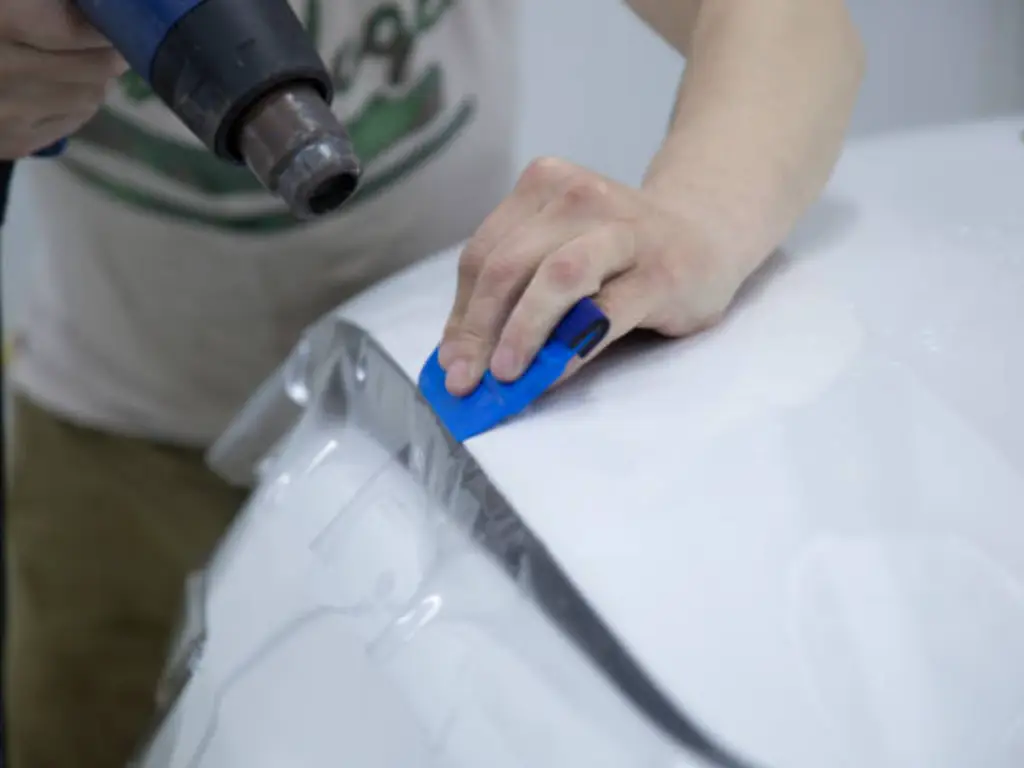
It is quite normal that you are feeling a little sticker shock at the moment. It is hard to believe that one can spend five figures on a transparent film. It is however important to note that a full ppf cost is not just for a “sticker” that you stick to your car. The overall paint protection film cost reflects a very detailed, labor-intensive process that requires surgical accuracy, high-quality materials, and days of hard work by highly trained technicians.
The first quote is merely a general foundation. Then we will draw the curtain aside and demonstrate to you just what drives that price up or down, and why you will regret spending money on cheap stuff in the future.
Key Factors That Influence Your PPF Installation Price
When you find a difference in price of several thousand dollars between two cars, it is not usually by chance. The full car ppf cost is dictated by three primary variables: vehicle type, material quality, and regional labor rates.
- Vehicle Complexity and Body Style (The Labor Factor): Imagine trying to seamlessly wrap a piece of flat, rigid paper around a bowling ball without any creases. Now imagine doing that with a highly adhesive, thick polymer film on a car bumper. The intricacy of your body panels and your overall vehicle size is the largest factor in the time of installation, and consequently, labor expenses.
The Simple Canvas: A typical commuter car, such as a Toyota Corolla or a Tesla Model 3, has rather smooth and sweeping lines and flat surfaces. These vehicles are easy to install and less time and tension are needed by installers.
The Complex Beast: Now, picture a Chevrolet Corvette C8 or a Porsche 911 GT3 RS. These cars have aggressive aerodynamic designs, deep air intakes, sharp body lines and huge spoilers. To apply PPF to these complex shapes, hours of careful heating, stretching, and special trimming are needed to make sure that the film is applied without lifting with time. The more difficult it is to wrap the car, the more you will spend on labor. - Film Material, Finish, and Thickness: Not all films are created equal. The criterion is a clear polyurethane film that is high-gloss. But when you choose a premium film like a “Stealth” or Matte PPF, which turns your factory glossy paint into a smooth, satin finish, you can count on a high markup of 15% to 20%. Matte films require even more precision during installation because any stretching or edge lifting is instantly visible and cannot be easily hidden or polished out. The film brand you select also impacts the price, and extreme off-road films will be inherently more expensive than the normal-thickness commuter films.
- Regional Labor Rates and Shop Overhead: The role of geography in service pricing is massive. A detailing studio in Los Angeles, California, or Manhattan, New York, with an elite, climate-controlled overhead and labor is much more expensive than a shop in a small Midwestern town. This geographic variance heavily affects your overall ppf pricing. You are not only paying the film, but the hourly charge of the master technician who is doing it.
Full vs. Partial PPF: Comparing Popular Coverage Packages
In case the full car ppf cost of $7,000 for a full body wrap is not in line with your present financial objectives, you do not need to leave your car fully uncovered. Reputable installers offer tiered partial coverage options so you can choose the right package tailored to different driving habits and budgets.
Here is a breakdown of the most popular PPF packages available in 2026:
| PPF Coverage Package | Average Price Range | What It Covers | Ideal Driver Profile |
|---|---|---|---|
| Partial Front | $900 – $1,500 | Front bumper, partial hood (usually 18-24 inches), partial fenders, mirrors. | Budget-conscious city drivers who rarely take long highway road trips. |
| Full Front | $1,800 – $2,500 | Entire front bumper, full continuous hood, full front fenders, side mirrors. | Highway commuters who want seamless protection against high-speed rock chips and debris. |
| Track Package | $3,000 – $4,500 | Full front + rocker panels, lower doors, A-pillars, and rear wheel impact areas. | Performance car owners, canyon carvers, and weekend track-day enthusiasts. |
| Full Vehicle | $5,000 – $10,000+ | Every exterior painted surface on the car. | Luxury/exotic car owners, matte-finish seekers, and those who want ultimate peace of mind and maximum resale value. |
Strategic Tip: A highly popular and cost-effective strategy is combining a Full Front PPF package with a Full-Vehicle Ceramic Coating. This provides you with maximum protection in the areas that you need it the most (the front) and leaves the rest of the car incredibly glossy and easy to clean, typically keeping the overall bill under $3,500.
Hidden Costs to Watch Out For Before Installation
The greatest error that consumers commit is believing that a PPF quote is “all-inclusive” without reading the fine print. You must know what you have to prepare before the film even touches the car so that you do not get unpleasant surprises on your final price.
- Paint Correction: This is the most significant hidden cost. PPF is totally transparent; when you have swirl marks, small scratches or water spots on your paint, the film will enhance them and they will be sealed forever. A professional shop will never be able to do without a proper wash, decontamination and a multi-stage paint correction (machine polishing) to make the surface perfect before it can be applied. This will cost you an extra $300 to $1500 depending on the quality of your paint – yes even the new dealership cars have paint defects.
- Disassembly and Reassembly: For the cleanest possible installation with virtually invisible edges, installers need to wrap the film behind body panels. This may involve the delicate taking off and re-fitting of door handles, headlights, taillights, and factory badges. This is a very skilled labor which is time consuming and increases the cost.
- Old Film Removal: When you are purchasing a used car and you want to remove the old, yellowing, or cracked PPF, it is a painfully slow process to remove the old film and adhesive without damaging the underlying clear coat. This is usually charged per hour by shops and can easily run into hundreds of dollars.
A reliable store will never fail to examine the exact state of your car and list these possible expenses and then give you a final quote.
Is Full PPF Worth It? A Long-Term ROI Analysis
Looking at a full ppf cost bill of $6,000, the rational question is: “Is it really worth it?” To respond to that, we should change our mindset of considering PPF as “an accessory cost” to considering it as a “Total Cost of Ownership (TCO) asset preservation tool.”
We shall consider a conservative financial scenario whereby the ownership of a luxury sports car of $80,000 is held over a period of 5 years:
Scenario A: Investing in Full PPF ($6,000)
You spend $6,000 upfront. In more than 5 years, your vehicle will not be affected by rock chips, door dings, etchings by bird droppings, and the fading caused by uv rays, as the film provides excellent uv protection. When you sell or trade in the car, the buyer peels the film to show factory-fresh, perfect original paint. Top-tier customers and dealerships charge an astronomical price on flawless original paint. This can easily add up to $4,000 to $6,000 to the resale value of your vehicle as opposed to a highly worn out one.
Net Cost over 5 years: Effectively $0 to $2,000, plus 5 years of stress-free driving.Scenario B: No PPF Protection ($0 upfront)
You save $6,000 today. After 5 years of highway driving, your front bumper looks like it was hit with a shotgun blast of gravel. Your hood has deep chips that have begun to rust, and your side panels have parking lot scratches. A decent factory-quality respray of the front end and side panels will create high repair costs, running you about $5,000 to $8,000 to do before selling. Moreover, vehicles whose panels have been repainted immediately lose their value in the secondary market (they frequently appear on Carfax reports, and the buyer is likely to suspect that the car was involved in an accident), and the depreciation is thousands of dollars.
Net Cost over 5 years: $5,000+ in bodywork, plus massive depreciation and daily anxiety.The Verdict: Full PPF may not pay off in ROI in case you intend to keep your car less than two years or drive a cheap daily commuter. But when buying a high-end car, a unique color, or a car that you intend to retain over 5 years, Full PPF is a financially viable investment that will yield dividends upon resale.
Maximizing Your Investment: The ClearPro PPF Advantage
Assuming the reasoning that a Full PPF installation is a long-term financial investment in your car, then the most important variable in that equation is looking at premium ppf brands when you install. When you are spending thousands of dollars on labor, you cannot afford to be sold empty marketing jargon that promises you a material that lacks quantifiable, verifiable superiority.
This is exactly where ClearPro redefines the industry standard.
As a professional manufacturer operating a state-of-the-art 3,000-square-meter, Class 1000 cleanroom facility (a standard typically reserved for medical and aerospace electronics), ClearPro does not just assemble films; we engineer them at a microscopic level. Our proprietary Polyoptico™ technology ensures that your vehicle doesn’t just look protected—it looks drastically better than factory paint.
Here is why discerning owners of luxury vehicles and elite installation shops insist on the ClearPro advantage:
- Optics That Crush the Competition: We don’t just promise a “shiny car.” We deliver a scientifically measurable 60° gloss level of 95 GU (Gloss Units), which is 12-15 GU higher than standard industry PPF. Furthermore, we are the only brand to offer a “Zero Orange Peel” commitment. Under a 500x microscope, our surface roughness (Ra) is ≤0.05 µm, while competitors hover around 0.15–0.25 µm. The result is a glass-like, mirror finish that enhances your paint’s depth.
- Unmatched Durability and Hydrophobics: Equipped with an initial hydrophobic contact angle of ≥105°, water and dirt effortlessly slide off your car. More impressively, SGS lab testing proves that even after 2,000 hours of extreme Xenon arc aging, the angle remains ≥100°.
- Extreme Self-Healing & Yellowing Resistance: Minor scratches vanish instantly. ClearPro’s film can heal scratches >15 µm deep and withstand over 10,000 wire brush cycles in lab tests while retaining >90% healing efficiency. Coupled with a UV resistance metric of ΔE<1.0 (equating to 7-8 years of harsh outdoor exposure without visible yellowing), your film stays invisible.
- Installer-Friendly Engineering for Flawless Edges: We engineered an 8 mil total thickness that boasts an astonishing >400% stretch rate. This means your installer can easily manipulate the film around the most complex, aggressive bumper corners without the film tearing or losing its gloss—guaranteeing seamless, invisible edges on your vehicle.
We back every installation with a robust 10-year electronic warranty covering yellowing, cracking, and blistering. When you are paying for the ultimate protection, you deserve the ultimate material.
How to Choose the Right Installer and Avoid Scams
Even the most sophisticated PPF in the world such as ClearPro can appear awful and malfunction early in case of poor installation quality by an amateur. The market is regrettably full of pop-up stores with too good to be true deals. In order to secure your investment, you need to interview your ppf installer.
Here is your actionable guide on what to ask to separate the master technicians from the scammers:
Amateur shops use exact pre-cut software patterns that stop millimeters short of the panel edge, leaving a visible line that collects dirt and wax. Premier stores either buy in bulk or alter the software patterns to stretch the film to allow them to roll it around and conceal it behind the edges of the body panels.
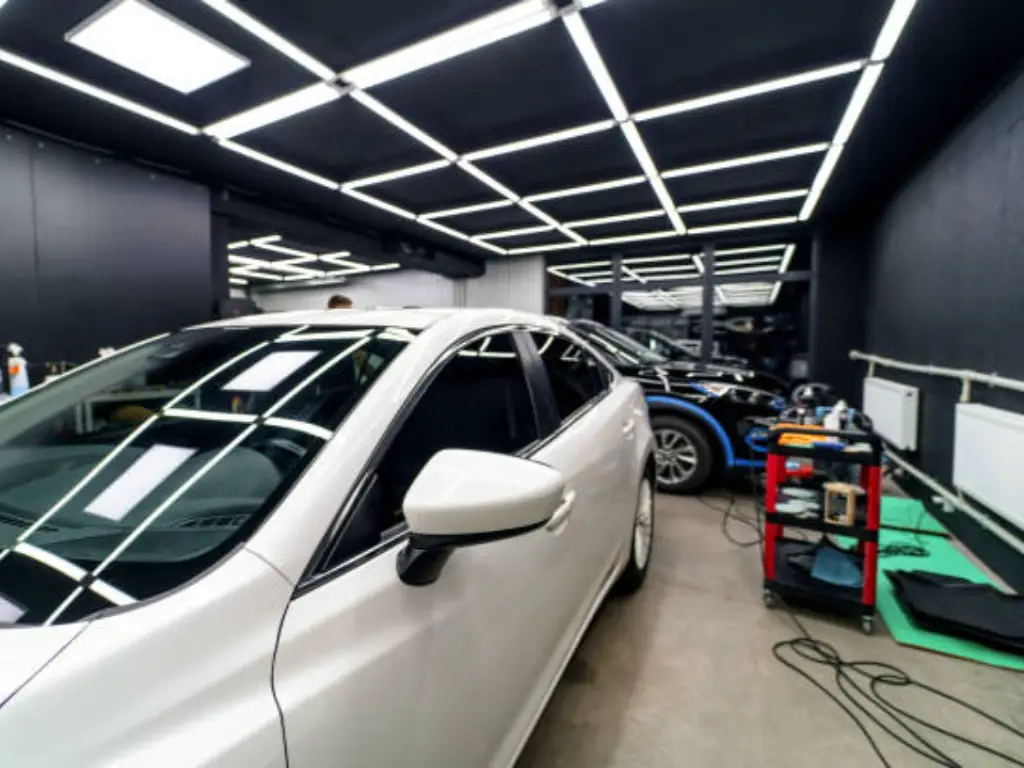
PPF is very prone to dust. When a store installs PPF in an open garage bay beside a person sanding a bumper or cleaning an ugly interior, you will have dirt under your film. Require a store that has a committed, climate-controlled and spotlessly clean PPF installation bay.
When a store tells you, “Your car is new, it does not need polishing,” then leave. All cars need some amount of surface preparation and polishing to make sure that the film adheres and the car is optically clear.
Do your research, read reviews, visit the shop in person to inspect their current projects, and remember: with PPF, you are paying for the artist’s hands just as much as you are paying for the canvas.
Ready to protect your investment?
Discover the ClearPro difference and find an elite installer near you today.
 EN
EN  ES
ES  FR
FR  AR
AR