




How Much Does It Cost to Wrap an SUV? Complete Guide
There has been a colossal paradigm shift in the automotive customization market in the past decade. Gone are the days when it used to take you a permanent, costly and time consuming visit to the body shop to change the color of your vehicle. A high-quality car wrap has become the ultimate solution to SUV owners who want to customize their cars, cover their original factory paint, or use mobile branding to promote their companies.
But in the case of Sport Utility Vehicles (SUVs), the pricing system can be unbelievably obscure. Due to the wide range of sizes, shapes, and surface complexity of SUVs, a quote that fits a small crossover will be radically different to that of larger vehicles like a full-size luxury off-roader. If you find yourself asking, how much does it cost to wrap an SUV, the average cost of a professional SUV wrap in 2026 will be between $2,500 and more than $7,000.
This comprehensive guide is designed to break down every single variable that influences the final price on your invoice. We will explore the exact cost breakdown by vehicle size, the profound impact of material chemistry, the hidden preparation fees that shops rarely advertise upfront, and the crucial differences between cheap DIY jobs and elite professional installations.
SUV Wrap Cost Breakdown by Vehicle Size
The first and most obvious thing that will dictate the price of your SUV wrap is the vehicle type and size of the vehicle in square feet. Wrap installation of vehicles is a highly manual and labor intensive process. Unlike smaller cars, the bigger the surface area, the more linear feet of film is needed, and the more time the installation technicians will have to spend on the careful application, stretching, and cutting of the material.
But professional shops do not give quotes on the basis of size only, they give quotes on the basis of a mixture of material volume and complexity of the vehicle. When determining how much does it cost to wrap an SUV, the following is a breakdown of the estimated costs in the various categories of SUVs.
| SUV Category | Representative Models | Est. Material Needed | Price Range (Standard Gloss/Matte) |
|---|---|---|---|
| Subcompact SUV | Honda HR-V, Mazda CX-30, Hyundai Kona | 55 – 60 linear feet | $2,000 – $3,000 |
| Compact SUV | Toyota RAV4, Honda CR-V, Ford Escape | 60 – 65 linear feet | $2,500 – $3,500 |
| Mid-Size SUV | Jeep Grand Cherokee, Toyota Highlander | 65 – 75 linear feet | $3,200 – $4,500 |
| Full-Size SUV | Chevrolet Tahoe, Ford Expedition, BMW X7 | 75 – 85 linear feet | $4,000 – $5,500 |
| Extended / XL SUV | Cadillac Escalade ESV, Chevy Suburban | 85 – 100 linear feet | $5,000 – $6,500+ |
| Boxy / Off-Road | Mercedes G-Class (G-Wagon), Jeep Wrangler | Variable (High Labor) | $5,500 – $7,500+ |
Understanding the “Complexity Factor”
You may examine the table above and ask yourself why a mid-size Mercedes G-Wagon comes at a higher cost and is much more expensive to wrap than a huge Chevrolet Suburban. This leads to the “Complexity Factor.”
Contemporary aerodynamic SUVs that have smooth and sweeping body lines (such as a Tesla Model Y or a Porsche Macan) are comparatively easy to wrap. The film is flat-laid and the lines are soft. Conversely, rough, square off-roaders are a nightmare to a wrapper. Cars such as the Jeep Wrangler or the Ford Bronco have exposed door hinges, large rain gutters, 90-degree angles, elaborate front grilles, and rear-mounted spare tire carriers.
For a flawless car wrap installation, technicians have to take hours to painstakingly remove exterior hardware before the initial piece of film is even cut. Moreover, it takes sophisticated heat control and tension allocation to push the vinyl into the deep crevices and sharp edges of these cars to ensure that the film does not peel off in the future. Thus you are paying a huge mark-up on the specialized work and the time spent in the shop, rather than the actual material.
Full vs. Partial SUV Wraps: Pricing Differences
Not every SUV owner wants a complete color overhaul. Depending on your aesthetic goals or your available budget, you might opt to wrap only specific areas of the vehicle. Understanding the difference between full and partial wraps can help you achieve a custom design without paying the maximum premium.
Full Wraps ($2,500 – $7,000+)
The entire painted exterior of the SUV is covered in a full wrap. This is the only alternative when you want a total color change – say a factory white SUV and transform it into a satin dark grey. This is the most material and labor-intensive because the panels should be smoothly incorporated.
Partial Wraps ($300 – $1,500)
Partial wraps are incredibly popular for adding sporty accents or breaking up the visual mass of a large SUV. Common partial wrap projects include:
- Roof Wraps ($300 – $600): Coating the roof with high-gloss black is a gigantic trend. It gives the illusion of a panoramic glass roof and provides the SUV with a lower, sleeker, and “floating roof” appearance.
- Hood and Trunk Accents ($200 – $500): Often done in matte black or carbon fiber textures for an aggressive, track-inspired look.
- Chrome Deletes ($500 – $1,200): A lot of luxury SUVs are delivered to the dealership full of chrome trim around the windows, grilles and door handles. A “chrome delete” is a wrap of all these particular accent pieces in gloss or satin black, which makes them look stealthy and modernized.
Commercial Fleet Wraps: Costs for Logos and Custom Decals
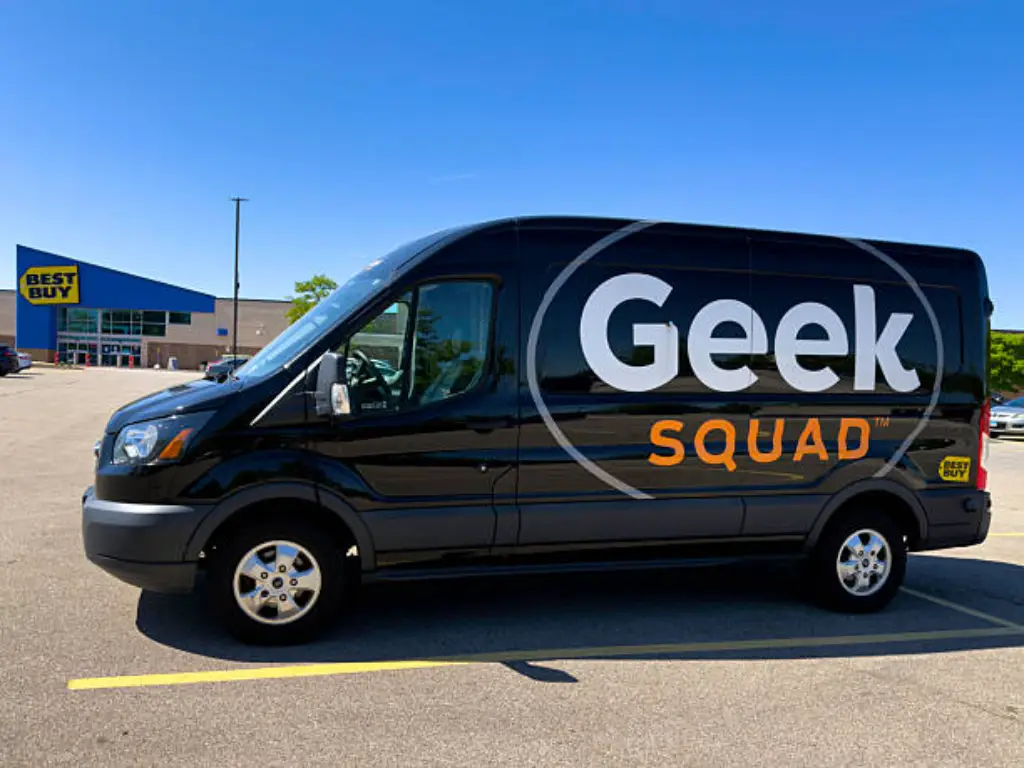
To business owners, commercial vehicles like an SUV are not merely a means of transportation, they are a mobile billboard that is very visible. Commercial SUV wrapping is a totally different story in terms of materials and pricing arrangements than personal color-change wraps.
When dealing with commercial fleet wraps, shops utilize printable cast vinyl (such as 3M IJ180Cv3) rather than pre-colored rolls. This allows for high-resolution printing of commercial logos, custom graphics, gradients, and photographic elements.
The commercial wrap pricing has a number of line items that are unique:
- Design and Layout Fees: If you do not have print-ready vector artwork, professional vehicle wrap designers will charge an initial setup fee, typically ranging from $300 to $1,000, to ensure your branding scales perfectly across the SUV’s specific body lines without distorting critical text over door handles or seams.
- Lamination Costs: Printed vinyl should be laminated. The printed film is then covered with a heavy-duty UV-resistant clear laminate to ensure that the sun does not fade your company logo and to ensure that the ink is not damaged by road debris.
- Fleet Standardization and Decals: In case you just require a localized logo on the doors and a phone number on the tailgate (partial commercial wrap), the price is reduced significantly to approximately $500 – $1200. Moreover, when you are wrapping a whole fleet of the same SUVs, the shops tend to give a 10%-20% discount on labor since the work is a very efficient and repeatable task to the technicians.
How Material Choices Impact Your Total Wrap Price
The automotive film market is very stratified. The final cost of your SUV wrap will be highly determined by the brand, chemistry, and finish of the material you choose.
Standard Gloss and Matte Vinyl (produced by such brands as Avery Dennison or the standard 3M series) are the cheapest at the entry-level. They are relatively easy to manufacture and install calendared or standard cast PVC films.
As we climb the ladder, we get Satin, Metallic and Pearl finishes. These films contain metallic flakes or special pigments which demand high material quality and manufacturing tolerances so that the “grain” of the metallic flake is the same throughout the roll. These materials normally increase the overall car wrapping costs by 10% to 15%.
Color-Shift (Chameleon) and Chrome films are at the very top of the traditional vinyl. If you are calculating how much does it cost to wrap an SUV with these premium finishes, keep in mind Chrome wraps are infamously hard to deal with. The material is so stiff and when an installer puts a little too much heat on it or stretches it a millimeter too much the mirror finish “hazes” and is ruined forever. A complete chrome SUV wrap can easily cost more than $8000 due to the high chances of wasting the material and the high level of expertise needed.
However, the industry is currently undergoing a massive evolution. Traditional vinyl (PVC) is inherently flawed: it is thin (usually around 3 to 4 mils), offers virtually zero protection against rock chips, and is highly susceptible to UV fading and chemical etching. This brings us to the ultimate material choice.
Why Clearpro Color PPF Offers Better Long-Term Value
To achieve the ultimate highest ROI (Return on investment) on your custom car wrap, you have to change the discussion to Color Paint Protection Film (Color PPF) instead of traditional color vinyl.
Clearpro is a major producer of high-performance automotive films, and it has a huge 3000-square-meter, Class 1000 cleanroom factory, a manufacturing standard typically found in the medical and aerospace sectors. This perfection has enabled Clearpro to address the weaknesses inherent in traditional wraps.
Historically, SUV owners were forced to make a painful decision: purchase a vinyl wrap to change the color (exposing the paint to rocks) or purchase a clear PPF to cover the paint (but leave it in the dull factory color). Color PPF by Clearpro does not compromise on this by providing a product that provides both breathtaking aesthetic transformation and a physical protective layer of ballistic grade.
This is why Clearpro Color PPF has much better long-term value:
- Optical Perfection and Zero Orange Peel: Standard vinyl wraps often suffer from “orange peel”—a dimpled, textured surface that makes the car look like it’s wrapped in plastic. Clearpro utilizes proprietary Polyoptico™ cross-linked polymer coating technology. Under a 500x microscope, Clearpro’s surface roughness is an astonishing Ra ≤0.05 µm (compared to the industry standard of 0.15–0.25 µm). Furthermore, it boasts a 60° gloss level of 95 GU, completely crushing the 80 GU average of standard vinyl. The result is a flawless finish that looks identical to—and often better than—high-end factory paint.
- True Self-Healing and Protection: Clearpro films have a total thickness of 8 mil and stretch rate of over 400%. Clearpro has a high-tech self-healing topcoat as opposed to vinyl, which is permanently scratched by a rogue branch or improperly washed. Scratches and swirl marks (up to a depth of >15 µm) literally melt away and self-heal when subjected to the heat of the sun or hot water.
- Unmatched Durability and Warranty: Offering better durability, traditional vinyl wraps have a life span of approximately 3 to 5 years before the sun destroys them. Clearpro has been subjected to severe SGS testing, with a water contact angle of 105° or more that hardly diminishes even after 2000 hours of Xenon lamp exposure. It offers an elite UV resistance of ΔE<1.0. Because of this uncompromising quality, Clearpro provides a massive 10-year electronic factory warranty covering yellowing, cracking, and delamination.
Although the initial cost of Clearpro Color PPF is more expensive than premium vinylor simple PVC, the TCO (Total Cost of Ownership) is significantly less. You are putting money into a product that proactively defends the underlying OEM paint of your SUV against rock chips and road debris and provides a perfect, color-changing finish that lasts ten years. You have the combination of “Feel The New Clarity,” high-end protection, and beauty in a single layer.
Hidden Wrap Costs: Prep Work and Door Jambs
When using an online estimator to figure out how much does it cost to wrap an SUV, you are usually seeing the “best-case scenario” baseline price. But in the real world, there are a number of under the carpet factors that will radically change your final quote.
The Reality of Paint Correction
A wrap is not a band-aid. Another myth that SUV owners have is that they can apply a wrap to conceal a failing clearcoat, deep scratches, or rock chips. The truth is the very contrary: the vinyl film is a magnifying glass. If you have a rock chip on your hood, the wrap will conform perfectly around that chip, creating a highly visible crater.
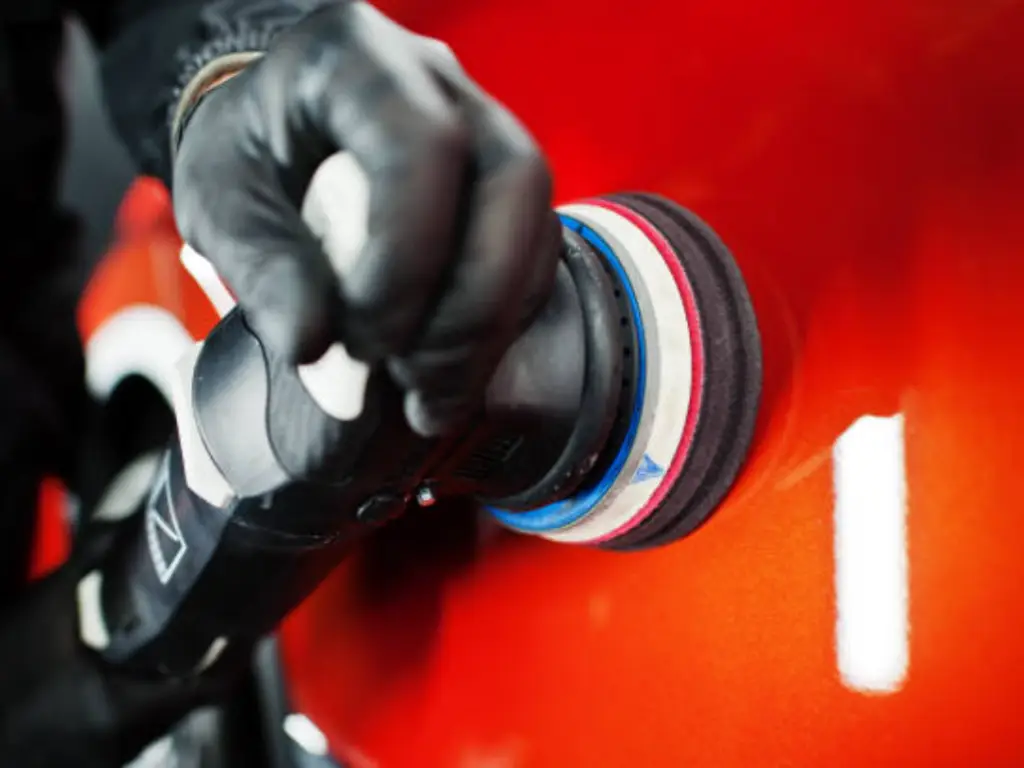
A thorough surface preparation and decontamination process should be carried out on the SUV before any film is applied. This includes heavy chemical iron removers, clay bar treatments to draw out embedded contaminants in the pores of the paint and an isopropyl alcohol (IPA) wipe down.
In case of swirl marks, oxidation or chips on your paint, the shop will require a Paint Correction service. This is done by machine compounding and polishing the surface to produce a completely smooth canvas on which the adhesive can bite into. Paint correction may also be an extra $400 – $1200 to your final bill depending on the state of your SUV.
The Door Jamb Dilemma
When a shop quotes a standard full wrap, they are quoting for “tucked edges.” This implies that the film is enclosed a bit on the periphery of the outer panels. But, as you open the door of the driver, you will still see your original factory paint on the inner door frame, the hinges, and the sills.
When you are wrapping your SUV that is factory black in dark blue, this contrast is hardly noticeable. However, when your SUV is factory bright red, and you are covering it with matte white, as you open the door, you will see a red frame that is jarring and ugly.
To solve this, you must request a Door Jamb Wrap. It is an enormously labor-intensive process. Technicians have to physically unbolt the doors, strip away weather stripping, pull off wiring harnesses and wrap the very complicated internal geometry of the door frames. Due to the sheer amount of labor hours, wrapping the door jambs on a big SUV will immediately increase your invoice by $1500 to $3000.
Long-Term TCO: Maintenance and Future Removal Costs
Covering your SUV is not a “set and forget” kind of modification. The Total Cost of Ownership (TCO) is a life-long process that determines how you clean the vehicle and what will happen when it is time to remove the film.
Post-Installation Maintenance Rules
With proper care, you can dramatically extend the life of your film. As soon as you pull your freshly wrapped SUV out of the shop, you are now forbidden to use automatic “tunnel” car washes. The rough chemical soaps and the rough and violent spinning brushes will cause heavy micro-scratching to the normal vinyl and will grab the edges of the film and tear it off the panels violently.
The Two-Bucket Hand Wash Method is needed in wrap maintenance. You have to apply pH-neutral car shampoos that do not include heavy waxes or harsh degreasers. Also, when you have a matte or satin wrap, you cannot use the conventional spray waxes, they will fill the micro-pores of the matte film and leave shiny streaks. To alleviate these maintenance pains, high-end owners usually treat the wrap with a special ceramic coating (another $400 – $800 expense) to render the surface hydrophobic and easier to clean.
The Inevitable Cost of Removal
Every wrap, whether it is standard vinyl or premium PPF, has a lifespan. Standard vinyl usually peaks at 3 to 5 years. When it is time to sell the SUV or change colors, you must pay for removal.
A standard, healthy wrap removal takes a professional shop a few hours, usually costing between $500 and $800. But when you disregard the lifespan and leave the cheap vinyl on your SUV 7 or 8 years, baking in the hot summer UV rays, you are in a disaster.
When the technician tries to peel the film, it will shatter into thousands of tiny flakes rather than peeling off in one sheet. Removing “baked-on” wrap requires heavy chemical solvents, steam, and dozens of hours of agonizing scraping. This disaster scenario can easily cost $2,000 to $3,000 in labor, and there is a high probability that the original paint will be irreparably damaged in the process. This is another reason why investing in stable, premium materials like Clearpro—which guarantees its adhesive stability—is financially prudent.
Vehicle Wrapping vs. Paint: The Ultimate ROI Comparison
When presented with a quote of $4000 and wondering how much does it cost to wrap an SUV versus painting it, most SUV owners would always question themselves: “Is it better to simply have the car repainted?”
In order to respond to this, we need to compare the two alternatives based on Return on Investment (ROI), vehicle downtime, and asset preservation.
The Cost and Time Factor:
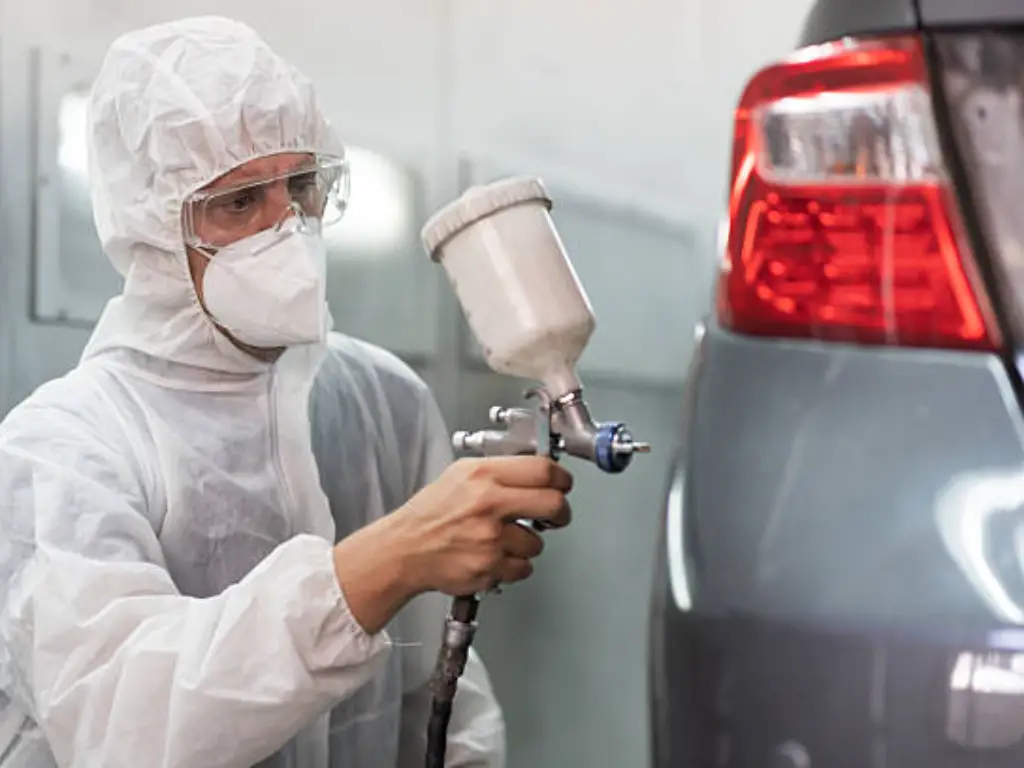
A low-cost paint job of $1,500 by a discount chain is horrible; it will have serious orange peel, overspray on the trim, and will start peeling in a year. It will cost between $8,000 and $15,000 to have a large SUV repainted in a glass-out, quality paint job. Moreover, a good quality repaint involves sanding the car to bare metal, priming, painting and clear coating in a spray booth. This translates to 3 to 6 weeks in the body shop of your SUV. A professional wrap, on the other hand, is completed in 3 to 5 days.
Asset Preservation and Resale Value:
This is where wrapping wins decisively. In the automotive market, original factory paint (OEM paint) is sacred. As soon as you repaint a car, its resale value drops. The dealerships and purchasers immediately presume that the car had been in a huge, unknown accident.
Wrapping your SUV acts as a physical barrier. As you are driving a custom Matte Charcoal SUV over four years, the wrap is taking in the UV rays, the bird droppings, and the minor abrasions. When you are ready to sell the vehicle, you just pay to get the wrap off. Below, the original OEM paint is in a perfect condition, appearing just as it was the day the wrap was put on. You receive the best trade-in price and have had the pleasure of a custom vehicle.
Does Wrapping an SUV Increase Your Car Insurance?
An important aspect that most SUV owners fail to consider is the intersection of vehicle modification and insurance policies.
To begin with, you must legally notify your insurance company that you have changed the color of the vehicle. The majority of police databases and automated license plate readers monitor the vehicle colors according to the initial registration. When your SUV is registered in white and is now covered in matte green, it may lead to unnecessary inconveniences when you are stopped in traffic or crossing the border. Immediately update your local motor vehicle registry and your insurance company.
Will it increase your premium? Typically, car wrapping and cosmetic wrap treatment of a vehicle does not cause the enormous premium increases that come with performance alterations (such as the addition of a supercharger or a lift kit). But your usual all-inclusive insurance policy will only pay the amount of money to restore the car to its factory state. When you are rear-ended and the body shop repairs your tailgate, the insurance company will only pay to have it painted in the original factory color. They will not spend the $600 it will take to re-wrap that new panel to fit the rest of your custom SUV. In order to secure your investment, you need to contact your agent and include a Custom Parts and Equipment (CPE) rider to your policy. This specifically addresses the added value of the wrap, whereby in case of an accident, the replacement wrap is fully covered under the claim.
Professional Installation vs. DIY: Is It Worth It?
As thousands of “DIY Wrap” tutorials flood social media, it is easy to order a roll of vinyl that costs $600 and invite a friend over and see how you can wrap your SUV in the garage over the weekend. Professionally, this is a perilous fake economy.
Wrapping a vehicle is a highly specialized trade. It requires an intimate understanding of material physics, surface tension, and automotive anatomy.
The Master Craftsmanship of an SOP (Standard Operating Procedure)
When you hand your keys to a professional wrap installer or certified professional installation center, they execute a strict SOP that a DIYer simply cannot replicate.
- Hardware Removal: A professional shop does not just cut the film around your door handles, headlights, and badges. They meticulously disassemble the necessary vehicle components. They take off the taillights, the front bumpers and the mirrors. This enables them to install the film in the panel gaps.
- Tucked Edges: Due to the removal of the hardware, professionals are able to perform “tucked edges.” They roll the film 2 to 3 millimeters behind the actual edge of the metal panel. This implies that the wind cannot blow the car at 80 mph and peel the edge of the vinyl backwards.
- Tension Relief and Cold Pre-Stretch: This is the invisible artistry of wrapping. In the case of stretching film into a deep recess (such as the fog light housing of an SUV), an amateur will heat the film, press it in, and leave it. Several days later, the material’s natural memory will cause it to shrink and pull out of the recess. Professionals use techniques like “cold pre-stretching” and precise “tension relief” cuts to neutralize the mechanical stress of the film. They then post-heat the applied areas to perfectly lock the molecular structure of the vinyl into its new shape.
The Disastrous Risks of DIY
DIY jobs fail miserably when they fail. The most prevalent one is the lifting and bubbling of the film around the wheel arches and mirrors during the first month.
Worse still, there is the risk of cutting the clearcoat. The film is cut with incredibly sharp surgical blades by installers. Advanced “knifeless tape” (a Kevlar filament thread applied under the film to slice it through the inside out) is used by professionals or the muscle memory to cut the vinyl without ever breaking through the clearcoat underneath it. A blade in the hands of an amateur will most definitely cut right through the OEM paint of the SUV. It will not be until three years later that you take off the wrap and discover that the damage is permanent because the razor-blade scars are permanently etched in every panel of your car.
The Final Verdict
A DIY wrap is hardly a cheap thing by the time you add in the price of the raw material costs, the specialized heat guns, squeegees, the wasted film that is inescapable when tearing a panel, and the sheer volume of your own time. More to the point, you are given no warranties.
In the case of an asset as precious as a modern SUV, professional installation is a must. When you combine the services of a reputable installer and the finest, manufacturer-approved materials such as those of Clearpro, you can be sure that your SUV will be noticed on the road, will be perfectly shielded against the elements, and will keep its high price tag many years down the line.
Ready to elevate your SUV with industry-leading protection and unmatched clarity? Demand the best for your vehicle. Speak to a certified installer to get a free quote and learn more about transforming your ride with Clearpro Color PPF today.

 EN
EN  ES
ES  FR
FR  AR
AR