




The most important initial step in any vehicle modification or commercial fleet branding project is determining the exact financial investment. If you find yourself asking how much does it cost to wrap a truck, remember the answer is never a flat rate. The overall cost is a mathematical formula that is motivated by wrap material technology, vehicle geometry, overall coverage area, and wrap installation labor.
Regardless of whether the goal is to turn commercial vehicles into high-visibility mobile marketing tools or to offer physical exterior protection to individual trucks, an accurate interpretation of the pricing model is necessary to avoid budgetary overruns. This is a complete 2026 pricing guide that decomposes the fundamental cost drivers, helps answer how much is it to wrap a truck, reveals the concealed installation costs, and offers a clear-cut framework of calculating the actual Total Cost of Ownership (TCO) of both commercial fleets and personal vehicles.
How Wrap Coverage Impacts Your 2026 Pricing
In order to create a baseline for how much to wrap a truck, the market rates of truck wrapping in 2026 will be within certain ranges depending solely on the total area covered and the amount of vinyl used. Instead of a flat rate, installers calculate material volume and labor hours based on the boundaries of the application. Here is the standard market breakdown:
- Full Wrap (100% Coverage | $2,500 – $6,000+): This process covers all painted exterior surfaces, offering maximum visual transformation and complete baseline paint protection. The price range is the most expensive to start up since it consumes the most material volume and cost of labor.
- Half Wrap (50% to 75% Coverage | $1,500 – $2,500): Installers typically focus on the rear and sides of the truck bed or commercial cargo area, strategically leaving the cab or front hood in the original factory paint color.
- Partial Wrap (25% to 50% Coverage | $500 – $1,500): This option targets specific, highly visible panels such as the doors, tailgate, or lower rocker panels for localized branding, allowing you to upgrade the look of your truck without the expense of a full transformation.
- Custom Decals and Logos ($150 – $500): This is a low-cost level where the specific die-cut logos, contact information, or DOT compliance numbers are plotted and applied to the exposed original paint of the truck.
Strategic Advantage for B2B Clients: In the case of commercial fleets, Full Wrap is not always required to have high-impact branding. The same marketing effectiveness can be achieved with a carefully planned Partial Wrap that makes use of the base paint color of the truck as a “negative space.” With the factory paint color incorporated into the custom graphics, the businesses can save 40% to 50% of materials and labor and still have a very visible and professional mobile presence.
Price Breakdown by Truck Size and Model
When asking how much does it cost to wrap a truck, the absolute basis of determining the material consumption and labor hours is the size of the truck. The bigger the surface area, the more raw material is required, naturally making larger trucks more expensive than smaller trucks. At the same time, the complicated geometry of vehicles requires long and very technical installation time. The data table below outlines the baseline costs and primary cost drivers across different commercial and personal truck categories.
| Truck Category | Common Examples | Average Material Required | Estimated Full Wrap Cost | Primary Cost Drivers |
| Standard Pickup | Ford Ranger, Ford F-150, Chevy Silverado 1500 | 60 – 75 sq. ft. | $2,500 – $3,500 | Standard bed length, minimal complex curves. |
| Heavy-Duty Pickup | Ford F-350, Ram 3500 Dually | 80 – 100 sq. ft. | $3,500 – $4,500 | Extended beds, dual rear wheels, larger surface area. |
| Cargo Van | Ford Transit, Sprinter Van | 150 – 250 sq. ft. | $3,000 – $5,000 | Massive flat panels, deep body channels, exposed door hinges. |
| Box Truck | 16ft – 24ft Commercial Box Trucks | 300 – 500+ sq. ft. | $3,500 – $6,000+ | High square footage, presence of hundreds of exterior rivets. |
| Semi-Truck (Cab) | Freightliner Cascadia, Volvo VNL | 150 – 200 sq. ft. | $4,000 – $6,000+ | Highly complex curves, intensive grilles, sleeper cab integration. |
The Impact of Vehicle Geometry and Hardware:
Huge physical size is not the only reason that makes labor more expensive. Cars with complicated curves, deep cuts, or a lot of rivets take a lot of time to install. The design complexity plays a huge role; as an illustration, commercial box trucks have hundreds of exterior rivets. Installers should take care to heat and seal the vinyl around each and every rivet with special heat guns and rivet brushes to avoid entrapment of air and consequent tenting.
Moreover, cars that need to have several hardware parts removed, including heavy-duty bumpers, special towing mirrors, roof clearance lights, and utility racks, will cost a lot more in labor charges, increasing the final price. To make sure that the edges of the film are neatly folded behind the hardware, technicians need to remove and re-attach these parts safely.
Vinyl Material and Finish: The Technical Costs
People often wonder how much is it to wrap a truck if they choose premium films. The choice of material determines the aesthetic performance as well as the physical performance of the wrap. The industry makes use of various grades of film. The vinyl quality and particular finish greatly changes the cost of the base material and the level of difficulty of installation.
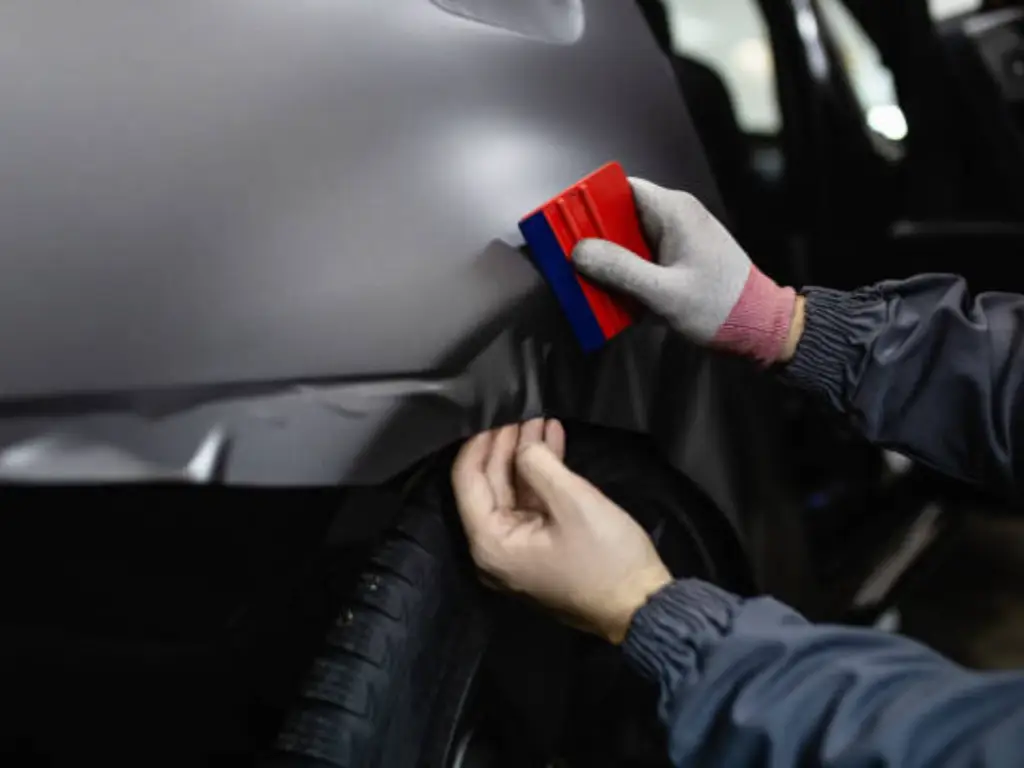
- Gloss Finish: This remains the industry standard. Standard cast vinyl films (3M 2080 or Avery Dennison Supreme Wrapping Film) are very conformable. They are the cheapest point of full solid color change wraps.
- Matte and Satin Finishes: These finishes carry a slight premium over standard gloss. They require highly careful handling during installation. Aggressive squeegee use or improper heat application can burnish the matte surface, creating permanent, unwanted glossy patches that require panel replacement.
- Color-Shift and Metallic Finishes: These specialized films change color depending on the light angle. They are physically heavier and have metal flakes, which make them more rigid and less conformable. Installers should be very careful in the directional consistency of all the adjacent panels; otherwise, they will have different colors. This limitation adds to material wastage and man hours.
- Chrome Finishes: Chrome is the most expensive and technically demanding option. Chrome films are very low stretchability. Excessive stretching of the material will result in the metallic layer becoming “cloudy” or “whitish,” immediately destroying the finish. It takes master level technicians to install and in many cases multi-piece installations with complicated overlapping on curved surfaces. Chrome wraps often cost more than $6000 due to the high cost of materials and the heavy work involved.
The ClearPro Advantage: TPU vs. Traditional PVC Wraps
Although traditional cast vinyl offers sufficient color conversion, it offers physical protection against extreme industrial or off-road conditions that are highly limited. Moreover, cheap market prices tend to use calendered PVC vinyl- a stiff, low-end material that is highly likely to shrink, crack, and quickly degrade under uv rays in less than two years. Standard PVC vinyl is not adequate for stakeholders who are concerned with Total Cost of Ownership (TCO) and severe-duty asset protection.
This is where ClearPro provides a definitive, engineering-grade solution. ClearPro is a specialized manufacturer of high-performance Paint Protection Films (PPF) and color films based on Thermoplastic Polyurethane (TPU), operating a 3,000-square-meter Class 1000 cleanroom facility—a specification normally reserved for high-precision electronic and medical manufacturing.
Technical Superiority of ClearPro TPU:
- Advanced Optical Clarity: Utilizing the patented Polyoptico™ cross-linked polymer coating, ClearPro achieves a 60° gloss level of 95 GU. This is 12–15 GU higher than standard PPF products on the market. Furthermore, it maintains a haze level of <0.9%. The surface roughness is restricted to Ra ≤0.05 µm (compared to competitors at 0.15–0.25 µm), delivering an industry-exclusive “zero orange peel” finish that is optically superior to standard factory paint.
- Extreme Physical Defense and Self-Healing: Unlike standard PVC vinyl, ClearPro TPU features a >15 µm self-healing layer. In laboratory testing, the film withstands over 10,000 cycles of copper wire brush abrasion. The material self-repairs these scratches rapidly under 80°C heat. Even after 10,000 cycles, the self-healing efficiency remains >90%.
- Hydrophobic Stability: SGS-certified data confirms an initial water contact angle of ≥105°. Crucially, this hydrophobic property does not rapidly degrade; it maintains ≥100° even after 2,000 hours of intensive Xenon lamp aging testing.
- Unyielding Weather Resistance: ClearPro addresses the primary failure point of vehicle films: yellowing. With a yellowing resistance of ΔE<1.0 under 5,000 hours of UVB exposure (equivalent to 7–8 years of direct outdoor exposure), the material withstands extreme UV radiation without perceptible color degradation. Real-world testing across 50,000 km in environments ranging from the Middle East (50°C) to the Tibetan Plateau (1,200 W/m² UV) showed less than 3% loss in optical clarity and thickness.
The ROI of ClearPro Integration: ClearPro holds ISO 9001:2015, ISO 14001, ISO 45001, and automotive IATF 16949 certifications. While the initial capital expenditure for ClearPro TPU is higher than traditional PVC vinyl, it fundamentally alters the TCO. Backed by a 10-year electronic warranty against yellowing, cracking, fading, and delamination, ClearPro eliminates the requirement for the 3-to-5-year replacement cycle inherent to standard vinyl. It provides unmatched, verifiable protection against rock chips, road debris, and industrial fallout, establishing it as the most cost-effective long-term material investment for high-value vehicles.
Labor, Design, and Hidden Installation Fees Explained
To accurately estimate how much to wrap a truck, you must realize the ultimate wrap price is much higher than the cost of the raw material. The overall price is composed of a large percentage of labor and critical surface preparation. These line items can be explained by understanding the per-square-foot pricing model (which is usually between $12 and $18 per sq. ft. fully installed using standard materials).

- Design and Layout Fees: Professional vehicle templating and graphic design services range from $300 to $1,000. A 2D corporate logo has to be translated onto a highly contoured 3D vehicle surface, which cannot be done without special vector software. Designers must ensure critical text does not fall into door gaps, distort over wheel wells, or wrap around door handles illegibly.
- Surface Preparation and Decontamination: Vinyl film and TPU adhere only to pristine, surgically clean surfaces. Shops charge mandatory fees for intense decontamination. This process includes specialized chemical washing, heavy degreasing to remove road tar, mechanical clay bar treatment to remove embedded iron particulates, and isopropyl alcohol (IPA) wipe-downs. Any paint chips, rust spots or peeling clear coat that exists will telegraph right through the film and will interfere with adhesion.
- Hardware Removal and Assembly: To achieve a seamless, “paint-like” finish, installers cannot simply cut the film around parts. They will have to remove bumpers and headlights, taillights, door handles, badges, and rubber weather stripping. This de-assembling and reassembling procedure introduces a lot of hourly labor expenses.
- Professional Installation Labor: The highly trained technicians will charge high hourly rates. A professional application takes 20 to 30 man hours to wrap a typical pickup correctly. A commercial cargo van or complicated cab may easily surpass 40 hours of dedicated installation time.
Truck Wrapping vs. Painting: A Cost Comparison
If you are debating how much does it cost to wrap a truck compared to painting it, wrapping and traditional automotive painting should be compared in terms of financial background.
A high quality, factory level paint job on a truck costs between $5,000 and $15,000. This cost is very much dependent on the size of the vehicle and the amount of prep work that needs to be done, like sanding the existing paint to bare metal. Conversely, a high-end full wrap costs between $3,000 and $6,000.
Beyond the drastically lower initial cost, wrapping offers critical lifecycle advantages. In industrial, construction, and logistics settings, heavy-duty trucks are subjected to continuous abrasion. A wrap is a sacrificial covering. In cases where a commercial vehicle is no longer in the fleet or sold, the film can be easily removed leaving the original factory paint untouched. This is done to a great extent to enhance the residual resale value of the vehicle. On the other hand, a custom paint job, especially one done in garish corporate colors, will tend to reduce the resale value and will necessitate a costly, second repaint before the asset can be sold in the secondary market. Moreover, wrapping requires 3 to 5 days, and commercial painting requires 2 to 3 weeks to ground a vehicle, which means that the operational revenue is lost.
Commercial Fleet vs. Personal Truck Wrap ROI
The cost and value analysis between corporate business organizations and individual consumers is quite different.
For Commercial Fleets:
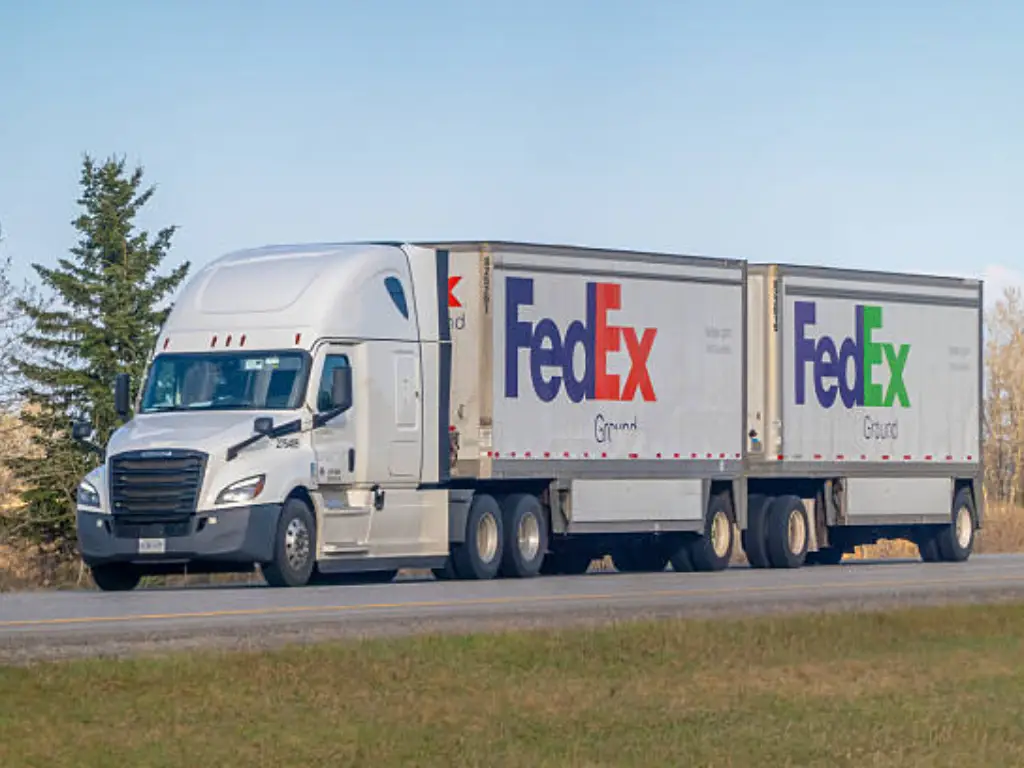
A truck wrap is not a maintenance cost of a vehicle; it is a direct advertising cost. Commercial wraps have the lowest Cost Per Thousand Impressions (CPM) in the whole advertising business when it comes to the analysis of the Return on Investment (ROI). The visual impressions created by a single wrapped delivery truck or service van that serves a typical metropolitan area range between 30,000 and 70,000 per day.
Moreover, companies that package several vehicles at a time enjoy huge volume fleet discounts. The uniformity of the graphic design on 5 to 20 vehicles minimizes the unit material wastage and simplifies the process of installing the graphics. This efficiency frequently lowers the average cost per truck by 15% to 25%.
For Personal Trucks:
In the case of the individual truck owner, ROI is directly quantified in terms of asset protection and personalization. Knowing how much to wrap a truck helps you protect your truck while fully customizing the look of the vehicle without permanently modifying or destroying the OEM factory finish. Combined with the robust protection against environmental damage, UV fading, and minor abrasions—especially when utilizing high-thickness TPU materials—the investment preserves the underlying asset’s market value.
Frequently Asked Questions About Truck Wraps
- How long does a truck wrap last?
A professionally applied standard cast vinyl wrap has a lifespan of 5 to 7 years. Nevertheless, more sophisticated materials such as high-quality TPU (Thermoplastic Polyurethane) color or protective films have significantly higher durability, and most of the high-end products have extensive warranties up to 10 years. No matter what the material is, the overall life is highly reliant on the exposure to climate on a daily basis, the geographical UV index, and the strictness of the maintenance routines.
- Can I wash a wrapped truck?
Yes. Hand washing with a mild soap or pH-neutral automotive soap is the strictly recommended method. Brushless, touchless automatic car washes are generally safe. Nevertheless, automated car washes with abrasive friction brushes should be avoided at all costs since they will scratch regular vinyl film, damage the hydrophobic coating, and aggressively peel the edges of the panel. The use of pressure washing is only acceptable when the temperature of the water is maintained at moderate levels, the pressure is not more than 2,000 psi, and the nozzle is not less than 12 to 14 inches off the surface and is directed strictly away all the edges of the panels to avoid forced lifting.
- Does wrapping a truck damage the original paint?
No. When calculating how much is it to wrap a truck, consider that the wrap adhesive will not damage the original factory paint provided that it is in good condition, structurally sound and completely cured. As a matter of fact, it is very effective in safeguarding the clear coat against UV fading, chemical stains, and minor physical abrasions. However, applying wrap film over failing clear coat, aftermarket paint that has not properly cured, or deep preexisting scratches can result in paint pulling during the eventual film removal process. A professional surface assessment prior to installation is mandatory.
- Can I wrap a leased commercial truck?
Yes. The best option to leased commercial vehicles is wrapping. Since lease contracts are very strict on permanent modifications and paint damage, a wrap enables a business to completely brand the vehicle throughout the term. Before handing the car back to the dealership or leasing company, understanding how much does it cost to wrap a truck initially pays off, as the wrap is peeled off, leaving the covered, unharmed factory paint intact, and no end-of-lease penalty fees are paid.

 EN
EN  ES
ES  FR
FR  AR
AR