




By 2026, the global market of Paint Protection Film (PPF) has changed considerably. For both high-end vehicle owners and professional detailing shop operators, the decision to invest in PPF is no longer merely about aesthetic preservation; it is a calculated asset management strategy. Nevertheless, the industry is still marred with excessive price opacities. Consumers are often faced with quotes that are all over the board between $1,500 and more than $8,000 on what appears to be the same services. This discrepancy creates a “black box” of pricing that breeds hesitation and skepticism.
This is a complete guide that is aimed at de-black-boxing that black box to determine the true paint protection film cost. By utilizing a data-driven approach based on the FABE (Features, Advantages, Benefits, Evidence) framework, we will systematically break down the true cost drivers of PPF installation in 2026. We will transition the conversation away from aggressive sales tactics and toward objective material science, labor analytics, and verifiable Return on Investment (ROI) metrics. Be it a consumer who is seeking to hedge a depreciating asset or a B2B operator who is seeking to optimize his supply chain and profit margins, the only way to make an informed decision and high-value decision is to understand the underlying economics of PPF.
What is the Average PPF Cost in 2026?
It is important to have a point of reference of the prevailing market rates before getting into the technical variables which determine pricing. PPF installation cost is not a fixed figure, but a range based on the coverage area, grade of the material, and geographical market forces. In 2026, a high-quality, professional-grade installation generally falls within a predictable range when standard parameters are applied.
The following is a transparent pricing table that gives a breakdown of the minimum prices of standard transparent gloss PPF installations in key markets around the world.
| Coverage Level | Description of Coverage | North America (USD) | Europe (EUR) | Singapore (SGD) |
| Partial Front | 1/3 to 1/2 of hood & fenders, front bumper, mirrors | $900 – $1,500 | €850 – €1,400 | $1,200 – $2,000 |
| Full Front | Entire hood, full fenders, front bumper, mirrors | $1,800 – $2,500 | €1,700 – €2,300 | $2,500 – $3,500 |
| Track Package | Full front + rocker panels, A-pillars, roof edge, rear splash guards | $2,500 – $3,500 | €2,300 – €3,200 | $3,500 – $4,800 |
| Full Body | Every painted exterior surface of the vehicle | $5,000 – $8,000+ | €4,500 – €7,500+ | $7,000 – $12,000+ |
Regional Price Differences Explained:
The above data indicate important regional variables. In North America, localized labor rates and sheer number of suburban commuters vehicles that need high impact protection dictate the pricing. In Europe, the pricing structures are somewhat different because of the strict environmental disposal laws on chemical byproducts and the increased value added taxes (VAT).
Conversely, in markets like Singapore, the baseline quotation is substantially higher. This is not merely an inflation artifact; it is directly tied to the Certificate of Entitlement (COE) system. When the basic price of owning a vehicle is astronomically high, the amount spent on insuring that property is spent in the same proportion. Moreover, the overhead of real estate of commercial detailing facilities in ultra-dense urban areas such as Singapore compels the shop owner to charge the consumer more, creating a significantly higher floor of professional PPF services.
Standard Coverage Packages: Partial Front to Full Body
The most immediate determinant of your PPF quote is the physical square footage of the film required and the corresponding labor hours. Standardization of the industry has resulted in four basic ppf packages of coverage that are tailored to meet particular risk profiles and budgets.
- Partial Front Coverage (The Baseline)
- Coverage: Typically covers the leading 18 to 24 inches of the hood and front fenders, alongside the front bumper and side view mirrors.
- Installation Difficulty: Low to Moderate. Installers often use bulk film or simple plotter cuts. The edges of the hood are frequently left unwrapped (a visible line where the film ends) instead of being wrapped, which reduces the time spent on the job.
- Baseline Price: $900 – $1,500. It is the entry-level package, but it is losing popularity with high-end consumers because of the visible seam across the hood, which can accumulate dirt and wax over time.
- Full Front Coverage (The Industry Standard)
- Coverage: The full hood, both full front fenders, the front bumper, and mirrors.
- Installation Difficulty: Moderate to High. Since complete panels are used, edges can be completely wrapped around the hood and fenders giving it a smooth appearance. The most labor intensive part is the front bumper because of complicated curves and grilles.
- Baseline Price: $1,800 – $2,500. It offers the optimal cost-to-protection ratio to daily drivers, fully covering the most dangerous areas of impact without the outrageous price of full-body coverage.
- The Track Package (High-Risk Mitigation)
- Coverage: Includes everything in the Full Front package, plus critical side and lower-body areas: rocker panels, A-pillars, the leading edge of the roof, and the impact zones behind the rear wheels.
- Installation Difficulty: High. Lower rocker panel work needs shop lifts and film over A-pillars and roof edges needs to be very precise to prevent tension lines.
- Baseline Price: $2,500 – $3,500. Engineered specifically for performance vehicles, sports cars, or owners who frequently navigate roads with heavy loose gravel. It protects against lateral debris kicked up by high-performance, sticky tires.
- Full Body Coverage (Ultimate Asset Protection)
- Coverage: All the millimeters of the painted exterior of the vehicle, and occasionally interior carbon fiber trims.
- Installation Difficulty: Extreme. Takes a lot of tearing down of the car (door handles, headlights, taillights, badges, and even bumpers) to make sure that all edges are folded and none can be seen.
- Baseline Price: $5,000 – $8,000+. It is a multi-day process that involves master level technicians. It is the ultimate decision in exotic cars, matte-finish factory paint, or custom luxury cars in which any paint damage would lead to disastrous value loss.
Key Technical Factors Driving PPF Pricing Differences
Other than the coverage area size, the basic material science of the film itself determines the cost of the upstream raw material and the retail price on the downstream. The PPF market is very stratified in terms of grades of manufacturing.
Substrate Chemistry: Aliphatic TPU vs. Aromatic TPU vs. PVC
Any PPF is based on its polymer. PVC (Polyvinyl Chloride) or Aromatic TPU is used in low-end films (which are usually sold cheaply on e-commerce websites). PVC is a plasticizer that evaporates with time causing it to yellow, crack and become hard and unyielding. Aromatic TPU is superior yet remains vulnerable to the uv damage at the molecular level, which discolours the benzene rings in its chemical structure.
Premium PPF is produced purely out of Aliphatic TPU (Thermoplastic Polyurethane). The aliphatic chains are structurally resistant to yellowing caused by UV. Production of aerospace grade Aliphatic TPU involves very stringent conditions and the raw material is very costly and therefore the material cost is exponentially greater than PVC. This is a basic determinant of the initial pricing level within the supply chain.
Coating Thickness and Physical Puncture Resistance
Normal PPF is between 6mil and 8mil in overall thickness (including release liner, adhesive, TPU core and clear coat). But in case of extreme off-road or track applications, manufacturers provide 10mil to 12mil films. The 8mil to 10mil is not just 20% more material; to extrude a thicker TPU film without optical distortion (orange peel) one needs very precise slot-die extrusion equipment. The thicker films offer exponentially greater physical protection to rock hits, but are much more difficult to stretch and manipulate, which increases labor costs at the same time.
The Yellowing Index (ΔE) and Optical Clarity
A critical metric in PPF quality is the Yellowing Index, often measured by ΔE (Delta E) under accelerated UV weather testing. Cheap films may show a ΔE > 3.0 within two years, turning a white car visibly yellow. Top-tier manufacturers engineer proprietary nano-ceramic topcoats that filter UV rays, keeping ΔE negligible over a decade. The research and development and chemical engineering to create a self-healing topcoat that is stable and does not degrade is a huge capital outlay to the manufacturers which is directly translated to the roll cost to B2B distributors.
Surface Finish Types: Gloss vs. Matte/Satin vs. Color PPF
The surface finish introduces another significant pricing variable. Standard transparent gloss is the baseline. However, Matte/Satin PPF and the rapidly growing category of Colored PPF command a 10% to 20% premium.
The manufacturing process for a matte finish requires manipulating the topcoat’s surface energy to diffuse light evenly without creating a cloudy appearance. Colored PPF (a structural vinyl wrap with the impact protection of TPU) involves the even distribution of pigment into the urethane base. The defect rate of this process is very high in the manufacturing process resulting in low yields and high costs of raw materials. Moreover, the application of matte or colored PPF must be done with perfect accuracy; unlike gloss, any stretch lines, adhesive lines or poorly wrapped edges on a colored/matte film are immediately noticeable and require the highest level of labor skill.
Upstream Supply Chain Economics
Why is the cost of the raw material between a high-quality brand and a white-label cheap brand multiples higher? It reduces to the production of accuracy. High-level cleanrooms that are ISO-certified are used to produce premium films. The microscopic dust particles that are caught in between the TPU layer and the adhesive during the lamination process will lead to a defective roll. The entry barrier is high due to the cost of operating a Class 1000 cleanroom, pharmaceutical grade filtration, and the purchase of aliphatic resin of flawless quality and tier one chemical suppliers. This strict upstream quality control avoids failures, and this explains the increased wholesale price to the installation shop.You can compare the top industry players in our comprehensive review of the best PPF brands.
Vehicle Size and Complexity Impact on Installation Cost
A quote of a sedan at $6,000 and that of a sports car at $8,000 with the same roll of film usually leaves the consumers puzzled. The variable here is not the material, but the geometry of the asset being protected.
Vehicle Dimensions: Sedans vs. SUVs vs. Trucks
The mathematical surface area is the most basic metric. A full-size luxury SUV simply requires more linear feet of film than a compact sedan. Car size equals material usage. But the size is not the only dimension of the labor equation.
The Geometry of Complexity: Flat Panels vs. Intricate Aerodynamics
The real motivator of labor hours is panel complexity. As an example, we can take a full-body installation on a Tesla Model 3 and a Porsche 911 GT3 RS.
The Tesla Model 3 has a minimalist design with a high degree of aerodynamics. The fenders, doors and hood are more or less flat, sweeping curves. A skilled technician can lay the PPF on a Model 3 door, squeegee out the slip solution, and trim the edges in less than 20 minutes.
On the other hand, the Porsche 911 GT3 RS is an aero nightmare to an installer. It has aggressive front splitters, strongly inset hood vents, louvered fenders, and a huge, multi-piece rear wing. PPF is a two-dimensional sheet which has to be stretched and shaped into three-dimensional shapes. The tension on the film rises exponentially when it is stretched into a deep recess (such as an air intake). If overstretched, the film will “finger” (lift at the edges) or the adhesive will fail.
In order to install a GT3 RS correctly, the installer expertise has to make strategic relief cuts, take apart complicated aero parts, and hours of time to massage the film into position. The front bumper of a Tesla could require 1.5 hours; the front bumper of a GT3 RS could require 4 to 5 hours of intense work. Moreover, intricate shapes lead to an increased scrap rate (film that was required to be cut off), which directly adds to the material overhead of that particular job.
Labor, Pre-Installation, and Paint Correction Expenses
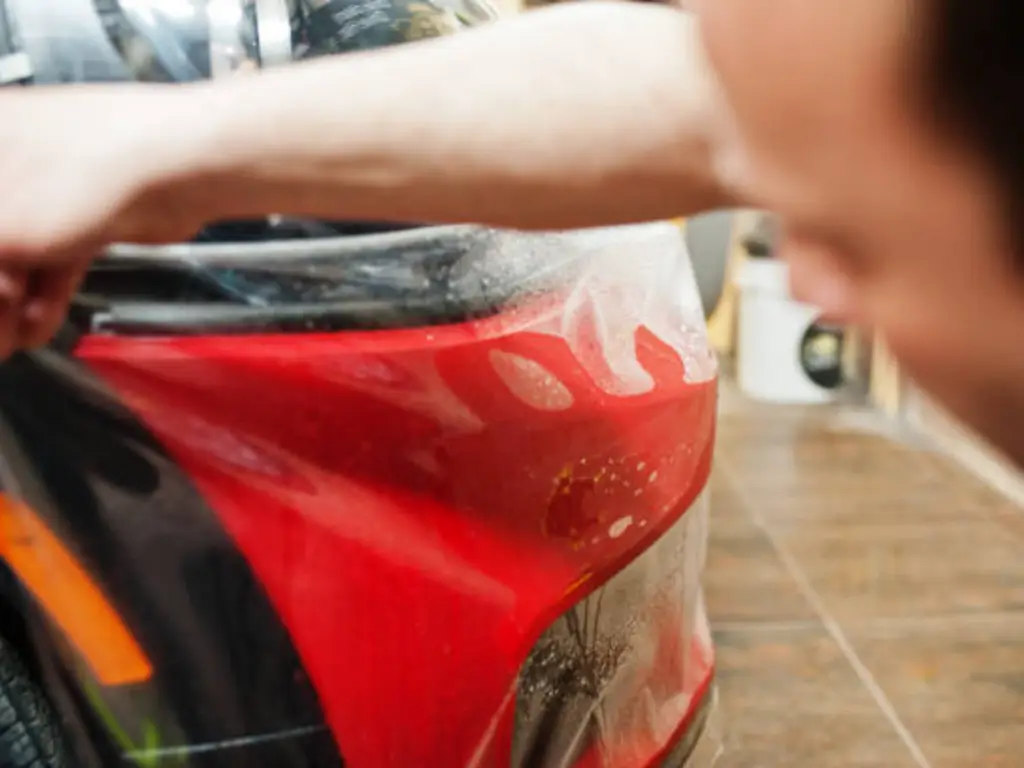
The biggest myth about the automotive aftermarket is that the installation of PPF is a “peel and stick” affair. As a matter of fact, the film itself takes up about 30% to 40% of the entire invoice. Most of the expense is credited to the careful preparation of the canvas and the environmental controls of the plant.
The Illusion of Perfect Factory Paint
When a vehicle rolls off the assembly line, the paint is rarely flawless. During transport via rail, truck, or ocean freighter, the clear coat is bombarded with industrial fallout, rail dust, and environmental contaminants. If PPF is applied directly over this, the film will seal in those impurities permanently, severely degrading the optical clarity and potentially causing premature adhesive failure.
Pre-Installation Decontamination and Paint Correction
Before a single inch of film is cut, the vehicle must undergo a rigorous, multi-stage decontamination process. This includes a ph-neutral wash, chemical iron removal (to dissolve embedded brake dust), and mechanical decontamination using automotive clay.
Following decontamination, Paint Correction is strictly required.
This includes machine compounding and polishing the clear coat to eliminate swirl marks, holograms and small scratches. PPF will enhance the gloss of anything under it; in case you apply it over scratched paint, you will have glossy scratches. One-stage paint repair costs an average of $400-$800 to the overall bill, and multi-stage repair of neglected paint may cost over $1500. This work cannot be compromised on a professional finish.
The Premium of the Cleanroom Environment
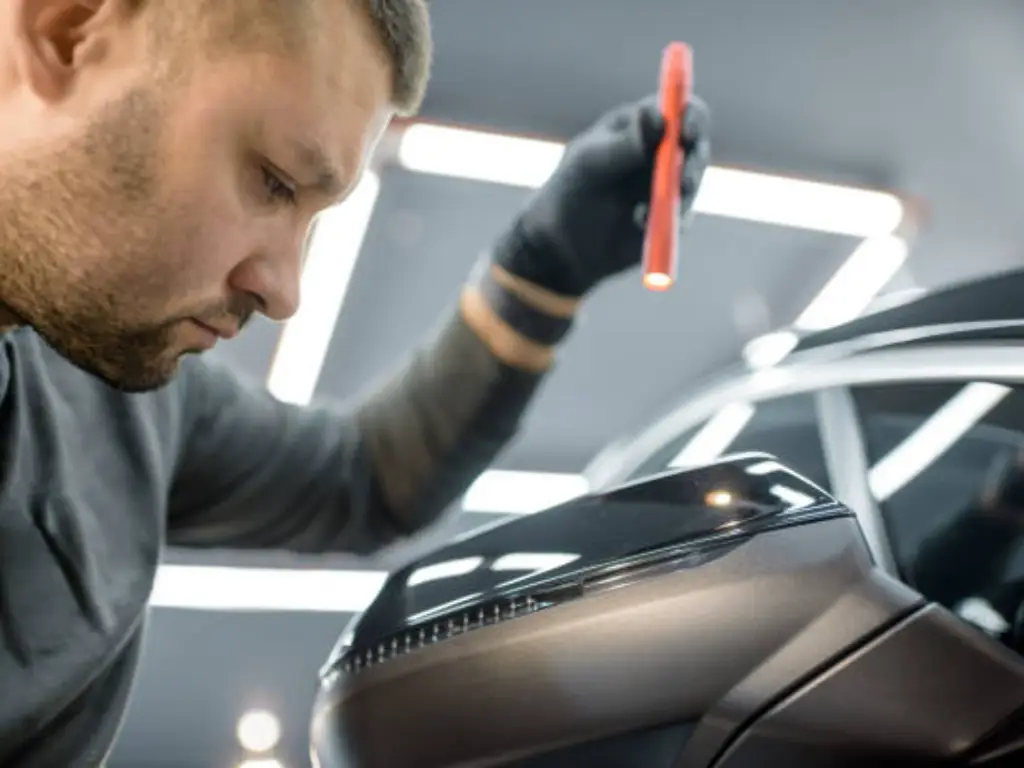
High-end detailing shops operate climate-controlled, surgically clean environments. Airborne dust is the enemy of PPF. If a shop invests in high-lumen inspection lighting, epoxy floors that mitigate dust disruption, and HVAC systems with advanced filtration, those massive overhead costs are factored into the hourly labor rate. You are paying for a sterile operating room for your vehicle.
DIY vs. Professional Installation: The Hidden Costs of Failure
Some consumers buy ready-cut PPF kits online to install them themselves in an effort to avoid these labor expenses. This is where the idea of “trying to save money costs you more” comes out brutally.
PPF adhesive is tacky. Should a beginner installer slip the film onto itself, or pull it in an uneven manner leaving silver “stretch lines” in the glue, that strip of film is immediately destroyed. A destroyed hood section may cost $300 of wasted material.
Worse still is the process of removal. When low-grade DIY film is applied to the car and allowed to bake in the sun over two years, the adhesive will cross-link with the factory clear coat. It takes industrial steam, special chemical solvents, and dozens of hours of tedious work to remove it. In extreme situations, peeling off worn out DIY film will strip the factory clear coat off the primer, leaving a $3,000 repaint bill. The professional labor rate is a policy against disastrous DIY damage.
Hidden PPF Costs: Maintenance, Insurance, and Replacement
The financial commitment to PPF does not end when you drive out of the installation bay. To calculate the true 10-year cost of ownership, consumers and fleet managers must account for post-installation maintenance, environmental degradation, and replacement logistics.
Ongoing Maintenance and Chemical Synergy
Although high-quality PPF is self-healing to light physical scratches, its porous topcoat needs to be maintained to maintain its hydrophobic (water-repelling) characteristics and avoid being stained by bird droppings or tree sap. Owners will have to spend money on PPF-specific maintenance products. Normal carnauba waxes may dry white on the edges of the film, which appears unattractive. Rather, artificial silica-based sealants or ceramic boosters should be used twice a year. This introduces a small yet steady cost of maintenance of $100 to 200 per year.
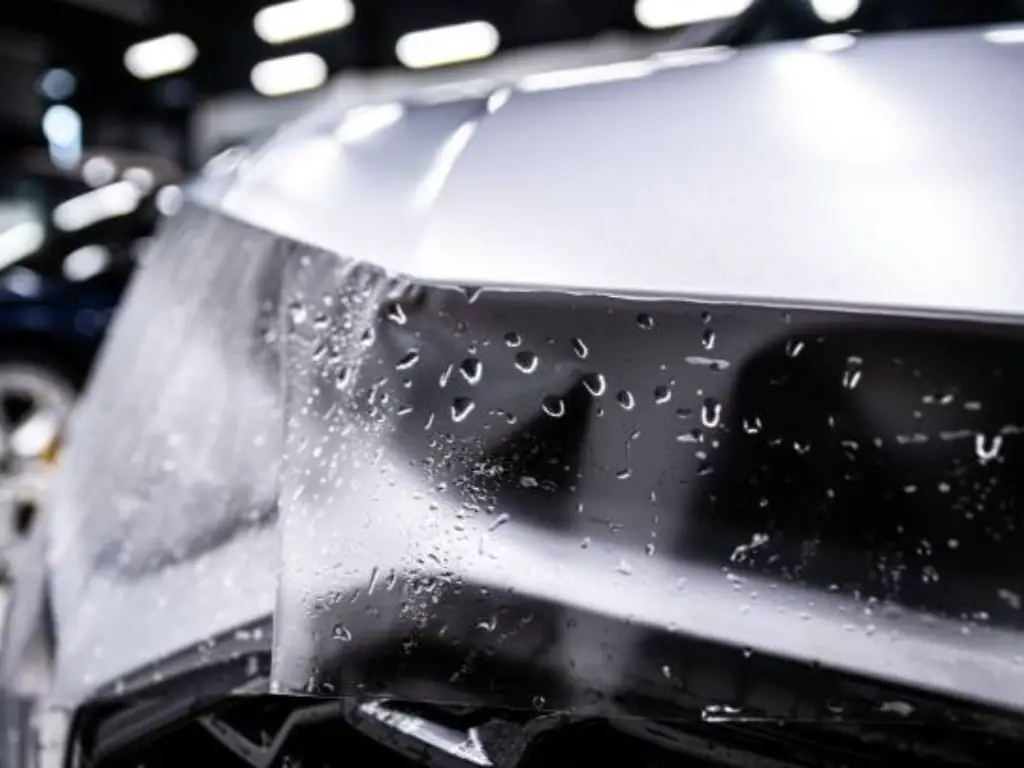
Environmental Acceleration and the 10-Year Average Annual Cost
The geographical setting has an enormous influence on the life of PPF, which has a direct effect on its depreciation curve. In places where UV radiation is intense (like the Middle East or high altitude places like Colorado), the constant assault of ultraviolet radiation challenges the boundaries of the UV inhibitors of the film. The finest Aliphatic TPU will degrade microscopically in 7 to 8 years under such extreme conditions.
On the other hand, in cold climates (such as Canada or Scandinavia), the film is exposed to severe winter road salts, magnesium chloride, and severe thermal shock. These corrosive components may assault the film edges when they are not sealed and wrapped. If environmental damage forces a panel replacement at year 5 instead of year 10, the “Average Annual Cost” of the PPF investment effectively doubles.
Insurance Policies and Post-Collision Replacement
In case your car is in an accident, the metal or plastic panel will have to be physically fixed and repainted. The panel with the PPF covering is destroyed. Does your car insurance cover the replacement of the film? This is a hidden variable. The aftermarket accessories and modifications are not automatically covered by most standard insurance policies unless a specific rider is included on the policy, the “custom parts and equipment” (CPE) rider. This rider will raise your insurance premium.
Warranty Claims and Comebacks
To describe the shop owners and regional distributors, the concealed expenses are associated with product failure. When a store puts up a poor film, the original margin may appear appealing. But in case that film prematurely yellowed, or delaminated at the edges, or the adhesive failed during the first year, the customer will make a warranty claim.
A large Warranty Claim Rate is catastrophic to a B2B operator. Replacing a failed hood PPF would cost the shop the replacement material, but more importantly, they would lose 4 hours of very lucrative labor time to strip the bad film, clean the surface and re-install. The quality of materials is a risk-reduction measure to the shop owners that stabilizes their long-term profit margins by removing these operational liabilities.
ROI Calculation: Is Paint Protection Film Worth It?
In order to find out whether PPF is a good financial choice, we should go beyond the emotional aspect of a shiny car and apply the objective ROI calculations on the basis of asset protection and risk mitigation.
The Matrix: PPF vs. Ceramic Coating
One of the most frequent areas of confusion that results in a wasted capital is the misconception of Ceramic Coatings and PPF. They have completely different purposes and provide various ROI profiles.
- Ceramic Coating (Chemical Defense): This is a liquid polymer which is bonded to the paint to form a hydrophobic surface. It protects against chemical etching (bird droppings, acid rain, UV oxidation) and makes washing incredibly easy. It offers zero protection against physical kinetic impacts. It will not stop a rock chip.
- Paint Protection Film (Physical Defense): An 8mil+ thick urethane shield. It absorbs the kinetic energy of flying gravel, prevents key scratches, and prevents physical abrasion.
It is a complete loss of ROI to invest $1,500 in a ceramic coating that is believed to stop rock chips on a highway commute. The only solution that can be verified in terms of physical impact protection is PPF.
Calculating Asset Protection ROI
The ROI of PPF is calculated by comparing the cost of the film against the cost of an OEM-quality repaint, factored against the preservation of the vehicle’s resale value.
Consider a High-Impact Zone (the front bumper and hood) on a luxury vehicle.
- Cost of PPF (Full Front): $2,000.
- Cost of Repainting (Hood and Bumper): Repaint in a certified collision center of high quality and factory matched is easily over $2,500.
- The Resale Penalty: An electronic paint thickness gauge that is operated by dealership appraisers will immediately identify a repainted panel even when it has been repainted perfectly. Non-original paint in the luxury and sports car market suggests a prior collision, which instantly results in a “diminished value” penalty. This may decrease the trade-in value of a Porsche or Mercedes by $3,000 to $5,000 or more.
Thus, the $2,000 invested in PPF will save a $2,500 repair cost and save $5,000 in intrinsic vehicle value. The ROI is proven to be positive with the vehicles of high value.
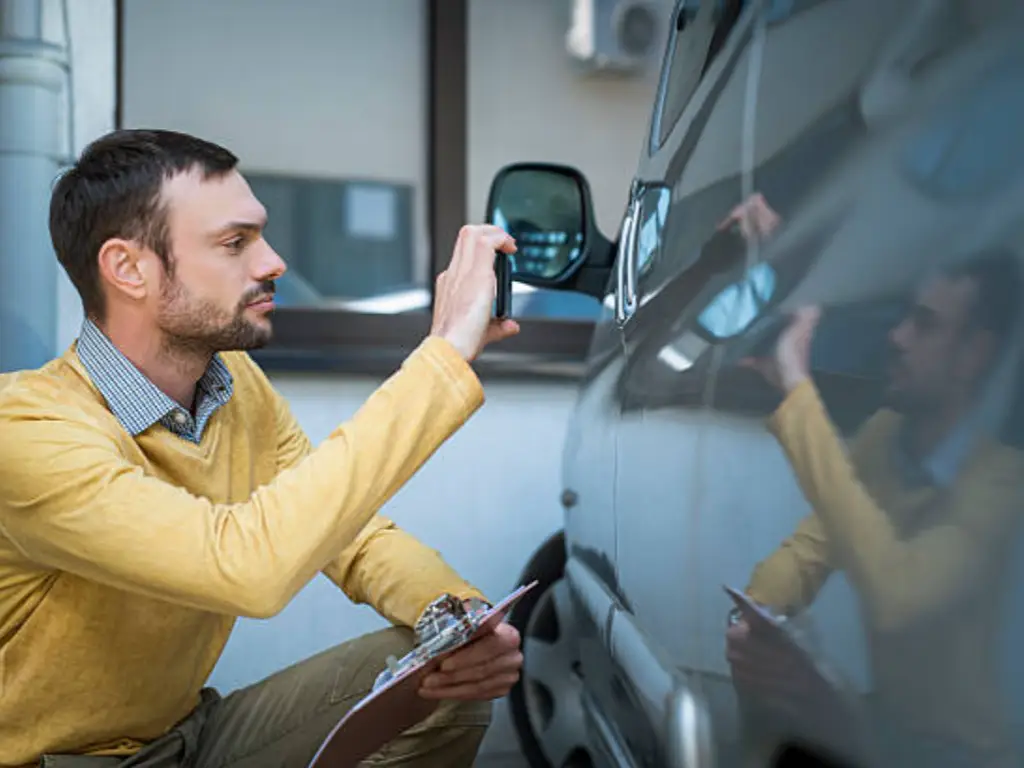
Consumer ROI vs. Installer Profitability
ROI is a concept that varies radically depending on which side of the transaction you are on.
To the consumer, the ROI of high quality PPF is purely of value retention, aesthetic preservation and the avoidance of the disastrous depreciation of repainted panels. It is a car equity insurance policy.
To the installer (B2B), ROI of using a high-quality brand of PPF such as ClearPro is all about operational efficiency, reduction of hidden costs, and the justification of high-ticket prices. The market is saturated with low-cost, imported white-label films that have high initial profit margins. But these movies are infamously hard to deal with. They are not well elastic, and they need a lot of heat to stretch, causing local thinning and adhesive distortion (silvering).
Installation times go up by 30%-40% when a shop uses inferior film. More importantly, these films are likely to be affected by UV degradation (yellowing) or edge peeling within six to twelve months. This leads to disastrous Warranty Claims and Comebacks. To a business owner, “re-doing” a job at no cost translates to losing the cost of the new film, but more importantly, it is the most expensive asset in the shop Labor Hours. Through standardization of operations based on high-performance films, installers will significantly lower comeback rates, maximize bay turnover times, and be able to charge high prices with the assurance of verifiable product life.
ClearPro Case Study: ROI on High-Impact Zones
In order to see how the concept of premium engineering directly translates to consumer value and B2B profitability, we can examine the performance metrics of ClearPro in the extreme high-impact zones, i.e., the front end of a Tesla Model 3 a vehicle that is infamous due to its low aerodynamic nose, which serves as a road debris magnet.
Instead of basing on ambiguous marketing statements, actual ROI should be based on quantifiable technical specifications. ClearPro has radically changed the discussion of the “High-End PPF” to be based on subjective aesthetics to objective, third-party validated hard data.
Optical and Structural Supremacy
To the critical car owner, the visual clarity is the most important. ClearPro utilizes its proprietary Polyoptico™ cross-linked polymer coating technology. This inorganic metallic compound structure provides an independently tested 60° gloss rating of 95 GU (Gloss Units) which is 12-15 GU above the standard PPF. Moreover, it has a haze of less than 0.9% which is much lower than the industry average.
Above all, ClearPro ensures an industry-exclusive finish of “Zero Orange Peel.” The surface roughness of the film under 500x microscopic examination is rated at Ra ≤ 0.05 µm which is lower than the normal 0.15-0.25 µm of the competitors. This implies that the PPF is entirely indistinguishable to perfect factory clear coat, and maintains the aesthetic ROI to the owner.
Durability, Anti-Yellowing, and B2B Efficiency
ClearPro offers a total thickness of 8mil to secure the asset. But in contrast to stiff competitive films, its highly developed formulation enables an elongation/stretch rate of more than 400% with a gloss retention of more than 92% even at extreme tension. To the installer, this outstanding pliability implies that complicated bumpers can be wrapped quicker, with less exhaustion, no adhesive silvering, and significantly lower scrap rates.
Regarding longevity, ClearPro sets an extreme benchmark. While the industry considers a Yellowing Index of ΔE < 2.0 acceptable, ClearPro enforces a rigorous ΔE < 1.0 standard, even after 5,000 hours of UVB exposure (simulating 7-8 years of harsh outdoor sunlight). Its self-healing topcoat is engineered to recover from scratches deeper than 15 µm in seconds under heat, maintaining over 90% healing efficiency even after 10,000 wire-brush abrasion cycles.
Verifiable Evidence
ClearPro has a large 3,000-square-meter, Class 1000 cleanroom production plant, which follows electronics/medical-grade environmental standards. This quality control mania is supported by the authoritative certifications such as ISO 9001:2015, REACH+RoHS and SGS dual reports of QUV and Xenon arc aging. In order to demonstrate practical ROI, ClearPro took a 50,000 km worldwide road test of 10 vehicles, including the 50°C heat of the Middle East and the 1,200 W/m² UV radiation of the Tibetan Plateau.
The result: optical, hydrophobic (maintaining a ≥105° contact angle), and thickness loss remained under 3%. Supported by a comprehensive 10-year electronic warranty covering yellowing, cracking, and blistering, ClearPro provides a mathematically sound, risk-free investment for both the asset owner and the professional installer.
How to Choose an Installer and Avoid Overpaying
With the knowledge of global pricing, material science, and ROI dynamics, the last stage is market execution. What do you do to choose an installation facility that will ensure that you are getting what you are paying for?
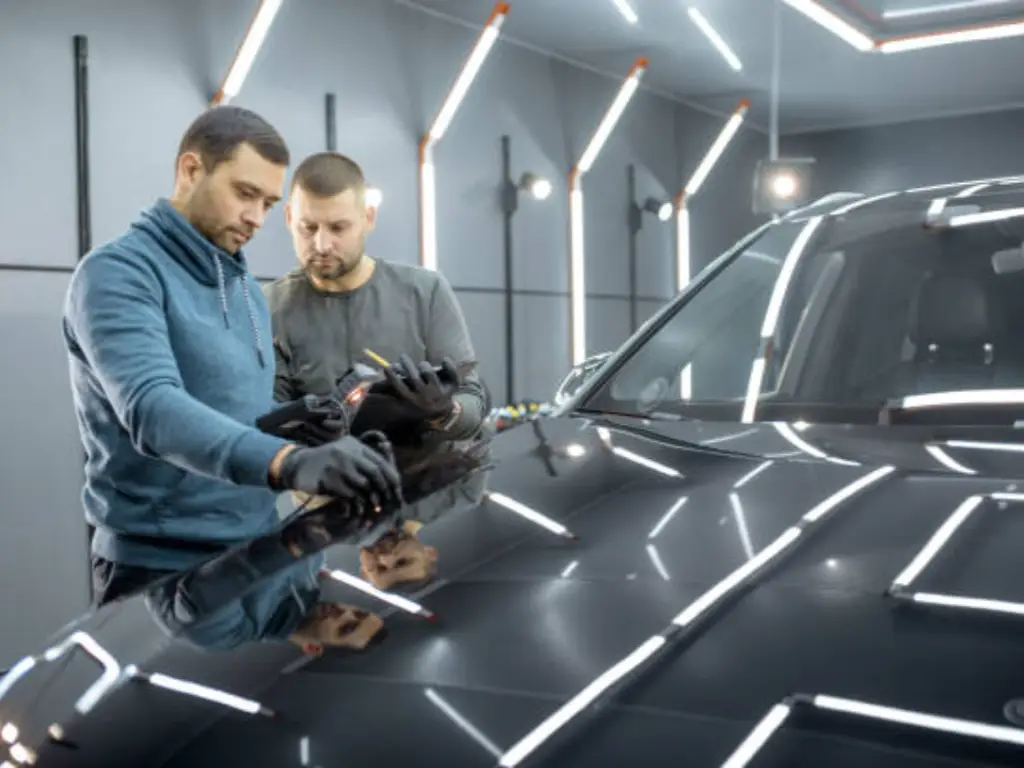
You have to be a procurement manager of your vehicle. Do not take a verbal quote on the basis of “We use good film.” Demand a standardized Service Acceptance Checklist typed into the work order.
The 5-Point “Avoid Overpaying” Checklist:
- Paint Correction Inclusion Specification: The contract must explicitly state whether a 1-stage or 2-stage paint correction is included in the quote, or if the shop is merely doing a chemical wash. PF should not be applied over swirled paint that is not polished.
- Wrapped Edges (Deep Tucking): Demand written confirmation that all possible panel edges (hood, fenders, doors) will be deeply wrapped inside the panel gap, not cut flush with the edge. Flush cuts create a dirty line that is visible and very vulnerable to peeling by high-pressure car wash.
- Post-Installation Edge Sealing & Quality Check: The invoice should have a compulsory 24-48 hour hold period where the shop retains the car to allow the moisture to dry up after which a careful inspection is done to heat-seal any raised edges prior to delivery.
- The 1-Year Review Clause (1-Year Review): Experts of the highest level will offer a 1-year inspection as a part of the package. They will tell you to take the car back after 12 months to test the health of the film, test environmental edge-lifting and decontaminate the topcoat. This demonstrates that the shop is in support of its labor long-term.
- Official Electronic Warranty Registration: A handwritten receipt is of no use when the shop goes out of business. The installer should formally enter the VIN and roll batch number of your vehicle in the global electronic database of the manufacturer, which guarantees your 10-year warranty throughout the country, directly with the brand.
By demanding transparency on these five metrics, you eliminate the “black box” of PPF pricing, ensuring your capital is strictly deployed toward premium materials, expert labor, and measurable asset protection.
Take the Next Step in Professional Asset Protection
Having broken the “black box” of PPF pricing, the next thing to do is to select a solution that will meet your particular ROI objectives. Whether you are a high-end vehicle owner looking to preserve showroom-quality paint or a business partner seeking the industry’s most stable manufacturing benchmarks, ClearPro provides the quantified data and technical precision required for an informed investment.
Explore our full range of high-performance film series and technical specifications here: ClearPro Paint Protection Film Solutions

 EN
EN  ES
ES  FR
FR  AR
AR