




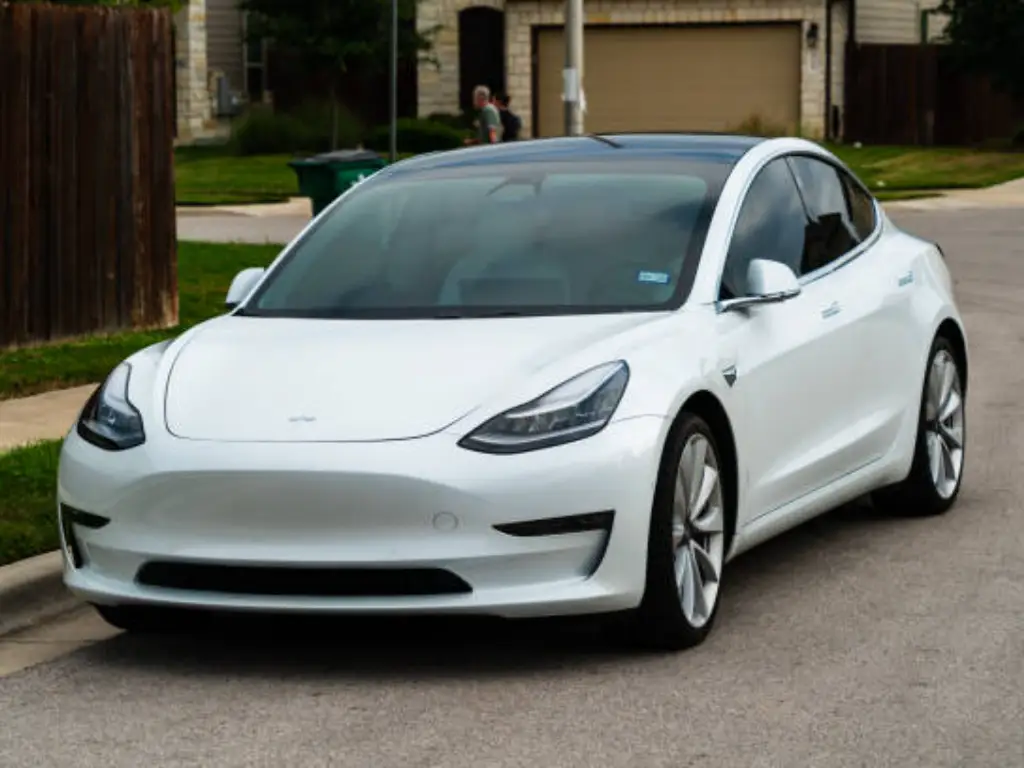
Navigating the aftermarket paint protection industry requires more than relying on ambiguous marketing rhetoric. In order to secure high-value assets, the owners need to base their choices on materials science, verifiable optical data, and measurable financial returns. This detailed manual breaks down the technical facts of automotive protection to show the actual payback in the long-term.
The Technical Truth About Tesla’s Factory Paint Quality
We cannot use subjective assertions that Tesla paint is “soft,” but we should examine objective empirical evidence. Ultrasonic thickness gauges of professional measurements indicate that the total thickness of paint on a factory Tesla is 90-110 µm, often less than 90 µm on lower parts. Conversely, traditional luxury car manufacturers usually have a strong 120-140 µm standard.
This is because of the stringent California environmental laws, which compelled Tesla to use highly developed water-based paint, which is environmentally friendly. Although these significantly lower VOC emissions, they structurally produce a significantly thinner outer clearcoat. The compression of the clearcoat forms two extreme engineering weaknesses since the clearcoat is the first line of defense of the vehicle:
- Drastic Drop in Physical Impact Thresholds: At highway speeds, rock chips and road debris carry immense kinetic energy. A thin clearcoat lacks the necessary buffering depth to dissipate this stress. Consequently, impacts instantly penetrate the surface, creating localized craters that expose the bare primer or metal substrate beneath.
- Severe Lack of Chemical Buffering: Acidic substances such as uric acid in bird droppings, tree sap and acid rain quickly break down the cross-linked macromolecular structure of the paint. The fact that these hazards can burn through the physical protection zone in less than 48 hours is determined by a thinner clearcoat that causes irreversible, patchy chemical etching to the basecoat that cannot be repaired by any standard polishing.
Chemical Defense vs. Physical Barriers: Decoding Protection Materials
With the natural susceptibility of modern paint processes, vehicle owners must design a scientific defense mechanism. When researching the best way to protect Tesla paint, many owners mistakenly confuse “Ceramic Coating” and “Paint Protection Film” (PPF). These are two completely different technical fields: Chemical Defense and Physical Barriers.
| Feature | Ceramic Coating (Nano-Coating) | Paint Protection Film (PPF) |
| Material Structure | Inorganic nano-scale polymers (SiO2 / TiO2). | High-molecular TPU elastomer + Anti-fouling topcoat. |
| Physical Thickness | Ultra-Thin: $1\mu\text{m} – 2\mu\text{m}$. | Substantial: $150\mu\text{m} – 200\mu\text{m}$ ($6-8\text{ mil}$). |
| Rock Chip Defense | Ineffective. Brittle structure; cannot absorb kinetic energy. | Maximum. High-elasticity “Kinetic Sponge” prevents paint penetration. |
| Chemical Resistance | Top-Tier. Extreme pH resistance ($pH2-pH12$) & hydrophobicity. | Highly Effective. Advanced topcoat blocks sap, droppings, and stains. |
| Scratch Remediation | Abrasive. Requires mechanical polishing to remove (sacrificial layer). | Self-Healing. Thermal energy prompts molecular realignment to fix scratches. |
| Maintenance Profile | Lowers cleaning effort; delivers a high-gloss, mirror finish. | Acts as a physical barrier; preserves resale value and original paint. |
| Value Proposition | Chemical & Aesthetic Enhancement. | Physical Asset Protection. |
According to the above rigorous materials science breakdown, and specifically to the daily driving conditions of Tesla owners (especially those with a high percentage of highway commuting), the Hybrid Matrix Strategy is the most efficient and highest-ROI strategy. This plan implements specific solutions on the basis of a scientific risk distribution model:
- Quadrant 1: High-Risk Physical Impact Zones. This covers the front bumper, the hood, the left and right front fenders and the side mirror caps. They are wind-facing surfaces whose probability of impact is more than 90%. The use of PPF in these regions is quite obligatory to create an impassable physical kinetic barrier.
- Quadrant 2: Chemical & Environmental Aggression Zones. In the case of vertical or leeward panels like the doors, trunk lid and roof edges, the likelihood of high-speed rock hits reduces exponentially. The main hazards in this case are environmental fallout, hard water spot, and UV oxidation. Within a tight budget, the use of multi-layered premium ceramic finishes on these particular areas provides the highest level of chemical corrosion protection and superior hydrophobic ease-of-maintenance, and at the same time, enhances the overall visual gloss of the vehicle.
Understanding Yellowing Indices (ΔE) in Premium TPU Films
The performance ceiling and lifespan of any PPF is solely determined by the chemical composition of its substrate. The market is mainly categorized into two types namely Aromatic and Aliphatic Thermoplastic Polyurethane (TPU).
- Aromatic vs. Aliphatic TPU: Budget films rely on Aromatic TPU, which contains unstable benzene rings. Under UV radiation, these rings undergo rapid photochemical reactions, oxidizing into chromophore groups that cause severe yellowing and embrittlement. Premium PPF also uses pure Aliphatic TPU. It lacks benzene rings, and it entirely blocks the physical route of degradation of UV at the molecular level.
- The Yellowing Index (ΔE): In materials engineering, naked-eye observation cannot be used. The Yellowing Index is the scientific standard, which is measured in the form of a color difference value ΔE (Delta E). The acceptable passing threshold of ΔE of the industry is 2.0 under harsh accelerated weathering conditions like the ASTM G154 protocol.
- Thermal Self-Healing Mechanics: Premium TPU is a block copolymer that has a cross-linked structure of dynamic and reversible hydrogen bonds. Minor mechanical forces—like wash swirl marks or light scratches—merely pull these bonds apart without severing the main polymer backbone. When exposed to thermal energy (sunlight, warm water, or a heat gun), the Brownian motion of the polymer chains is excited. The broken hydrogen bonds instantly seek new pairings and realign, “automatically healing” the scratch and restoring flawless optical flatness.
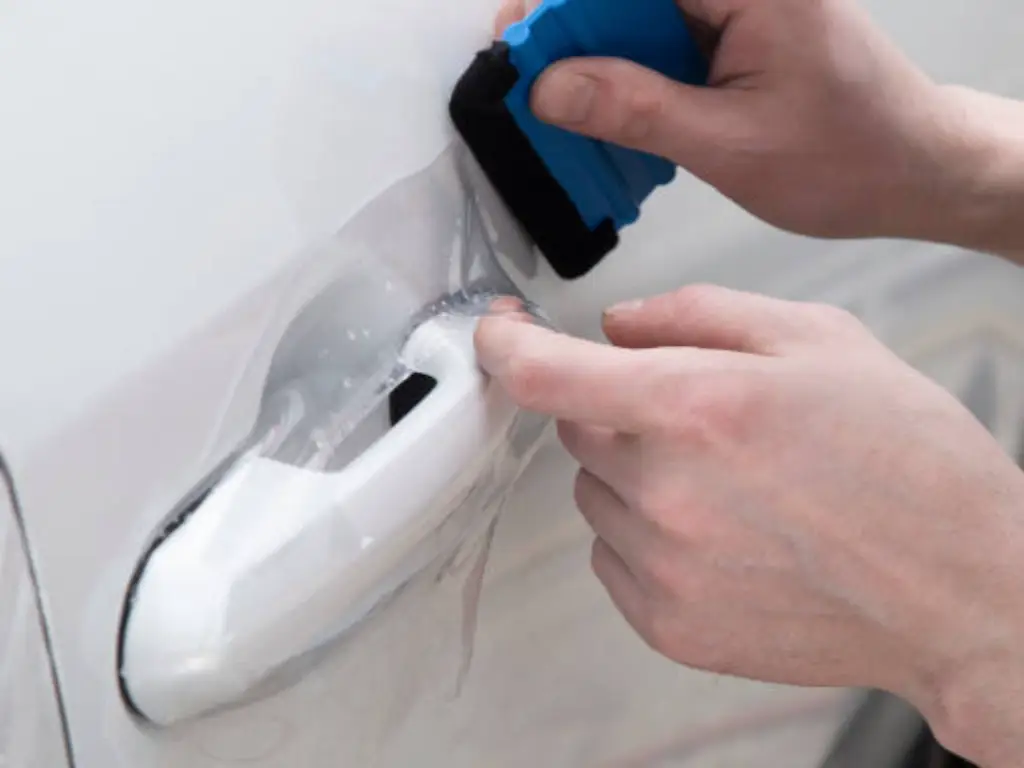
The ClearPro Benchmark: Engineering Zero-Compromise Clarity
In the place where the industry is diluted with marketing rhetoric, ClearPro is transforming the “Premium PPF” into a third-party verifiable, measurable, industrial standard, developing a zero-compromise standard of optical clarity and physical protection.
- Features: Manufactured in a 3,000-sqm Class 1000 cleanroom (medical/electronic grade), ClearPro utilizes proprietary Polyoptico™ nano-crosslinked polymer technology. It gives a 8-mil thick strength and an impressive more than 400% elongation rate to do perfect and complex edge-wrapping.
- Advantages: This precision manufacturing yields a “Zero Orange Peel” mirror finish (Ra ≤0.05 µm, compared to the industry average of 0.15-0.25 µm). It boasts an industry-leading 60° gloss level of 95 GU and suppresses haze to <0.9%—metrics that can be instantly validated on-site.
- Benefits: For Tesla owners, it eradicates the anxiety of film yellowing and paint dulling (especially on Pearl White). It guarantees enduring, crystal-like brilliance, safeguarding both your visual satisfaction and the vehicle’s long-term resale value.
- Evidence: Backed by authoritative SGS, REACH, and ISO certifications. SGS data confirms a yellowing index of ΔE < 1.0 after 5,000 hours of UVB aging (equivalent to 7-8 years outdoors), and a water contact angle of ≥105° after 2,000 hours. Mechanical tests prove a >90% self-healing efficiency even after 10,000 wire-brush scratches. Moreover, 50,000km of real world fleet testing in harsh global environments led to less than 3% total degradation.
Engineering zero-compromise clarity is just the beginning. >Beyond optical performance, understanding the landscape of available protection is key to a long-term investment. Check out our expert analysis on Selecting the Right PPF Brand for Your Vehicle to ensure you’re getting the best protection for your specific needs.
Full Body vs. High-Impact Zones: Optimizing Your Coverage
The high energy efficiency of Tesla cars is based on their aerodynamic design, especially the most recognizable, low-diving, grille-less front fascia of the Model 3 and Model Y. Although this design drastically reduces the drag coefficient to give the vehicle maximum electric range, it also makes the front of the vehicle a giant “rock collection net” in fluid dynamics. Through the analysis of large volumes of road impact distributions, scientific classification of vehicle panels based on their physical risk profiles can be achieved, which will offer coverage optimization strategies depending on the budgets and driving patterns.
The Optimal Localized Solution: High-Impact Zones
In case your daily route is mostly made up of tarmac urban roads, or in case you have a tight budget to follow, then it is the most economically sound choice to focus your resources on the high-risk areas.
- Front Bumper: This is the point of contact with the wind that is the absolute first point of contact. It is the epicenter of rock hits and bug splatter acid. The probability of damage is 100%. It is a P0-priority zone and installation of PPF is an absolute requirement.
- Hood and Fenders: Aerodynamic airflow sweeps road debris up and over the front of the hood and the lateral sides of the fenders. Chipping of paint in these very visible places is aesthetically disastrous. Full Hood installation is highly encouraged instead of Half Hood cut to prevent the ugly build up of dirt along the seam line of the middle panel.
- Mirrors and Rocker Panels: These are the unseen yet high-frequency casualty areas, which is constantly bombarded by the constant ejection of sand and gravel by the high-speed rotation of the front tires.
- Crucial Technical Consideration: When you choose to use localized High-Impact Zone protection only, you need and can only use the highest quality transparent films with very high clarity and very low haze values. It is an essential aesthetic necessity to make sure that the front panels that are to be safeguarded and the back panels that are not to be safeguarded have complete color consistency in the presence of the strong sunlight, completely avoiding any visual discontinuity and clumsy color contrast.
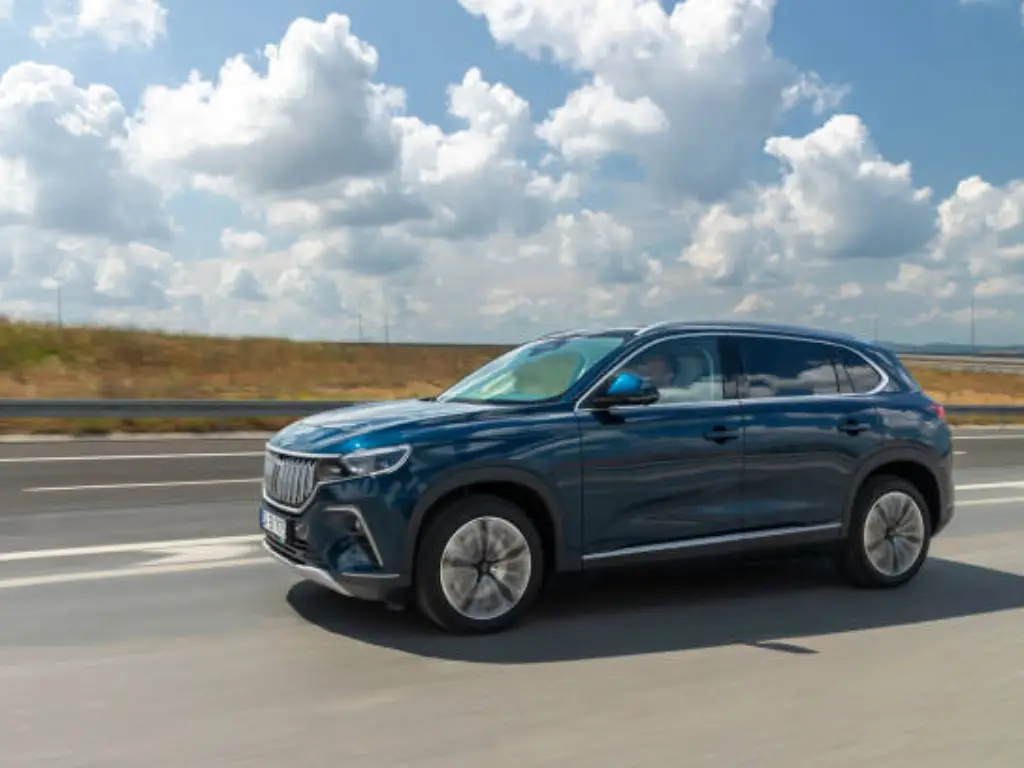
Comprehensive Evolution: Full Body Coverage
Full-body coverage is the solution of the ultimate solution to eliminate all anxiety related to paint to the owners who have a large budget, deep customization needs, or those who travel long distances on unpaved gravel roads.
- With full-vehicle film, there is much more to it than transparent protection. It is a good chance to combine the maintenance of assets and the individual visual improvements. You may choose Color-shifting PPF or a very textured Stealth (Matte) PPF.
- PVC Vinyl Wraps are very thin (typically only 3-4 mil), have no scratch or rock-chip resistance whatsoever, and are extremely susceptible to extreme UV fading in 1-2 years. By contrast, a TPU protection film impregnated with color or a matte finish provides 8-mil heavy-armor physical protection and changes the light refraction of the vehicle to completely change its visual texture (e.g., giving a glossy factory Tesla an instant, deep, satin-like matte finish). This is not just premier protection; it is a profound declaration of automotive taste.
Professional Installation vs. DIY Kits: A Risk-Benefit Analysis
Despite the fact that the labor savings will be ensured to be thousands with the assistance of “Pre-cut DIY PPF Kits,” PPF installation is a low-tolerance, high-precision craft. A logical risk-benefit study will demonstrate that DIY endeavors present extreme engineering hazards that proactively diminish vehicle worth.
- The Tolerance Trap and Internal Stress: TPU is highly elastic despite the fact that computer templates are flawless. Novice DIYers do not have the capacity to estimate the limits of stretch or to control stress points when working with them. Overstretching leads to the molecular structure reeling in over time, leading to extreme edge contraction, elevation or adhesive cracking (also known as “silvering”), ultimately destroying the panel.
- The Cleanroom Imperative: Airborne dust is the greatest enemy of optical clarity. Professional studios are closed with temperature-controlled bays with high-power dust suppression systems. TPU in a static-prone position in a normal garage guarantees the trapping of dust, pollen and micro-fibers. Once squeegeed, these contaminants form permanent micro-bubbles under the film, utterly destroying the mirror-like flatness premium films are engineered for.
- Wrapped Edges vs. Setback Cuts: To lower installation difficulty, DIY kits feature a 1-2 mm setback cut, leaving the film’s edge exposed directly on the panel. From an engineering perspective, this is catastrophic. Daily driving forces grit, wax, and shampoo into this physical step-down, forming a stubborn, highly visible black line over time. Worse, high-pressure car washers can easily catch these exposed edges, causing adhesive failure.
The professional standards stipulate that there should be some excess film left behind. Technicians apply the process of controlled thermal softening to the film to fold and fix it on the inner surface of the metal panel. This Full Wrapped Edge technique leaves the edge of the film outside the pollutants of the environment and is the only secret of 10 years of life and invisibility.
True Costs and Long-Term ROI of Tesla Paint Protection
Faced with the prices of a full-body installation—where the average tesla paint protection film cost ranges between $4,000 and $7,000—most owners would automatically classify this as a very costly consumer luxury. Nevertheless, the logic of B2B asset management is that we should not accept emotional pricing models. The only valid methodology of making large capital expenditure decisions is using mathematical projections to compute True Costs and Long-Term Return on Investment (ROI).
Let us establish a financial baseline using a brand-new Tesla Model 3 with a landed cost of approximately $45,000:
Clear Tiered Market Pricing Projections:
- High-Frequency Localized Protection (Partial Front / High-Impact Zones): Covering the front bumper, full hood, front fenders, and mirrors. Professional installation utilizing top-tier TPU with fully wrapped edges typically ranges from $1,800 to $2,500.
- Full Body Coverage: Encompassing all exterior painted panels. Professional quotes are usually in the range of $4,500 to $6,500 depending on the complexity of the geometry of the vehicle and the grade of the film used.
When we choose to drive the car “naked” (unprotected) in the first 3 to 5 years of service with the normal frequency of urban and highway commuting, the front bumper and hood will be covered with thick, white paint chips due to the impact of rocks.
Inevitable Hidden Maintenance Expenditures and Sunk Costs:
- Physical Restoration Costs at Factory Standards: Multi-layer specialty paints like Pearl White are notoriously difficult to spot-repair without creating jarring color mismatches. In order to reassemble the front end to a factory-new condition, the car has to be brought to a Tesla Approved Body Shop. The uniformity of the process of removing the old paint, sanding, priming and coating the hood and front bumper with several layers of basecoat and clearcoat will easily cost more than $2,500 to $3,000 in hard costs.
- Diminished Value on the Secondary Market: This is the huge, silent financial bleeding which is most often ignored by the owners. In established automotive resale markets (like North America), any legitimate bodywork and repainting will be recorded and registered into vehicle history tracking systems such as Carfax. The presence of non-factory paint on an evaluation report is an enormous red flag in the used car valuation matrix and it is an indication to the buyer that the car has been traumatized before. According to industry statistics, cars that are not painted by the original factory paint experience a significant depreciation blow of 10% to 15%. In the case of this particular Tesla, which is hypothetically worth $30,000 in five years, it would be an immediate loss of asset equity of between $3,000 and $4,500.
The Intuitive ROI Mathematical Proof:
ROI Node = [Avoided Future Repaint Costs] + [Used Car Premium from Factory Paint Preservation] – [Initial PPF Investment]
- Localized Protection ROI = ($2,500 + $3,000) – $2,000 = A positive asset protection value of +$3,500.
- Even in the scenario of a $5,000 Full Body Coverage investment, the upfront cost is virtually entirely offset by the preserved “factory paint premium” over years of depreciation, alongside the priceless psychological benefit of zero maintenance anxiety.
The conclusion is mathematically indisputable: PPF is not a mere car accessory. It is a pre-paid asset insurance policy that covers the irreplaceable value of factory paint of the vehicle. By committing yourself to a fixed initial expense, you have entirely capped the whirlpool of excessive future maintenance expenses.
What Happens After 3 Years? Real-World PPF Degradation
Although sterile laboratory accelerated aging data is scientifically sound, the anarchic interaction of the harsh environmental factors in the real world is the true test of the absolute limits of PPF.
A YouTube automotive reviewer known as SydneyEV posted a well-documented video on one of the most reputable automotive review channels describing the precise wear and tear of a white Tesla Model 3 equipped with PPF after 3 years and 100,000 kilometers of driving in Australia. White paint is universally recognized as the most unforgiving canvas for evaluating PPF aging, as any microscopic yellowing or dirt accumulation is exponentially magnified against the bright background. This highly authentic video archive reveals several critical engineering realities:
- The Inescapable Assault of the Elements: This three-year period was a period of what can only be termed as a hellish test of endurance: scorching summer heat up to 49°C, massive sheets of highly corrosive ash due to disastrous bush fires, snow, and the mere abrasion of thousands of kilometers of unpaved red dirt roads, and the sheer impact of millions of acidic insects at cruising speed.
- The Flawless Performance of the Sacrificial Layer: The macro shots in the video depict extensive, visceral impact trauma of the front fascia and side skirts. The massive kinetic energy of bigger projectiles literally sliced visible, texturally rough divots and pits into the surface of the PPF. But the engineering triumph is this: the whole physical damage was completely stopped by the 8-mil polyurethane barrier; the white factory paint beneath it was not in any way damaged (Did not penetrate through to the paint). The PPF served perfectly as a sacrificial armor that took all the fatal hits on behalf of the vehicle.
- Visual Degradation and Edge Contamination: As a result of the severe bushfires on the car, carbonized ash, which was highly corrosive, mixed with uncleaned road tar stuck to the film on the rear of the car over an extended duration of time. This produced a permanent and grayish motley effect which could no longer be removed with the usual isopropyl alcohol wipes. The overall surface gloss was much lower than it was on day one and the Yellowing Index had shifted to a position that is observable with the naked eye.
- The Painful Lesson of Poor Edge Wrapping: The video directly refers to the inability of the installation shop to perform a smooth edge covering. The physical withdrawal of the film thickness was an entrapment at the acute ends of the bumper and at the lips of the fenders. When ten thousand miles of mud and water had passed, in these crevices not wrapped over, tenacious black dirt was forever fixed. These “Black Edge Lines” were shining on the white chassis and they were a big threat to the aesthetic integrity of the car.
The Road Test Revelation: This documentary piece of evidence is objective in that it destroys the myth of the industry that PPF installation is a promise of a permanently new car. PPF will become old, it will be scratched, and it will be visually damaged because all it does is to receive the trauma that is supposed to befall your car. But it keeps your very expensive factory paint, all right, and all the time. Furthermore, it validates our previous engineering stance: Selecting a top-tier material with ultra-dense, anti-fouling coatings (like the ClearPro Polyoptico™ coating mentioned earlier, which drastically resists ash and chemical permeation) and strictly mandating professional full-edge wrapping techniques are the only proven methods to significantly delay real-world visual degradation, eliminate black edge lines, and maintain long-term optical beauty.
Navigating Insurance Claims and Warranty for Damaged PPF
Understanding the distinction between a Manufacturer Warranty and an Insurance Claim is essential for the proper management of a Paint Protection Film (PPF) installation. The two systems have varying legal and functional frameworks.
- Manufacturer Warranty: Coverage for Product Defects
Manufacturer warranty is a performance warranty by the producer of the film. It is strictly limited to the integrity of the material itself in the normal operating conditions.
- Scope of Coverage: Typically includes manufacturing-related failures such as abnormal yellowing (exceeding industry ΔE thresholds), spontaneous blistering, topcoat delamination, or premature cracking.
- Claims Process: Claims are usually processed through authorized installation centers. Once a defect is identified, the manufacturer provides the replacement material and the center does the re-installation.
- Exclusions: The warranty does not cover external physical damage. This includes but is not restricted to: collision impact, vandalism, stone chips, chemical etching as a result of industrial fallout or lifting as a result of the misuse of high-pressure washers.
- Insurance Claims: Coverage for External Damage
PFP is considered as a guarantee of the product in the event of its destruction in a road accident or by any other external influence. In order to be successful in a claim, the following standard procedures are suggested:
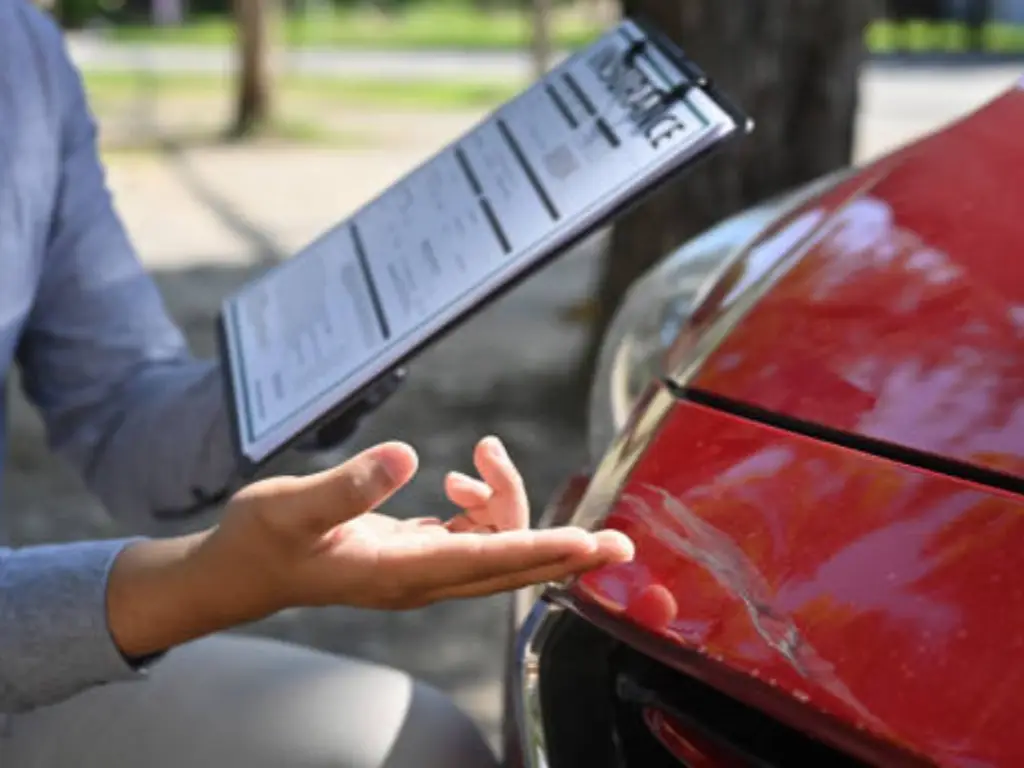
- Step 1: Policy Endorsement. PPF is regarded as an “Aftermarket Modification.” The owners will be expected to make the initiative of reporting the installation to their insurance company. Official invoice is a guarantee that the film is covered by the policy; it is often not covered by claims on undeclared accessories.
- Step 2: Establishing Liability. In the “not-at-fault” accidents, the at-fault party liability insurance is bound by the law to restore the vehicle to its original state before the accident. This involves the expenses of repairing the PPF on the damaged panels.
- Step 3: Technical Documentation. Quotes required by insurance adjusters are line by line. A certified studio shall provide a breakdown in detail including:
- Removal of damaged film and adhesive residue.
- Surface preparation.
- Material costs and labor for re-installation.
- Step 4: Coordination of Repairs. The replacement quote will be submitted along with the repair estimate of the body shop. Note: Newly repainted panels must fully outgas and cure (typically 2–4 weeks, depending on the paint system) before PPF can be safely reapplied to prevent future adhesion issues.
Ready to give your Tesla the protection it deserves? Waiting until it starts to degrade is not an option. Select a movie that is designed to last long after the 3-year mark. Upgrade to ClearPro Tesla PPF – Expert Protection for Your EV ➔

 EN
EN  ES
ES  FR
FR  AR
AR