





The automotive detailing and surface protection industry is frequently saturated with marketing terminology that obscures the fundamental engineering principles governing paint preservation. The most common question that is posed by high-net-worth vehicle owners and fleet managers is exactly how long does a ceramic coating last. The commercial discourse tends to assure of “permanent” or “lifetime” protection, which creates a huge gap between the expectations of the consumer and the physical world.
To definitively answer how long does ceramic coating last, it is necessary to get rid of subjective adjectives and treat the topic with the materials science in mind. Ceramic coating in automobiles is basically a liquid polymer solution, which is mainly made of silicon dioxide (SiO₂), silicon carbide (SiC), or polysilazanes. These liquid solvents evaporate (flash off) when applied to an automotive clear coat, and a nanoscopic, solid crystalline layer is left behind. This layer acts as a sacrificial protective layer against environmental, chemical and mechanical degradation, offering a substantial level of protection. But, like any physical barrier that is subjected to real-world kinetic and chemical forces, this matrix decays with time.
This comprehensive analysis deconstructs the lifespan of ceramic coatings into a quantifiable, technical matrix. This document provides a strict guideline on predicting the degradation of coating by isolating variables like the mechanics of chemical covalent bonds, environmental stress factors, and the concentration of a particular product. Moreover, it examines the state-of-the-art surface protection techniques, which provide a conclusive reference to surface engineering and automobile asset maintenance.
The Baseline Lifespan of Automotive Ceramic Coatings
Establishing a universal baseline for ceramic coating longevity requires acknowledging that “lifespan” is not a static monolith but a spectrum dictated by chemical formulation and application methodology. In the existing automotive surface protection industry, the target life of your ceramic coating ranges between a minimum of three months to an ideal of more than a decade. Such a wide variance requires a rigid classification of the type of coating to develop the right longevity expectations.
At the lowest spectrum, consumer-grade spray sealants and silica-infused quick detailers provide an ephemeral baseline. These are products that are usually prepared at low concentrations of active SiO₂ suspended in water or mild solvents and provide hydrophobic properties that normally decay in three to six months. They are mainly used to enhance the cosmetic appearance, often providing a glossy finish, and not to protect the structural paint.
Moving up the matrix, prosumer-grade bottled coatings represent a median baseline. These recipes have a greater concentration of solid and need careful surface preparation. When applied correctly in a controlled environment, these intermediate polymeric matrices generally sustain structural integrity for one to three years.
At the apex of the liquid coating hierarchy are professional-grade, multi-layer ceramic systems. These advanced chemical recipes are only limited to certified installers because they have short flash times, are highly toxic to solvents, and require infrared (IR) curing lamps. These professional matrices have a lifespan of five to ten years based on operating with a concentration of SiO₂ or SiC usually above 80%. However, this extended baseline is heavily contingent upon rigorous, documented annual maintenance protocols, usually including a professional inspection. In the absence of such scheduled decontamination processes, even the most sophisticated professional liquid coating will fail prematurely in hydrophobic mode even before its hypothetical expiration date.
Chemical Covalent Bonding and SiO₂ Degradation Mechanics
To comprehend the reason why a liquid ceramic coating is not a permanent, immutable armor, one needs to look at the chemical reaction between the siloxane compounds and the automotive polyurethane clear coat. The strength and density of the chemical anchoring of a coating is the key determinant of the durability of a ceramic coating.
When a good SiO₂ coating is applied over a well prepared paint surface, often requiring extensive paint correction beforehand, a complicated chemical reaction starts. The penetration of nanoparticles into the microscopic pores and valleys of the clear coat is facilitated by the carrier solvents in the formulation. As the solvents flash and evaporate, the silane and siloxane molecules undergo hydrolysis and condensation reactions. This is how real covalent bonds are created – siloxane bonds (Si-O-Si) – with the hydroxyl groups located on the surface of the clear coat. A ceramic coating is applied to the surface of the paint, unlike traditional waxes or polymer sealants which simply sit on the surface through weak van der Waals forces, and is a semi-permanent, cross-linked structural layer that changes the surface chemistry of the paint.
Despite the strength of these covalent bonds, the resulting crystalline structure is not immune to thermodynamic and chemical reality. The degradation mechanics are an inevitable consequence of exposure to an oxidative environment. The main failure mode is the gradual, progressive breaking of the cross-linked polymer chains due to ongoing environmental exposure.
Oxygen, moisture, and atmospheric pollutants constantly bombard the surface. Over time, these elements induce chemical hydrolysis, gradually breaking down the Si-O bonds. Moreover, the coating undergoes thermal cycling, i.e. expansion during extreme heat and contraction during freezing. Due to the fact that the ceramic layer and the polyurethane clear coat beneath them have different coefficients of thermal expansion, microscopic stress fractures ultimately occur in the crystalline structure. These micro-fissures undermine the structural integrity of the coating and the contaminants can enter and further hasten the deterioration of the covalent bonds. Hence, the coating should be considered as a sacrificial anode; it takes in the chemical and physical damage to ensure that the car’s paint is not spoiled, but it is eventually lost in the process.
DIY Polymers vs. Professional 9H Grade Longevity Matrices
The automotive detailing market exhibits severe intent entropy, frequently conflating the performance metrics of inexpensive DIY ceramic sprays with high-capital professional installations. In order to set a realistic time frame of longevity, it is essential to strictly isolate and distinguish these two types according to their physical chemistry and engineering requirements.
DIY polymers that are consumer-grade are designed to be easy to use. To do this, manufacturers have to dilute the active silica ingredients with slower-evaporating carrier solvents to a great extent. This ensures that the product does not flash too fast, and therefore the end-user has time to even out the fluid without creating permanent “high spots” or streaks. As a result, the real solid content of SiO₂ remaining on the surface of the vehicle after curing is low. The resultant layer is in nanometers, which provides a low chemical resistance and a very vulnerable physical structure.
On the other hand, the professional 9H grade quartz finishes are developed to be as dense and hard as possible. The pencil hardness scale is denoted as “9H,” which means that it is very difficult to microscopically scratch and mar, and therefore it is hard. These formulations have a very high solid content and in most cases, they need multi-stage applications. The carrier solvents are volatile and they flash off quickly and require careful leveling by skilled technicians. Assuming a proper application, the resulting cross-linked matrix can achieve a thickness of 2 to 3 microns—substantially thicker than consumer counterparts.
The technical matrix below distinctly outlines the physical and chemical distinctions, avoiding the confusion of the different categories of surface protection:
| Engineering Variable | Consumer DIY Silica Sprays / Polymers | Professional 9H Grade Quartz Coatings |
| Active Solid Concentration (SiO₂/SiC) | 5% – 15% (Highly diluted) | 70% – 90%+ (Highly concentrated) |
| Cross-Linked Layer Thickness | < 0.1 Microns (Nanoscopic) | 2.0 – 3.0 Microns (Microscopic) |
| Chemical Bonding Mechanism | Weak ionic bonds / Hydrogen bonding | Strong Covalent (Si-O-Si) Cross-linking |
| Hardness Rating (Pencil Scale) | N/A (Insufficient structural integrity) | 9H (Tested under laboratory conditions) |
| Thermal Resistance Threshold | ~200°C – 300°C | > 700°C (High structural stability) |
| Curing Requirement | Ambient air cure (12-24 hours) | Infrared (IR) Lamp curing often required |
| Expected Hydrophobic Lifespan | 3 – 8 Months | 5 – 10 Years (With strict maintenance) |
This matrix measures the precise causes of the lifespan gap. A coating that is 2-microns thick and has a 9H hardness rating naturally has a greater mass of sacrificial material, which takes a much longer period to be broken down by environmental forces to its molecular structure.
Environmental Stress Factors: UV, Chemical and Thermal Exposure
Theoretical life of a high-grade professional coating is immediately tested by the particular conditions of operation of the vehicle when it is assumed that a perfect application of the coating has been done. Environmental stress factors do not merely add wear; they exponentially accelerate the degradation of the coating’s integrity. These variables have to be analyzed separately in an objective longevity model.
Ultraviolet (UV) Radiation and Photo-Oxidation
One of the major catalysts of polymer degradation is high-intensity ultraviolet radiation, commonly known as uv rays. Although quality ceramic coating is developed with UV inhibitors, prolonged exposure to sunlight is bound to trigger photo-oxidation. The UV-A and UV-B rays have high-energy photons that have enough energy to break the carbon and silicon bonds of the polymer matrix. This incessant bombardment of the coating by photons leads to the oxidation of the outer nanolayers of the coating over a series of years, producing a microscopic chalking effect that reduces the gloss of the surface and the water repelling ability.
Chemical Aggressors: Industrial Acid Rain and Alkaline Degreasers
Ceramic coating is chemically resilient but not indefinitely. In industrialized areas or cities, cars are subjected to acid rain and industrial fallout, which is made up of high concentrations of sulfuric and nitric acids (pH < 4). Conversely, automatic car washes and low-tier detailing facilities frequently utilize harsh chemicals and highly alkaline traffic film removers and degreasers (pH > 10) to dissolve road grime rapidly. Although a ceramic coating can withstand these extreme pH compounds by etching the factory clear coat at a slow pace, the constant exposure to heavy acids and alkalis slowly removes the hydrophobic fluorine or silicone top-layer. This chemical stripping is the most common cause of premature coating failure.
Thermal Shock and Corrosive Salts
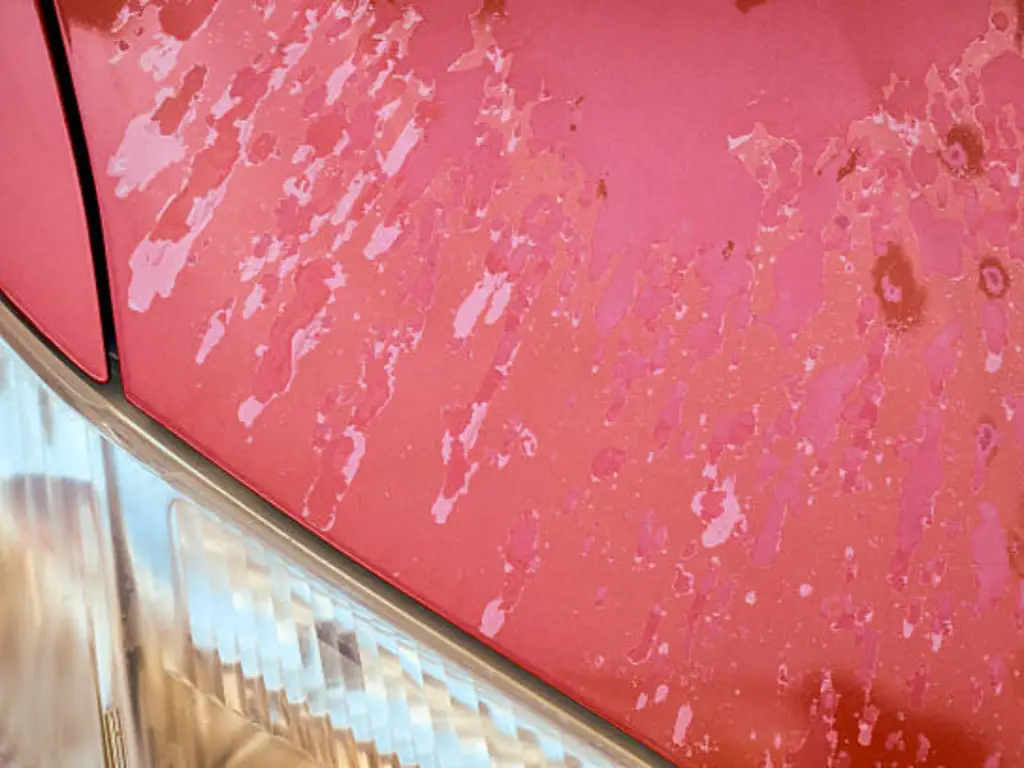
In very northern climates, there is a two-fold threat of thermal processes and corrosive agents. The use of sodium chloride and calcium chloride (road salts) to melt snow forms a very corrosive salty environment. This saline slurry sticks to the bottom of the panels of the vehicle when combined with winter slush. Moreover, hot water is used to wash a freezing car, which causes thermal shock. The fast contraction and expansion of the substrate strains the covalent bonds causing micro-cracking. Once the saline solution penetrates these micro-cracks, the degradation of the protective matrix accelerates exponentially.
Consequently, a “Garage vs. Outdoor” longevity model is essential. A vehicle parked in a climate-controlled environment and driven solely in temperate weather conditions may easily achieve the 7-to-10-year lifespan of a professional coating. The same chemistry used on a car parked outside 24/7, particularly for daily drivers in a severe winter climate in the coastal or industrial areas, can fail in its functional capacity in 36 to 48 months because of the excessive environmental stress factors.
Physical Markers of Nanocoating Failure and Hydrophobic Loss
Using subjective visual evaluations to ascertain the well-being of a coating on the surface is an inaccurate engineering procedure. In order to determine the remaining coating’s lifespan, it is necessary to monitor certain physical indicators and assess the energy processes on the surface.
The most apparent, yet often misunderstood, indicator of coating health is hydrophobicity. In materials science, this is quantified by measuring the Contact Angle. When a high-grade ceramic coating is freshly cured, the surface energy of the automotive paint is reduced substantially and the water molecules stick to themselves instead of sticking to the surface. This leads to the tight, spherical beads of water that have a contact angle that is usually more than 100 degrees. The surface tension changes as the molecular structure of the coating deteriorates through the environmental stressors mentioned above. The water beads start to flatten and the contact angle decreases to less than 90 degrees.
Moreover, the “sliding angle” or “roll-off angle” gets impaired. First, water will violently slide down the panels at low angles, forming a self-cleaning (Lotus) effect. As soon as the coating is on the verge of failure, water will accumulate, stagnate and take a lot of air pressure to flow over the surface. This slow fluid dynamic is an objective marker that is definite and is an indicator that the hydrophobic layer has been chemically stripped or abraded off.
Beyond fluid dynamics, visual micro-marring serves as a critical diagnostic tool. Ceramic coating is meant to be a hard and sacrificial coating. But when minute, microscopic scratches or swirl marks (usually caused by rough wash methods) start to form in large numbers on the clear coat, it means that the physical thickness of the ceramic layer has been grossly depleted. When the paint behind is being damaged mechanically, the ceramic barrier has essentially lost its protection ability. At this point, the rest of the coating has to be removed by mechanical means and another layer attached to the virgin clear coat to reinstate structural protection.
Maintenance SOPs to Maximize Cross-Linked Polymer Durability
The assumption that a ceramic coating is a maintenance-free coating is a terrible myth. In order to get the maximum life out of the cross-linked polymer matrix and to reach the extreme end of its lifespan potential, a stringent Standard Operating Procedure (SOP) of maintenance should be established. The core of proper maintenance is not merely to clean the coating, it averts mechanical abrasion and chemically de-clogs the microscopic pores of the SiO₂ structure.
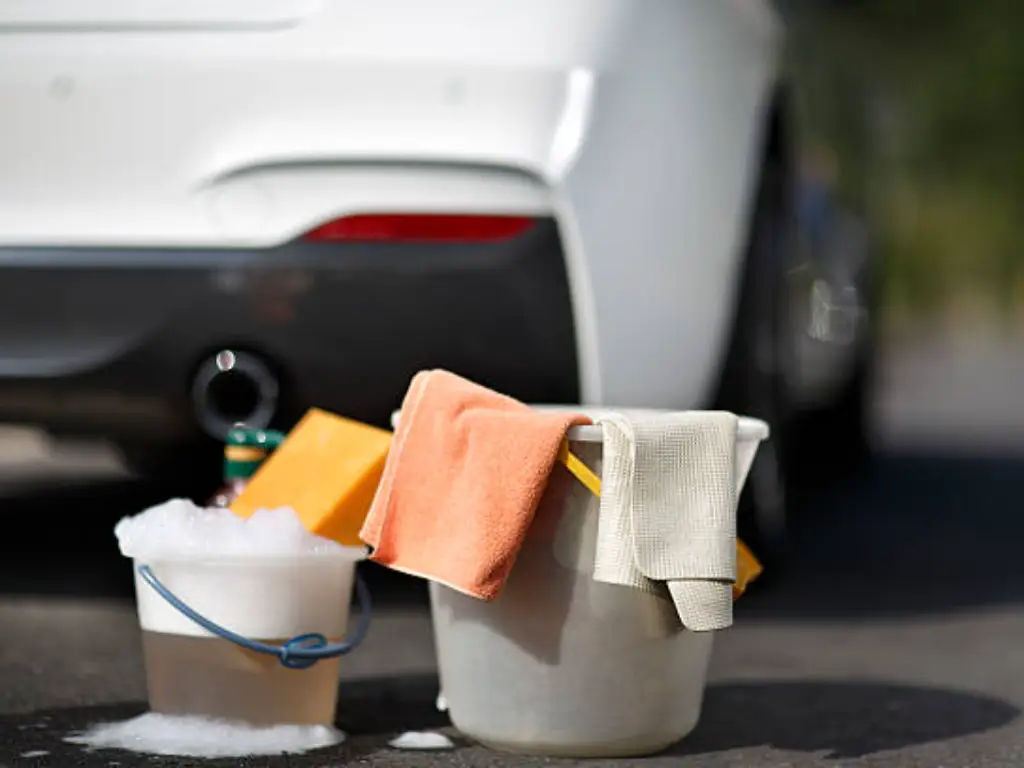
The foundation of coating longevity is the absolute avoidance of automated friction wash systems. The aggressive, high-RPM nylon brushes used in these facilities induce severe mechanical abrasion, effectively grinding away the micron-thin ceramic layer. Rather, the maintenance should be based on the “Two-Bucket Wash Method” during your regular washing. The protocol involves the use of a bucket of pH-neutral shampoo solution and a second, distinct bucket of clean water and a grit guard to rinse the microfiber towels or wash mitt. This isolation of particulate matter prevents dirt from being dragged back across the coated surface, eliminating wash-induced micro-marring.
It is also important to select chemicals. Wash formulas that are non-abrasive and neutral to pH must be used. The hydrophobic tension of the coating will be quickly destroyed by high-alkaline soaps. The coating will, periodically, however, undergo a process called “clogging” due to environmental contaminants. Brake dust iron particles, bird droppings, mineral deposits in hard water (water spots), and tree sap may be embedded in the matrix of the coating, covering its hydrophobic nature and making the surface look like it has broken down.
In order to correct this, a chemical decontamination SOP should be implemented every quarter or biannually. This includes the use of special iron fallout removers (chemically dissolving ferrous metals without damaging the SiO₂ layer) and weak water spot removers (weak acidic solutions), sometimes necessitating a gentle clay bar treatment to dissolve mineral bonds.
Lastly, the scientific guideline of longevity extension involves the tactical use of “toppers.” They are silica-impregnated spray sealants that are used on the wet surface after washing. These toppers are temporary and sacrificial layers over the permanent coating. They seal microscopic abrasions in the damaged polymer grid and recover the high contact angle, essentially absorbing the daily environmental maltreatment and leaving the underlying primary ceramic base layer intact.
Transcending Liquid Limits: Ceramic-Infused Paint Protection Films
Although a liquid SiO₂ coating can be maintained rigorously to extend its chemical life, an objective engineering perspective on surface protection shows that liquid coating, no matter how hard it is (9H), has virtually no mass. A matrix measuring 2 to 3 microns in thickness lacks the kinetic energy absorption required to deflect high-velocity projectiles. Thus, liquid coating is a congenital flaw, whereas its chemical resistance is exceptional. Moreover, the chemical degradation that is bound to take place with time necessitates the repetitive application.
To transcend these physical limitations, the automotive engineering and high-end detailing sectors have shifted toward a superior structural solution: Aliphatic Polyurethane Paint Protection Film (PPF). The industry has experienced a paradigm shift by incorporating nanotechnology in the actual production of thermoplastic polymers.
An ideal example of this architectural development in surface protection is the high-tech production of ClearPro. Instead of using aftermarket liquid applications, the top-level manufacturers design films in which dense, cross-linked nanomaterial polymer structures are permanently cured into the top layer of the film during the extrusion process. Utilizing specialized Polyoptico™ coating technology, this methodology physically fuses the chemical resistance of ceramics with the kinetic impact absorption of a thick polyurethane substrate.
This approach yields measurable, third-party verifiable data that eclipses pure liquid solutions. Operating out of industry-leading 3,000-square-meter, Class 1000 cleanrooms (a standard typically reserved for semiconductor or medical device manufacturing), the production environment guarantees zero microscopic particulate contamination. This accuracy in production leads to a surface morphology that has never been seen before. At 500x microscopic analysis, the surface roughness (Ra) is 0.05 µm or less, completely removing the “orang peel” texture of conventional films, and a 60° degree gloss reading of 95 GU, which is much higher than typical clear coats.
The technical specifications of such advanced ceramic-infused films represent a multidimensional upgrade. The thickness of the film, which is normally approximately 8 mil (approximately 200 microns), offers immense physical impact resistance and tensile elongation rate of over 400% enabling easy installation. More importantly, the hydrophobic parameters are engineered constants that are stabilized. Laboratory tests (with 2000 hours of Xenon lamp aging) show that the contact angle is still 100° or more, with a starting point of 105°.
Furthermore, the integration of advanced aliphatic polyurethane chains introduces robust self-healing mechanics. When subjected to physical abrasion (such as a 30 µm copper wire brush), the elastomeric memory of the film allows it to recover from >15 µm deep scratches under 80°C thermal exposure, maintaining a >90% healing efficiency even after 10,000 laboratory cycles. Coupled with a strict ΔE<1.0 rating for yellowing resistance under extreme UVB exposure, these metrics confirm that advanced PPF bypasses the volatile, degradable nature of liquid ceramics. It delivers a verifiable 10-year warranty timeline, offering an ultimate, quantifiable solution for both physical impact defense and chemical corrosion resistance.
Formulating a Realistic ROI Timeline for Surface Protection
In the implementation of high-capital asset protection, the stakeholders have the responsibility to remove subjective marketing warranties and create a realistic Return on Investment (ROI) schedule depending on Total Cost of Ownership (TCO). The exact life of a selected protective medium is important to this calculation.
In the case of professional quality liquid ceramic finishes, the start-up cost is significantly less than high-tech film systems. The calculation of ROI should however take into consideration the rigorous, continuous maintenance needs. To uphold a 5-to-10-year warranty, manufacturers typically mandate documented annual inspections. These annual check-ups involve professional decontamination washes, mechanical spot-polishing to remove minor marring, and the re-application of ceramic “boosters” or top-coats. The compounding cost of these mandatory annual services, combined with the inherent risk of kinetic damage (rock chips) which ceramics cannot prevent, alters the long-term financial equation significantly.
On the other hand, to compute the ROI of an engineered substrate such as ceramic-infused Paint Protection Film, one will have to compute a larger initial capital expenditure versus a significantly smaller depreciation and maintenance curve. Since the hydrophobic and optical properties are incorporated into the self-healing thermoplastic polyurethane, the necessity to regularly, and at a high cost, have the product decontaminated and re-coated by professionals is practically removed.
The final choice is based on schedule management and expectation management. When the goal is short-term (2-3 years) chemical resistance and gloss improvement and the maintenance cost is accepted to be incurred continuously, high-grade liquid ceramic matrices will be a valid ROI. Nevertheless, to achieve full asset protection with a 7-10 year horizon, a more quantifiable, structural defense mechanism that combines kinetic impact resistance with long-term chemical hydrophobicity would be much more desirable, and would provide a much better, much predictable long-term payback on investment.

 EN
EN  ES
ES  FR
FR  AR
AR