




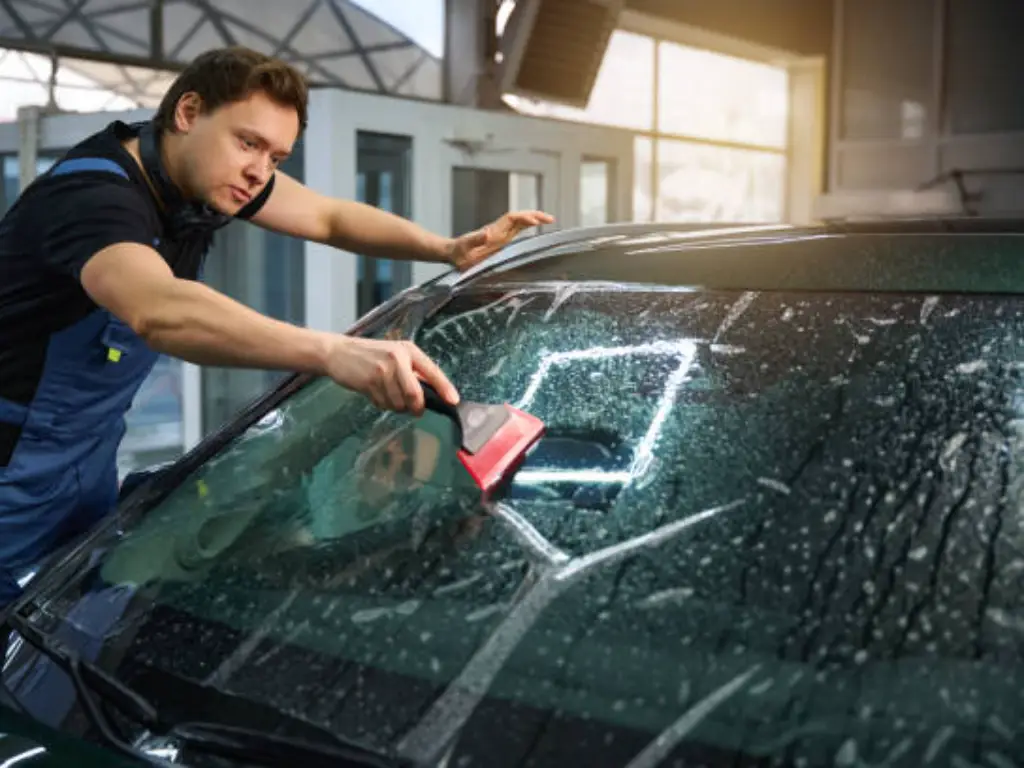
The windshield is no longer just a barrier; it forms the basis of your vehicle Advanced Driver Assistance Systems (ADAS) optical. A broken windshield is therefore not just the cost of a repair, it is a failure of the sophisticated sensors that ensure your safety.
This manual breaks down the marketing hyperbole of Windshield Protection Film (WPF). We are going to leave the lists of arbitrary brands and perform a technical analysis of the leading material technologies: PET and TPU. We will examine the actual economic calculus of protection and prepare you to read such important specifications as refractive haze and surface roughness.
We aim at assisting you in making trade-offs among impact resistance, optical fidelity. You are either running a commercial fleet or keeping a luxury EV safe, but this guide will make sure that you do not fall into the orange peel trap and choose an invisible shield.
Why Windshield Protection is a Financial Necessity
To understand the value proposition of windshield protection film, one must first audit the true cost of glass replacement in the modern era. The economic argument for WPF is no longer about avoiding a minor nuisance; it is about risk management and asset preservation.
The Invisible Bill: Beyond the Glass
The retail cost of an OEM (Original Equipment Manufacturer) windshield is only the tip of the iceberg. In the case of a normal car, the replacement may be between 300 and 500 dollars. But in the case of vehicles fitted with ADAS, which is found on most of the new cars sold in the United States, Europe, and Asia, the cost structure is fundamentally different.
Once a windshield has been changed, the sensors attached on the back of it need to be recalibrated so that they can see the road properly. A fraction of a degree can make emergency braking systems ineffective or malfunction the lane-departure warnings. This recalibration is a process that needs special equipment and a lot of man hours.
- OEM Glass Price: In the case of luxury EVs or high-performance SUVs, the glass itself can be much more than 1,000 or 1,500.
- Calibration Fees: Static and dynamic ADAS calibration would be an added cost of another $600 to 1200 to the bill.
- Total Exposure: It is not rare that a single stone chip can lead to a repair bill of over 3,000.
Windshield protection film is, therefore, a financial hedge. It transforms a high-probability, high-cost variable cost (glass replacement) into a lower and fixed-cost preventative investment.
Asset Preservation and the Factory Seal
To the connoisseur of luxury cars, super cars, or high-priced electric cars such as Tesla, the “Factory Seal” is sacred. The factory application of urethane sealant by robots provides some degree of structural rigidity and waterproofing, which is hard to duplicate in an aftermarket environment.
Removal of this original seal to install a windshield is risky:
1. Water Leaks: Leaks of water may occur due to imperfect use of sealant by hand, which destroys dashboard electronics.
2. Wind Noise: Highway speeds may result in audible whistling through micro-gaps in the seal.
3. Structural Integrity: In contemporary unibody, the windshield adds up to 40 percent of the structural strength of the vehicle in a rollover. Weakened adhesion may be a safety risk.
4. Resale Value: With collector cars, all original glass is a huge value addition. Even an OEM windshield replacement can indicate a history of accidents or reduce the provenance of the vehicle.
Commercial Operations Risk Management
In the case of fleet managers of logistics trucks, rental fleets, or off-road tour vehicles, the price of a broken windshield is quantified in Downtime. A truck that is in the shop awaiting the delivery of a particular glass part to be shipped and calibrated is a truck that is not producing revenue.
The likelihood of the windshield being damaged in rough conditions is close to 100 percent during the lifetime of a vehicle. With the use of a sacrificial layer of protection, fleet operators will be able to minimize the number of glass replacements and keep the assets on the road and meet delivery schedules. WPF in this case, is a tool of operational efficiency.
PET vs. TPU: Decoding Material Science
The market is currently divided between two distinct polymer technologies. Understanding the chemical and physical properties of these materials is essential for making an informed decision, as they manage impact energy in fundamentally different ways.
Quick Comparison: PET vs. TPU
| Feature | PET (Polyester) | TPU (Polyurethane) |
| Primary Defense | Deflection (Hard Shell) | Absorption (Soft Cushion) |
| Impact Resistance | High (Rigid) | High (Elastic) |
| Installation | Difficult (Requires Heat Shrinking) | Easy (Cold Stretch) |
| Self-Healing | No (Scratches are permanent) | Yes (Heals with heat) |
| Curved Glass | Poor (Prone to lifting) | Excellent (Conforms easily) |
| Ideal For | Flat Glass (Jeeps, Trucks) | Curved Glass (Teslas, Sports Cars) |
PET Films: The Rigid Defender
Polyethylene Terephthalate (PET) is the conventional method of windshield protection. This was the only possible solution in the past and it is still common in some industries.
The Physics of Deflection
PET films are analogous to the smartphone screen protectors that are made of tempered glass. They are based on high structural rigidity and hardness, which is normally 4H and above on the pencil hardness scale. When road debris hits a PET film, the material tries to divert the energy. Preferably, the stone does not penetrate the hard surface.
Applicability and Limitations
PET is especially effective in the following situations:
- Scratch Resistance: PET is hard and therefore inherently resistant to wiper blade and sand abrasion.
- Planar Surfaces: It works well on flat glass, including the one on Jeep Wranglers, Mercedes G-Wagons or heavy-duty trucks.
Nevertheless, PET has some serious limitations:
- Brittleness: The film is brittle due to the same rigidity which gives it scratch resistance. It is unable to assimilate energy; it has to repel it. As a result, the film itself is frequently broken by a huge impact and needs to be replaced.
- Installation Problem: PET is not stretchable. An installer has to employ high heat to shrink the film to shape to apply it to a curved modern windshield. It is a skilled procedure and a lot of heat may overload the glass.
- Delamination: In complicated curves, the tension in the rigid film may tend to lift it at the edges as time goes by.
TPU Films: The Impact Absorber.
Thermoplastic Polyurethane (TPU) is the new generation of protection, which has the same roots as high-end Paint Protection Film (PPF).
The Physics of Absorption
TPU is an elastomeric substance. It does not reflect energy, but absorbs and dissipates it. Suppose you threw rock chips against a concrete wall, and then threw it against a rubber tire. The rubber bounces back the concrete chips.
When a stone strikes TPU film, it temporarily deforms, absorbing the impact and distributing the impact force across a greater area of surface. This greatly minimizes the maximum stress which is passed to the glass beneath and no star breaks or bullseye cracks are formed.
The Benefits of Elasticity
- Simple to install: TPU is very flexible. It is able to be stretched over complicated curves (such as those on a Tesla Model X) without harsh heat contraction. This minimizes the chances of installer error and provides a superior fit.
- Self-Healing Properties: Polyurethane is soft and can therefore heal small scratches. The polymer chains reorganize when subjected to heat (sunlight or warm water) to remove fine swirl marks.
- Impact Damping: It is much better in stopping glass breakage of larger and faster projectiles since it is a shock absorber.
The Trade-off
In the past, TPU was weak due to its softness. The initial models were gummy, caused drag on wiper blades, and had optical distortion. Nevertheless, these problems have been to a large extent addressed by advanced manufacturing in the best products.
The “Orange Peel” & Clarity Crisis
While protection is the primary function, optical clarity is the critical requirement. A windshield film that protects the glass but impedes the driver’s vision is a safety hazard. This brings us to the most significant complaint in the industry: Optical Distortion.
Visual Distortion and “Orange Peel”
When applied to thin films, Orange Peel is a surface texture that looks like the skin of an orange. The surface is not absolutely flat but consists of microscopic peaks and valleys.
When a light is going through an orange peel film, it does not move in a straight line. Light is bounced off at different angles on the uneven surface. To the driver, this takes the form of:
- Wavy Vision: Straight lines (such as telephone poles or horizon lines) seem to wavy or bend with movement of the head.
- Focus Fatigue: The eye always has trouble focusing with the distortion and results in fatigue of the driver during long journeys.
This is especially common in low quality TPU films, where the extrusion or coating stages of the manufacturing process have not produced a completely leveled surface.
Haze, Glare and Refractive Index
In addition to texture on the surface we need to look at the internal optical characteristics of the film.
1. Haze: This is a measure of the light that is scattered through the film. The haze causes the windshield to appear milky or hazy particularly when driving in direct sunlight or during the night under the streetlights.
2. Glare (Bloom): Low quality films may lead to the blooming or starbursting of the Headlights of oncoming traffic, which decreases the visibility during night.
3. Birefringence (Rainbows): This is a typical problem with PET films. The film may exhibit a distracting rainbow pattern when observed using polarized sunglasses because of stress in the polymer orientation. In this respect, TPU films tend to be superior since they are optically isotropic.
Summary: There is no compromise on optical clarity. A film that lowers the visual acuity to make the process of driving more difficult, which is known as protective, ironically, makes one more prone to an accident, which is the opposite of what the film was supposed to do.
Durability Realities: Weathering and Wiper Wear
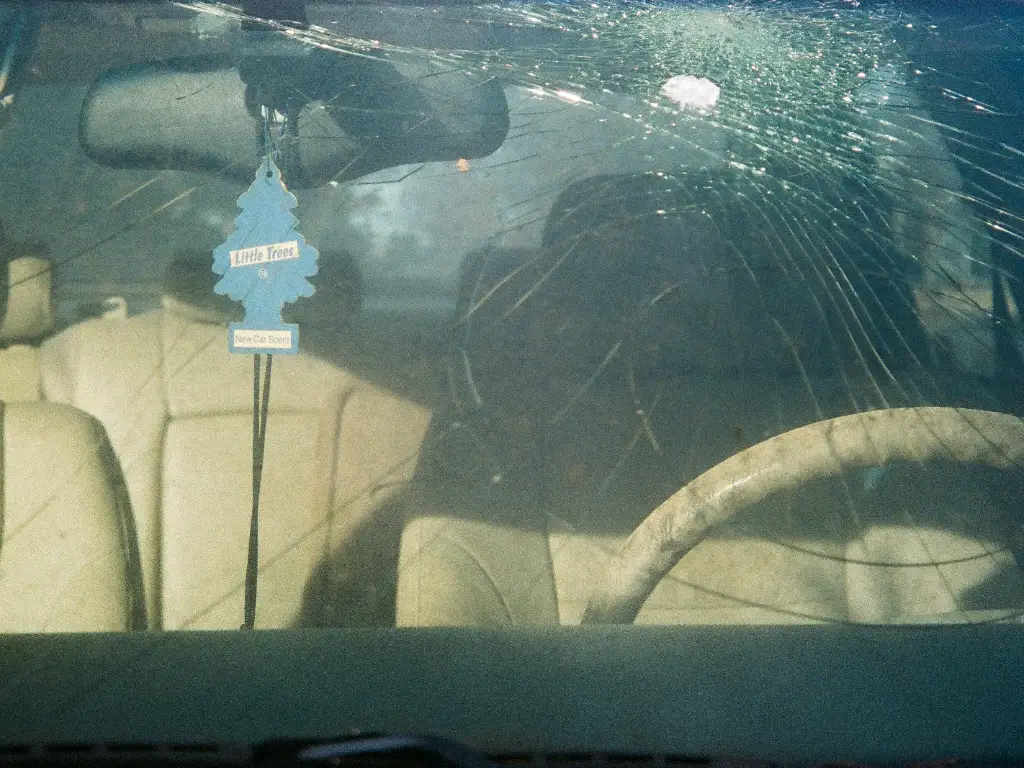
It is imperative to set realistic expectations regarding the lifespan of windshield protection films. Unlike Paint Protection Film (PPF), which can last 5 to 10 years, windshield film operates in a much harsher environment. It is the only surface on the car that is intentionally and repeatedly abraded by mechanical devices (wiper blades) while being blasted with grit and water.
The UV Challenge and Yellowing
The windshield is the most dominant greenhouse of the car which absorbs the greatest amount of the Ultraviolet (UV) radiation.
- The Chemistry of Degradation: UV radiation strikes chemical bonds in polymers. In substandard movies, this causes photo-oxidation, which is reflected as Yellowing. A yellow film does not only appear old, it also distorts color to the driver.
- Adhesive Failure: The adhesive layer may also be attacked by UV and crystallize or peel off the glass resulting in bubbles or delamination.
- The Reality Check: Budget movies can be doomed to fail within a matter of 6 months in extreme climates (Arizona sun or Middle Eastern heat).
The Wiper Blade Factor
The most common cause of premature replacement is the contact between the wiper blade and the film.
- Micro-Abrasion: The film is covered with dust and road grime. These abrasive particles are carried across the surface when the wipers are switched on. This produces micro-scratches in the direction of the wiper arc in thousands of cycles.
- Hydrophobic Breakdown: To overcome this, the high-quality films are based on a hydrophobic (water-repellent) top coating. This coating makes the surface smooth and enables wipers to slide easily and water to bead off. This coating is, however, a consumable layer. When it has worn off, friction rises, chatter of the wipers sets in, and the film is more readily scratched.
The Expert View: A good windshield film is a sacrificial film. It is its duty to absorb the abuse and not the glass. It is a rational and economically viable forecast to expect a lifespan of 12 to 24 months of a daily driven vehicle.
For a holistic glass protection strategy, balancing this exterior physical defense with advanced interior thermal regulation is essential. Reviewing an audited selection of [established automotive window tint brands] allows you to identify high-performance ceramic solutions that provide maximum infrared (IR) rejection while maintaining the optical clarity required for long-term driving comfort.
Defining the Top Tier: The ClearPro Standard
We have established the inherent challenges: the need for TPU’s impact absorption without its optical distortion, and the need for durability in the face of UV and mechanical abrasion.
How does one solve the “Orange Peel” paradox of TPU? The answer lies in precision manufacturing. This is where ClearPro distinguishes itself—not merely as a brand, but as a vertically integrated manufacturer holding the stringent IATF 16949 certification.
Polyoptico™ Technology: Zero Orange Peel
ClearPro has engineered a proprietary solution to the clarity crisis: the Polyoptico™ nano-material cross-linked polymer coating structure. This is not marketing nomenclature; it is a measurable structural advantage.
By utilizing transparent, high-gloss inorganic metal compounds within a dense coating matrix, ClearPro achieves surface metrics that statistically dominate the competition.
- Surface Roughness (Ra): The standard metric for “smoothness.”
- Competitor Average: 0.15–0.25 µm (Visible texture).
- ClearPro Standard:Ra ≤0.05 µm.
- The Result: Verified by 500x microscopic analysis, ClearPro delivers a “Zero Orange Peel” surface that is optically indistinguishable from bare glass.
- Optical Fidelity Verified by SGS:
- Gloss: Measured at 60°, ClearPro achieves 95 GU (Gloss Units), which is 12–15 GU higher than standard PPF-based windshield films.
- Haze: With a haze rating of <0.9%, the film offers exceptional transparency, verified by third-party SGS instrumentation. This is 30% lower than mainstream brands, ensuring that “Feel The New Clarity” is an empirical reality, not just a slogan.
Engineered for Extremes: Class 1000 Production
High-fidelity optics cannot be produced in a standard factory environment. Airborne dust particles are the enemy of optical film. A single speck of dust trapped between layers during coating creates a permanent optical defect (a “lens” effect).
ClearPro operates a 3,000 square meter Class 1000 clean room.
- Precision Control: This facility maintains constant temperature and humidity levels, adhering to standards typically reserved for semiconductor or medical device manufacturing.
- Consistency: This environment ensures that the coating thickness is uniform and free of contaminants, which is critical for maintaining the refractive index across the entire roll.
Proven in the Real World
Laboratory data is necessary, but road data is definitive. ClearPro conducted a grueling 50,000 km global road test:
- Conditions: From the scorching heat of the Middle East (50℃) to the freezing tundra of Northern Europe (-30℃) and the intense UV radiation of the Qinghai-Tibet Plateau (1,200 W/m²).
- The Outcome: After one year and 50,000 km, the films were removed and analyzed. The data showed less than 3% loss in optical clarity, hydrophobic performance, and thickness.
- Hydrophobic Endurance: The contact angle remained ≥100° (from an initial ≥105°) after 2,000 hours of Xenon aging tests. Competitors typically degrade to 85-90°, leading to water smearing.
This combination of IATF 16949 manufacturing discipline, Polyoptico™ technology, and SGS-verified performance defines the new benchmark for the industry.
Installation & Maintenance Best Practices

Even the finest film requires proper installation and care to perform at its peak.
Installation: The TPU Advantage
For professional installers, the shift to high-quality TPU like ClearPro fundamentally changes the workflow.
- Cold Stretch: Due to a high tensile strength and elongation rate of >400%, ClearPro films can be applied to curved windshields without the intensive heat shrinking required by PET. This removes the risk of thermal shock cracking the glass during installation.
- Edge Sealing: The most critical step is the edge treatment. Experienced installers will ensure the film is trimmed precisely (often 1-2mm from the edge or tucked under the molding) to prevent lifting.
- Curing Time: Unlike glass, TPU is porous. It requires time to fully bond. Visual “settling” of the adhesive is normal for the first few days.
Daily Maintenance for Longevity
To maximize the ROI of your protection film, follow these maintenance protocols:
- Keep Wipers Clean: Inspect your wiper blades weekly. Wipe the rubber blades with a damp cloth to remove embedded grit. This simple act reduces micro-scratching by 80%.
- Use Soft Blades: If possible, switch to silicone or soft rubber wiper blades, which are gentler on the TPU surface than hard graphite-coated blades.
- Hydration: TPU likes to be hydrated. Regular washing prevents pollutants from drying into the pores of the film.
- Top-Coat Maintenance: Every 3-4 months, apply a dedicated sealant or ceramic spray designed for PPF. This replenishes the hydrophobic layer, maintaining that 105° contact angle and ensuring water beads off effortlessly.
Choosing the Right Partner for Your Vehicle
As we conclude this expert guide, the criteria for selection should now be clear. You are not looking for a sticker; you are looking for an engineering component.
The Selection Checklist
When evaluating options, demand the following:
- Material: Ensure it is TPU (Thermoplastic Polyurethane) for impact absorption and self-healing, not PET.
- Data: Do not accept “crystal clear” as a specification. Ask for the Haze percentage (<1%) and Gloss Units (>90 GU).
- Verification: Ask to see the SGS reports for UV aging and Hydrophobic durability.
- Warranty: A warranty is only as good as the company backing it.
A Call to Action
For the Vehicle Owner:
Never sacrifice your safety system vision or even your eyes. Require a product with an Electronic Original Factory warranty. ClearPro has a 10-year warranty on yellowing, cracking, bubbling, and delamination. This is guaranteed digitized peace of mind.
To Global Partners and Distributors:
The generic products are flooded in the market and they do not satisfy the standards of the discerning customers. In case you are a distributor or installation center that wants to take your portfolio to the next level, you require a partner, not a supplier.
ClearPro is not a trader, we are manufacturers. We offer:
- Product Stability: Class 1000 clean room production and IATF 16949 certified.
- Support: Intensive sales and technical training, as well as, accuracy computer-cutting software.
- Opportunity: We are in the process of building a worldwide network of agents and distributors.
When you are willing to offer your clients data-supported, SGS-approved protection that can pass the microscope and even the road test, ClearPro is the company you have been longing to meet.
Conclusion
Gone are the days of either protection or clarity. The 2026 technology enables us to have both.
Windshield protection film has evolved to be a niche off-road accessory to a necessity in the contemporary automotive care. It protects the monetary investment in the car, preserves the integrity of factory seals, and makes sure that vital ADAS safety systems remain operational.
The effectiveness of this protection, however, is all that depends on the quality of the manufacturing. You are making a decision that goes beyond mere aesthetics by focusing on such optical qualities as low haze and zero orange peel, and by choosing materials that are designed with high-elasticity TPU. You are choosing clarity. And on the open road, sanity is equated with safety.

 EN
EN  ES
ES  FR
FR  AR
AR