





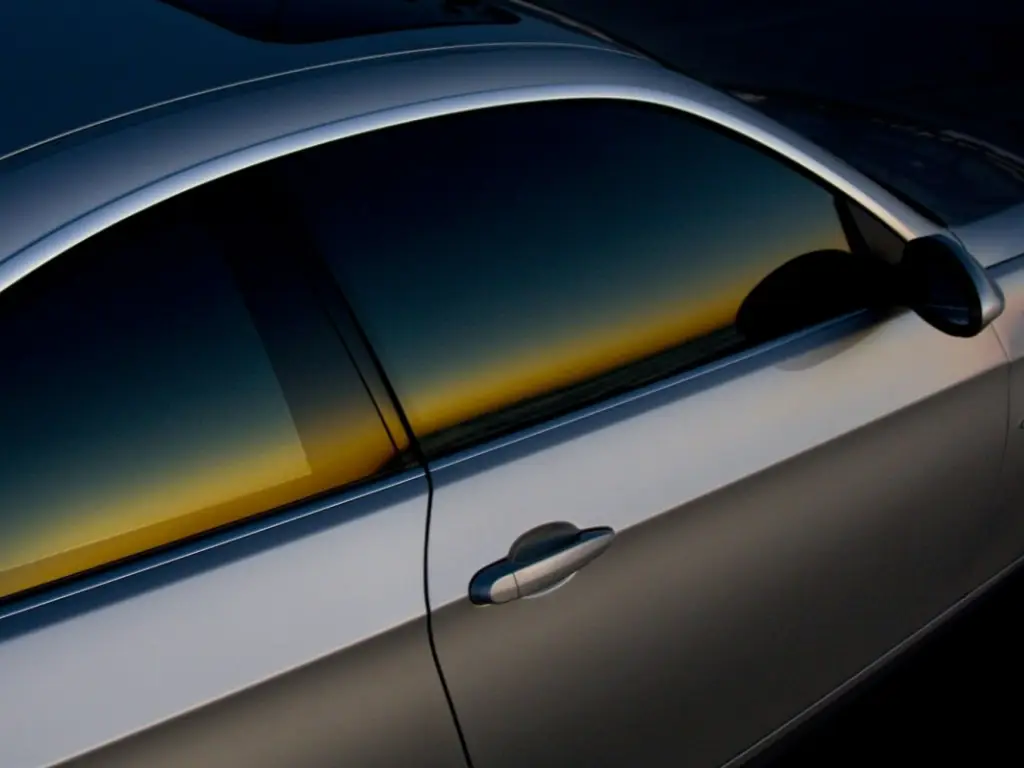
Yes, the quality of window tint does make your car a much cooler place to be in, but most people essentially do not understand how it gets to be so.
While many factors influence your cabin’s temperature, window tinting serves as a highly effective passive measure to keep your car relatively cooler. However, it is crucial to understand the physics: window tint offers heat rejection, not refrigeration.
It cannot actively dissipate trapped heat like opening the windows or blasting the air conditioning. Instead, its primary role is to act as an insulating barrier. By reducing the rate at which heat enters the vehicle, it limits the peak temperature and significantly improves passenger comfort.
The Solar Enemy: Why Your Car Interior Gets So Hot
The primary reason your vehicle transforms into an oven is solar energy. In fact, due to the lack of airflow when parked, the temperature inside your car can rapidly exceed the outside ambient temperature—a phenomenon known as the greenhouse effect.
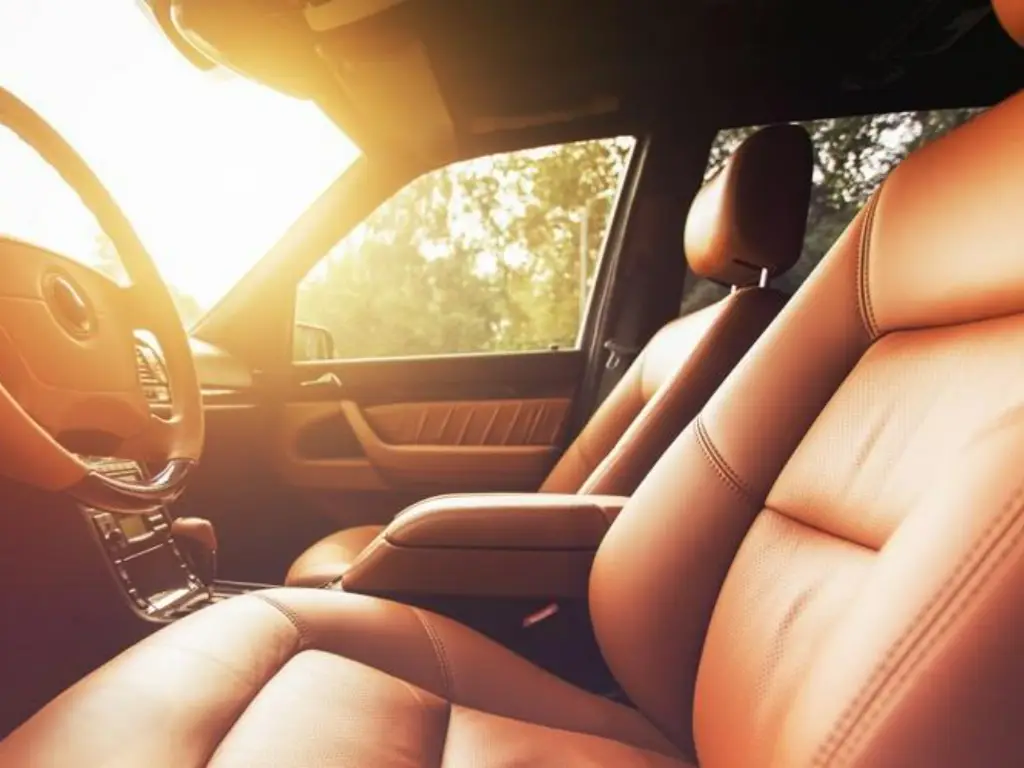
But how does the sun actually heat up your car? It attacks in two main forms:
- Infrared Radiation (IR): Accounting for roughly 53% of solar energy, these invisible rays carry direct thermal energy. You feel this as the “stinging” heat on your skin.
- Visible Light: When sunlight hits your dark dashboard or leather seats, these materials absorb the light and re-radiate it as heat, warming the air trapped inside.
The Solution: The most direct way to lower cabin temperature is technically heat dissipation (opening windows for ventilation or running the AC) or simply avoiding direct sunlight (parking in the shade). However, you cannot always drive in the shade.
This is where window tint plays its critical role. By blocking the solar load at the glass, it doesn’t replace your AC, but it acts as a force multiplier—preventing the interior from getting dangerously hot and ensuring your air conditioning can cool the car down much faster once you start driving.
How Tint Window Works: The Science Behind the Layers
The tint on the window looks to the naked eye as nothing more than a piece of dark plastic. In materials science terms, however, a high-quality heat-rejecting coating comprises an intricate, 7-9-layer composite assembly that is designed to control the solar spectrum.
The film is a kind of coordinated defense mechanism in the fight against heat. In order to comprehend why certain films offer superior heat removal, and other films only darken the glass, you need to differentiate between the Main Force (The Functional Layer) and the Synergistic Layers (The Auxiliary Layers).
The Main Force: The Functional Heat Rejection Layer
This is the moving power of the tint film. This layer is deep in the composite structure and it is what provides the thermal performance of the film.
- The Science: Billions of microscopic ceramic particles are incorporated into this layer using advanced manufacturing methods such as Magnetron Sputtering or Nano-Ceramic Dispersion.
- The Mechanism (Spectral Selectivity): It is a layer that serves as an intelligent filter. It is designed to be selective; in other words, it lets visible light pass through (leaving you with a normal view) but physically refracts or absorbs the infrared radiation (780nm–2500nm) which carries most of the solar heat.
- The Reality Check: Standard dyed films do not have this layer at all. They are dependent on dark polyester to take in light which, on the contrary, saturates and emits heat internally. Films that contain this particular functional layer can only be referred to, in a real sense, as Heat Shields that provide excellent heat reduction.
The Synergistic System: The Auxiliary Layers
Though the Functional Layer handles the heavy heat load, the surrounding layers give the required synergy to sustain such performance over time.
- UV Inhibitor Layer (The Health Shield): UV rays, though not as thermal-absorbing as Infrared, are high-energy waves. The layer blocks over 99 percent of harmful UV rays, which is essential in offering UV protection. This lessens the stinging of your skin and prevents interior damage caused by fading.
- Optical Grade PET (The Foundation): The efficiency of the heat-rejecting layer will be determined by how smooth the surface is that it is applied to. Optical Grade Polyester (PET) is of high quality and makes sure that the nano-ceramic particles are dispersed without defects, preventing heat leaks and waviness.
- Mounting Adhesive & Hard Coat: Every heat shield is useless if it peels or scratches. The high-performance adhesive makes the film bond fully to the glass, enabling free transfer of heat, and the hard coating prevents the delicate optical layers from being abraded daily.
Material Science: Dyed, Metal, and Ceramic Films
Here the industry draws the distinction between cosmetic enhancements and functional engineering. That Functional Layer, and hence the heat rejection power of the film, is purely a matter of the Base Material.
If the material of a functional layer is defective, the tint cannot be used for temperature control. We would like to deconstruct the ranking of window film materials with respect to their capacity to take that 53 percent Infrared heat load.
The Comparison: Physics vs. Economics
| Material Type | Heat Rejection Mechanism | Infrared Rejection (IRR) | TSER Standard | Signal Interference | Cost/Value Analysis |
| Dyed Film | Absorption. Uses dark dye to soak up visible light. | < 10% (Poor) | < 30% (Fail) | None | Low Cost, Zero Value. A “heat sponge” that radiates heat inward. Purely cosmetic. |
| Metalized | Reflection. Uses aluminum/nickel to mirror heat away. | 60% – 80% (Good) | 45% – 55% (Pass) | High (Blocks GPS/Cell) | Obsolete. Effective at cooling, but interferes with electronic signals in modern cars. |
| Nano-Ceramic | Selective Filtering. Uses nano-particles to trap IR. | 80% – 98% (Superior) | 50% – 65% (Excellent) | None | Best Value. The modern standard for cooling and connectivity. |
Why Nano-Ceramic is the Superior Choice
The metalized films are good thermal reflectors, however, they are catastrophic to the contemporary electronics. They interfere with radio waves and kill your GPS positioning, 5G cell phone connections, and even tire pressure sensors (TPMS). Materials such as Cesium Tungsten Oxide are non-conductive nano-Ceramic. They prevent the heat but allow data stream.
Dyed films operate by being black. Ceramic films operate through being smart. As the ceramic nanoparticle is directional (targeting a particular wavelength), we can create a ceramic film 70% VLT (Clear) which blocks more heat than a 5% VLT (Limo) film dyed. Night vision is no longer necessary to keep cool.
Inorganic compounds used in ceramic films include Cesium Tungsten Oxide (CWO). These particles are designed to be transparent to visible light and radio waves but opaque to infrared rays. They offer better heat rejection without transforming your car into a Faraday cage. Ceramic tint is the rational choice for any contemporary car owners.
To transition from understanding the physics of heat rejection to selecting a high-performance product, reviewing an audited lineup of [industry-leading window tint manufacturers] can help you compare Total Solar Energy Rejection (TSER) ratings across premium ceramic offerings.
Selection Guide: Navigating VLT Shades, UV Standards, and Legal Limits
After making a commitment to a quality material (such as Nano-Ceramic), the second thing to do is to make the right tint specification. The major mistake that many car owners commit is to check just the Darkness (VLT) or be confused with the UV marketing numbers.
One should go beyond the functional information to make an informed decision, by checking these three essential pieces of information.
Visible Light Transmission (VLT): The “Darkness” Trap
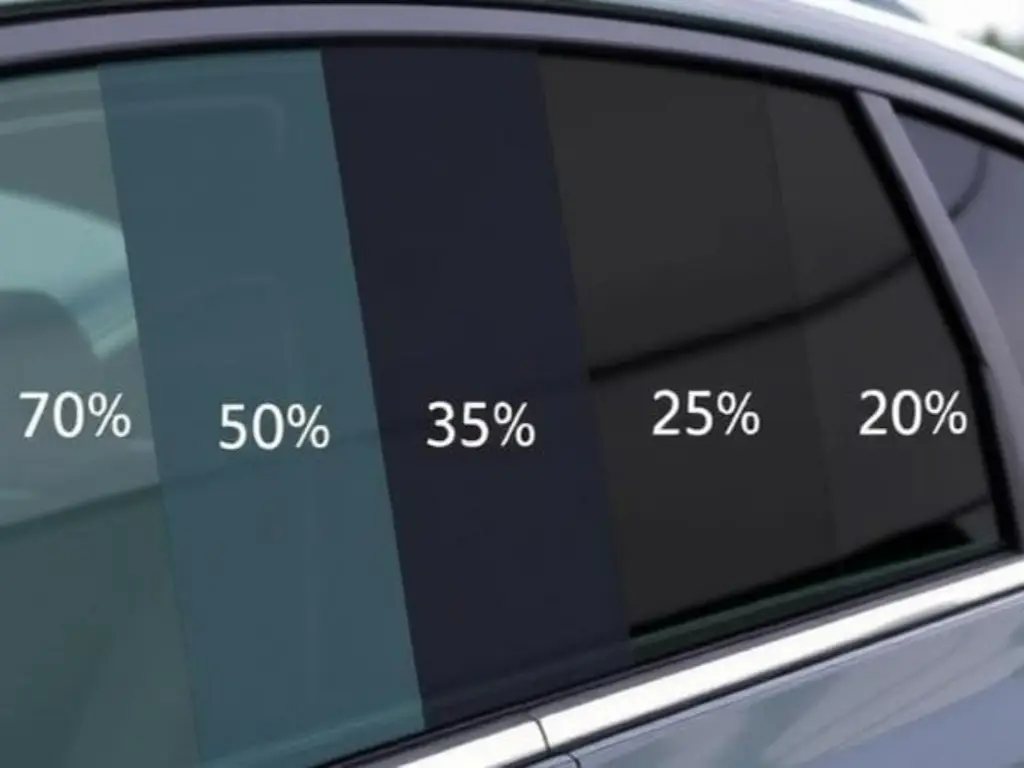
Visible Light Transmission (VLT) measures the percentage of visible light that passes through the window.
- The Physics: Lower VLT means darker tint. Nevertheless, being dark does not mean rejecting heat.
- The “Heat Sponge” Risk: When you select a dark 5% VLT of an inexpensive dyed fabric, it will just absorb the energy of the sun and radiate it into the car. On the other hand, a stark Nano-Ceramic film of 70 percent value is able to reject much more heat than a pitch-black colored film.
- The Decision: You should choose VLT depending upon your privacy requirements and local regulations, rather than the method of heat control.
UV Rejection: The Health & Comfort Baseline
Whereas the cabin gets hot due to the Infrared (IR), the UV rays cause skin damage and fade the interior of your car.
- The Sensation: UV rays are the cause of that stinging sensation on your skin when you are on long drives.
- The Standard: A quality film should be able to block over 99 percent of the harmful UV rays, offering UV protection against skin cancer (as suggested by the Skin Cancer Foundation).
- Note: A salesperson should not trick you into believing that extreme UV protection translates into extreme heat rejection. They are separate metrics.
The Selection Matrix: VLT & Usage Guide
Use this table to associate the correct shade with the correct window so that you are not breaking the law or driving recklessly but at the same time take the full benefits of window tinting.
| VLT (Shade) | Best Application | Visibility & Purpose | UV Standard | Legal Note |
| 70% – 80% | Windshield | Crystal Clear. Maximizes heat reduction without compromising night vision. | > 99% | Generally allowed on full windshields in many regions (check local laws). |
| 35% – 50% | Front Side Windows | Balanced. Provides glare reduction to reduce eye strain. Allows driver to be seen. | > 99% | The legal limit in many US states and European countries. |
| 15% – 20% | Rear Side / Back | Privacy. Good for passengers. Enhances the look of your vehicle. | > 99% | Often unrestricted for rear windows on SUVs/Trucks. |
| 5% (Limo) | Cargo / Security | Blackout. Maximum privacy. Not recommended for driver vision. | > 99% | Illegal on front windows almost everywhere. |
The Bottom Line:
Use a Nano-Ceramic heat control material. Then select your VLT with regard to privacy requirements and regulations and make sure that the UV rating is 99% or above to safeguard your health.
Manufacturing Excellence: The ClearPro Approach to Heat Rejection
At ClearPro, we do not only offer window film but we design heat rejection solutions out of the most superior materials ever known in the field of physics. We occupy the space between laboratory science and practical application because we are a manufacturer with a vertically integrated 12,000㎡ factory.
When you seek window tinting services, the quality of film should be considered as much as professional installation. This is where we make sure that our film works better.
Advanced Material Science: Beyond Generic Ceramics
We understand that various drivers possess various needs, that is why we have mastered two major technologies of the industry in heat rejection:
- Nano-Ceramic Series (Signal Friendly): Inorganic Nano-Ceramic materials are used in modern vehicles that support the use of 5G and GPS. With the engineering of these particles, which are at the molecular level, our series has a high Infrared Rejection (IRR) rate of 99 percent and high visibility. Our inorganic structure has a permanent thermal inhibit as opposed to organic dyes which fade away.
- Magnetron Sputtering (Maximum TSER): For customers requiring the absolute pinnacle of heat rejection, our HC PRO Series is using the state-of-the-art Magnetron Sputtering. Microscopic layers of precious metals (such as Gold and Indium Oxide) are deposited on the film. This physically reflects solar energy, and it reaches very high Total Solar Energy Rejected (TSER) values, as high as 68% on our HC15 PRO line.
Process Perfection: Polyoptico Coating & 8K Inspection
Essentially, it is useless to have the correct material if the application is poor.
- Polyoptico Coating Technology: We use our proprietary Polyoptico technology to ensure the functional coating is deposited with crystal-like glossiness and atomic-level uniformity. This provides a premium matte finish or gloss depending on the series and removes the “orange peel” texture.
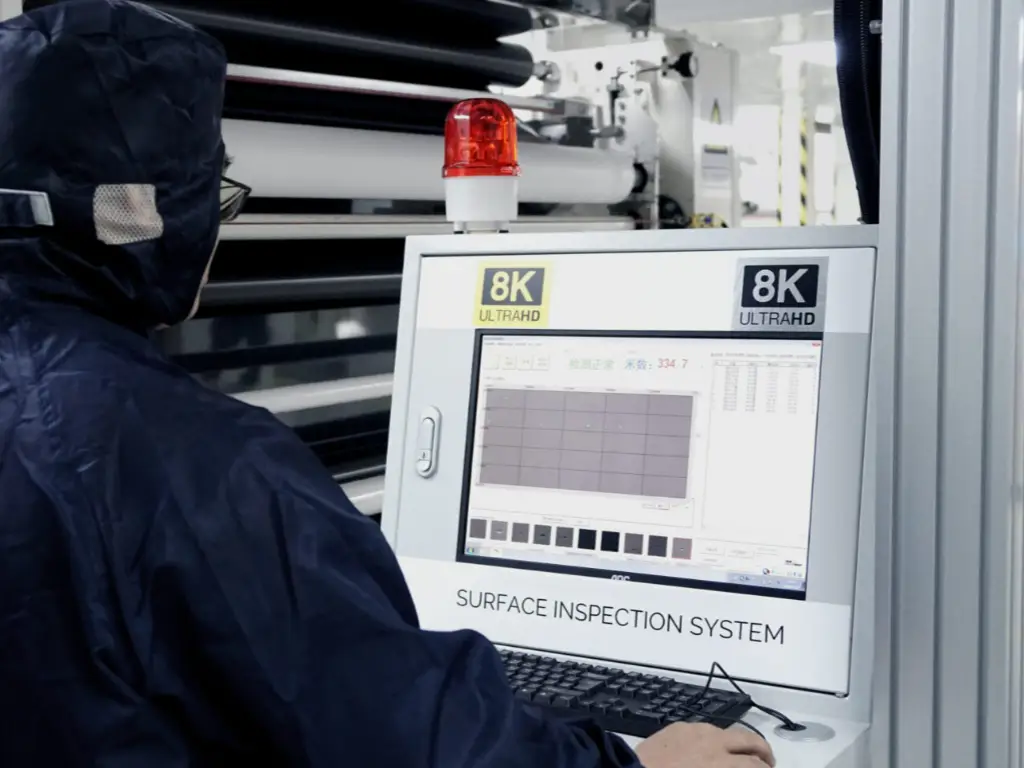
- 8K Automated Inspection: We do not use human eyes to detect defects. ClearPro uses an 8K Computer Detection System to scan each roll to identify microscopic weaknesses during manufacturing. This ensures that each roll out of our Class 1000 Clean Room is perfect.
Integrated Strength and Warranty
Since we have full control of the supply chain (from the raw PET base to the final curing), we do not wish our film to last; we ensure that it does. To support our engineering confidence, we provide Warranty to make sure that your investment does not yellow, crack, peel, or bubble.
Looking for professional installers or expert installers? Experience the difference of manufacturer-grade engineering at ClearPro Window Tint.
Final Thoughts: Investing in a Cooler Drive
Being honest: Tinting windows is an investment in thermal management and the overall value of your vehicle.
Although it will not transform your car into a refrigerator overnight, car window tinting fundamentally changes the driving experience. Your air conditioning is also not overworked, as you eliminate the invisible infrared attack, leading to better fuel efficiency and lower fuel consumption due to less reliance on the AC.
The Practical Benefits of Window Tint:
- Comfort: Ensures a comfortable ride and a cooler car.
- Protection: Protects the car’s interior from fading and creates a safer environment.
- Safety: Acts as a safety feature in the event of an accident, where the broken glass is held together.
- Aesthetics: Improves the aesthetic appeal and look of your vehicle.
The Bottom Line: The benefits of window tint go far beyond just looks. It is a worthwhile investment that provides peace of mind, practical benefits, and additional benefits like safety and savings. To make your drive smarter by using Nano-Ceramic materials and choosing professional installation.

 EN
EN  ES
ES  FR
FR  AR
AR